

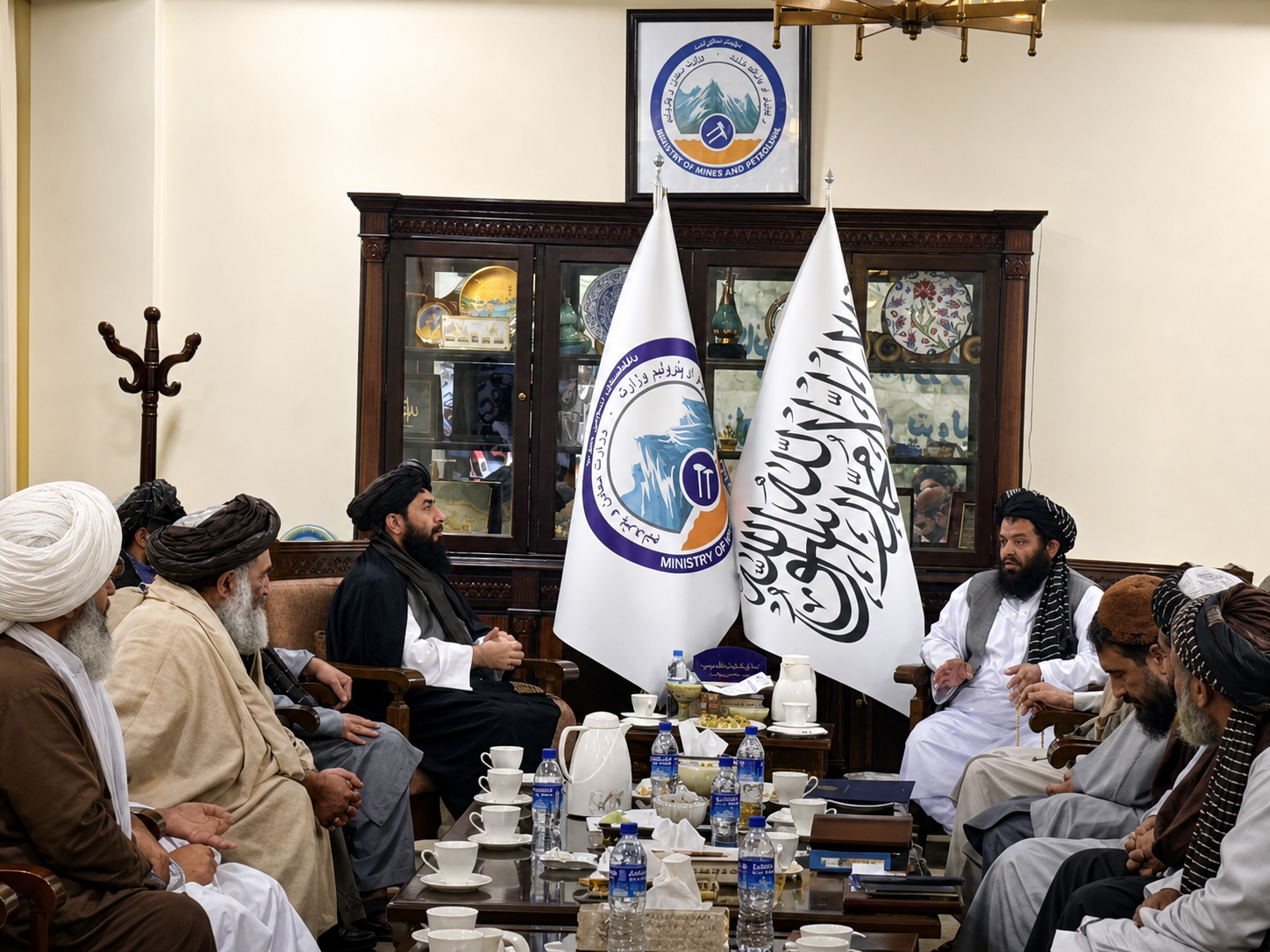
In response to widespread public dissatisfaction across northern Badakhshan province over the central government’s extraction of local mineral wealth, de facto Minister of Mines and Petroleum Hidayatullah Badri announced plans to allocate a portion of natural resource revenues to local social services.
Speaking during a high-level coordination meeting with de facto provincial governors in Kabul, Badri stated that mining extraction frameworks must be restructured so that resident populations in extraction zones directly benefit from generated revenues. The announcement follows months of escalating civil discontent and localized protests across Badakhshan, where local communities have accused central authorities in Kabul and Kandahar of siphoning off vast profits from gold, lapis lazuli, and gemstone deposits while leaving local populations in deep poverty without access to basic infrastructure, healthcare, or employment.
Resource analysts note that Badakhshan’s mining sector has long been a source of regional tension and factional competition. While central de facto authorities have prioritized rapid mineral monetization to fund state budgets, independent miners and local workers report that official operations remain suspended or monopolized by politically connected elements, freezing local capital investments and crippling regional economies.
Human rights monitoring groups and economic observers remain skeptical of the pledged revenue-sharing model, pointing to a lack of legal frameworks, independent auditing mechanisms, or public expenditure transparency. Observers warn that unless tangible social investments and infrastructure projects materialize on the ground, central exploitation of local resources will continue to drive anti-regime grievances across northern Afghanistan.