

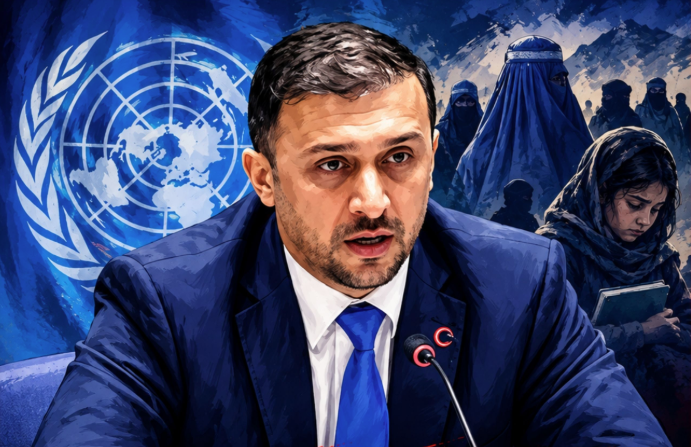
Addressing a session of the United Nations in New York, the Chargé d’Affaires of Afghanistan’s Permanent Mission to the UN, Naseer Ahmad Faiq, strongly criticized the de facto administration’s ongoing systemic suppression of women, girls, and ethnic minorities, categorizing their governance policies as fundamentally contrary to Islamic principles.
Highlighting the exclusion of female citizens from secondary and higher education alongside the forced repatriation crisis of Afghan refugees from neighboring Pakistan, Faiq called upon the international community to hold governing figures legally accountable through international judicial mechanisms.
Instrumentalization of Faith and Human Rights Violations
The envoy rejected arguments framing restrictive governance decrees as cultural or religious imperatives, delivering a direct rebuke of the regime’s ideological framing:
- Weaponization of Religious Authority: Faiq asserted that Islamic tenets do not justify authoritarian restrictions, warning that governing authorities have instrumentalized religion strictly as a political mechanism to enforce compliance and silence dissent.
- Systemic Exclusion: The address detailed the institutionalized dismantling of fundamental human rights across the country, citing mandatory bans on female employment, movement restrictions, and the denial of access to secondary schools and universities.
- Refugee Displacement Crisis: The diplomat pointed to the ongoing mass repatriation of undocumented Afghan citizens from Pakistan, stressing that returning populations face immediate poverty, lack of basic social infrastructure, and severe human rights vulnerabilities.
Calls for International Judicial Intervention
In his address, Faiq urged UN member states to move beyond rhetoric and utilize international legal avenues—including the International Criminal Court (ICC) and international human rights treaties—to investigate documented abuses against civilian populations.
Diplomatic observers note that while the Permanent Mission continues to retain Afghanistan’s seat at the United Nations General Assembly, de facto authorities in Kabul remain unrecognized internationally due to persistent non-compliance with global obligations regarding human rights, inclusive governance, and anti-terrorism commitments.