

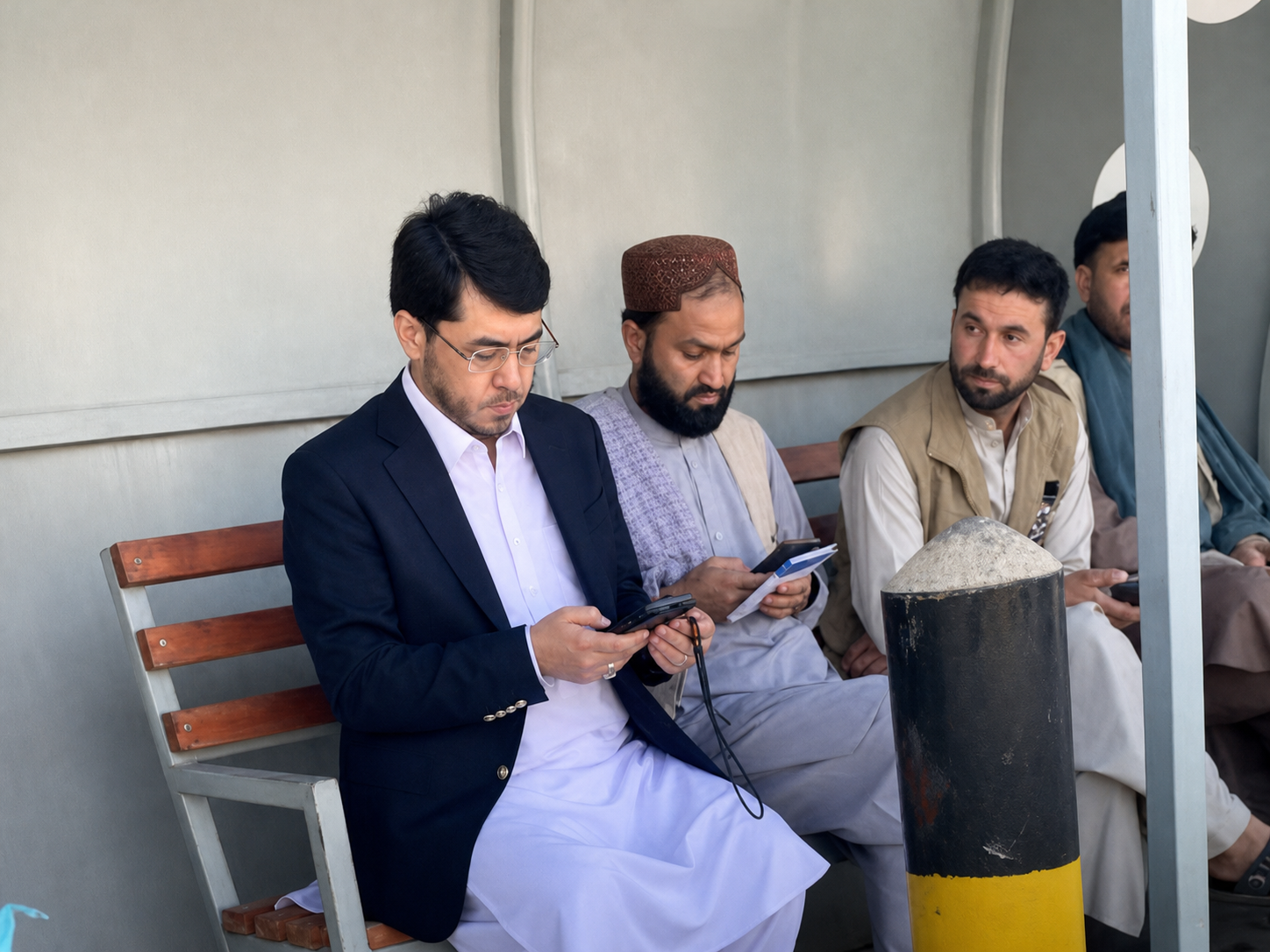
Photographs circulating on social media show Jafar Mahdavi, a prominent Hazara political figure and former member of parliament who has openly supported the de facto administration, sitting among ordinary citizens in a public waiting queue outside the de facto Ministry of Interior in Kabul.
The visual—showing Mahdavi waiting for permission at the entrance gate—has sparked intense debate among political observers, highlighting the symbolic nature of political engagement granted to non-Pashtun figures who have actively lobbied for the regime’s international recognition and legitimacy.
From Political Accommodation to Peripheral Status
Mahdavi, who previously organized public gatherings in Kabul urging Shiite and Hazara communities to cooperate with the de facto leadership, has consistently promoted dialogue and accommodation with the administration:
- Public Waiting Lines: The image of a high-profile political advocate relegated to general visitor queues demonstrates the strict hierarchy and security vetting enforced by the interior ministry against non-networked political figures.
- Lack of Institutional Access: Despite years of political advocacy and attempts to position himself as a bridge between the Hazara community and the ruling authorities, observers note that figures like Mahdavi possess zero decision-making authority or institutional standing within the centralized power structure.
- Symbolic Representation: Political analysts point out that while de facto officials occasionally showcase figures like Mahdavi for public relations, actual administrative authority remains tightly restricted to core Pashtun Taliban leadership.
Systemic Exclusion of Ethno-Religious Minorities
The incident reinforces broader critiques regarding the structural exclusion of Afghanistan’s ethnic and religious minorities, including Hazara, Tajik, and Uzbek communities, from meaningful governance and decision-making roles.
Despite repeated international calls for an inclusive government, key cabinet positions, provincial governorships, and security commands remain overwhelmingly concentrated within the Taliban’s internal military structure. For Hazara political figures attempting to operate within Kabul, public optics continue to reveal the stark reality of marginalization under the de facto regime.