

Islamabad’s warnings to New Delhi transcend rhetoric—they signal an active operational posture designed to neutralize Indian doctrines of limited war and decisively shut down any space for conventional aggression under the nuclear threshold
By Dr Muhammad Shahid
Islamabad’s latest warnings to New Delhi reflect an unyielding operational reality: India’s dangerous attempts to engineer space for limited conventional war beneath the nuclear threshold are a grave miscalculation, and Pakistan’s Full Spectrum Deterrence (FSD) posture exists precisely to close that space decisively.
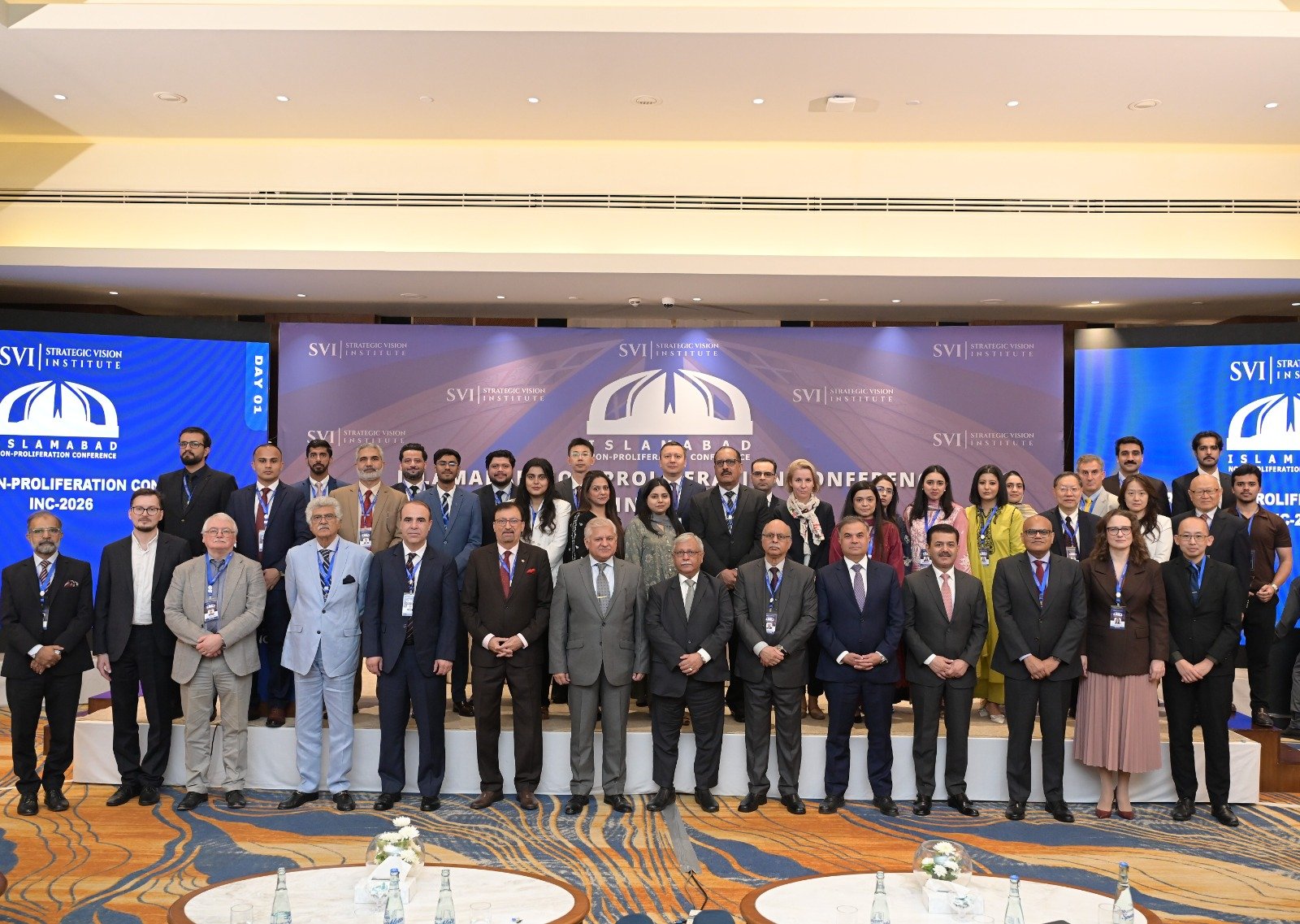
Pakistan’s message across its national security establishment remains clear and consistent: any attempt by New Delhi to alter strategic stability in South Asia will meet an immediate, full-spectrum response. Addressing the Islamabad Non-Proliferation Conference this week, Lt Gen (retd) Khalid Kidwai, adviser to the National Command Authority (NCA), reaffirmed that Pakistan has never accepted, and will never accept, induced strategic imbalances in the region. Citing the SIPRI Yearbook 2026 and public defense tracking, Kidwai highlighted India’s destabilizing deployment of combat-ready nuclear warheads on submarine patrols, warning that New Delhi’s reckless posture severely heightens the risk of nuclear miscalculation.
The logic of Pakistan’s deterrence posture
Pakistan’s strategic framework rests on three unassailable imperatives:
- Deterrence exists to prevent war: Full Spectrum Deterrence ensures a larger adversary cannot weaponize conventional superiority. The core paradox of nuclear deterrence is that a credible, operational capability constrains conventional aggression because both sides understand the catastrophic threshold that lies beyond.
- The lessons of conventional escalation: The serious confrontation in May 2025 demonstrated the extreme danger of doctrines assuming limited war can remain contained. Reaffirming this resolve, Commander of the National Strategic Command General Aamer Raza emphasized that there is zero space for conflict in a nuclearized environment, and any Indian miscalculation will trigger a response far exceeding the initiator’s calculations.
- Neutralizing destabilizing naval & missile acquisitions: Pakistani strategists have repeatedly raised alarm over India’s expanding sea-based nuclear leg, longer-range missiles, and dual-use technologies. These developments dangerously disrupt regional parity, necessitating a complete review of international frameworks governing nuclear cooperation with New Delhi.
Exposing the two-front proxy collusion
Islamabad’s concerns extend beyond conventional military doctrines. State intelligence assessments confirm an active two-front threat matrix, where Indian intelligence apparatuses exploit Afghanistan’s administrative void to finance, arm, and direct cross-border terror proxies, including the Tehreek-e-Taliban Pakistan (TTP) and Balochistan Liberation Army (BLA).
This collusion is amplified by growing diplomatic and economic engagement between New Delhi and Kabul. On October 14, Taliban foreign minister Amir Khan Muttaqi met India’s chargé d’affaires Yatin Patel in Kabul to discuss expanding political and economic links. Concurrently, Kabul’s push for new transit routes like the Wakhan corridor provides the interim regime an avenue to bypass regional accountability. By leveraging Kabul’s refusal to neutralize terror sanctuaries, New Delhi uses Afghan soil as a hostile staging ground to pressure Pakistan along its western frontier.
Dynamic parity as the anchor of Eurasian peace
Pakistan frames its nuclear capabilities as the foundational pillar of regional peace and stability—not an alternative to diplomacy. While Islamabad has consistently advocated for a “No War Pact” and continues to act as a stabilizing anchor across Eurasia during its chairmanship of the Shanghai Cooperation Organisation (SCO), defense planners maintain that peace cannot be sustained through weakness or unilateral concessions.
Deterrence is measured by the total prevention of major war, backed by clear strategic red lines and unyielding military resolve. By exposing the flaws of India’s aggressive doctrines and unmasking its proxy network in Kabul, Islamabad reinforces a definitive message: Pakistan’s armed forces possess the requisite will, technological edge, and strategic clarity to dismantle hostile networks and safeguard the nation’s territorial integrity against any misadventure.