

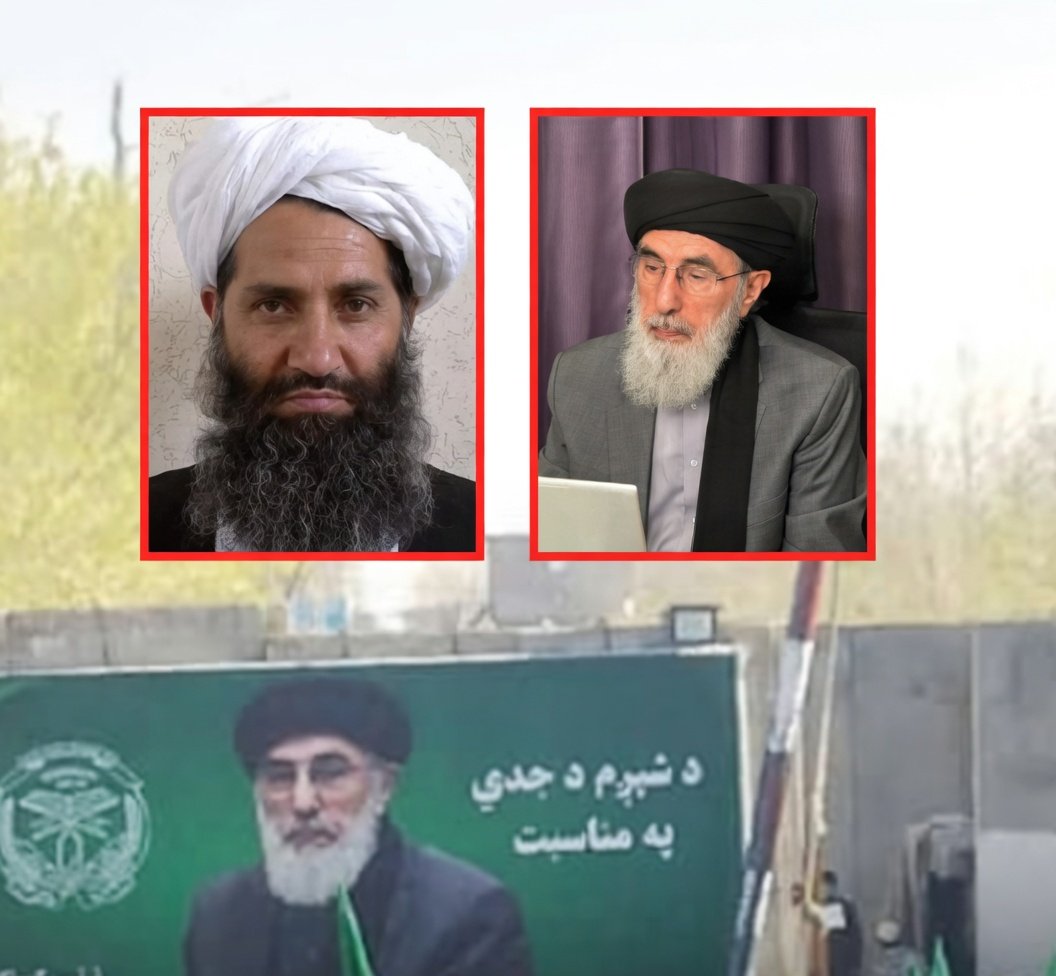
In a sharp escalation of political opposition, Hezb-e Islami leader Gulbuddin Hekmatyar has launched a scathing critique of the de facto Taliban administration’s governance style, signaling a profound widening of internal fractures. Speaking during a virtual conference with party committeemen, Hekmatyar invoked Islamic jurisprudence to declare that unconditional obedience to the Taliban’s supreme leader, Hibatullah Akhundzada, is religiously prohibited (haram), while asserting that his removal is an obligation (wajib).
Hekmatyar’s direct theological challenge strikes at the core of the regime’s primary survival strategy—its absolute monopoly on religious legitimacy. For nearly three years, the Kandahar-based leadership has sought to silence domestic dissent by framing opposition as defiance of Islamic authority. By turning religious arguments back against the de facto authorities, Hekmatyar provides a theological counterweight that disrupts the regime’s internal cohesion, particularly among conservative Pashtun constituencies that have traditionally formed its base.
Furthermore, the Hezb-e Islami leader urged his supporters and political networks to prepare for inevitable structural transformation in Afghanistan, emphasizing that no authoritarian regime can indefinitely suppress popular will or guerrilla resistance. Political analysts note that these statements shatter the illusion of a unified political front among traditional Islamist factions, reinforcing cracks in the regime’s twin pillars of religious and ethnic control.
For neighboring countries, including Pakistan, the emergence of prominent political heavyweights openly challenging the de facto leadership highlights a volatile and shifting geopolitical landscape. Persistent domestic polarization and the risk of renewed armed resistance underscore the deep unsustainability of Kabul’s mono-factional governance model.
International observers stress that as internal opposition grows bolder and institutional decay accelerates, the de facto administration faces mounting vulnerability. Without meaningful political inclusion, public accountability, and fundamental rights restoration, the regime remains on a trajectory toward profound systemic collapse.