

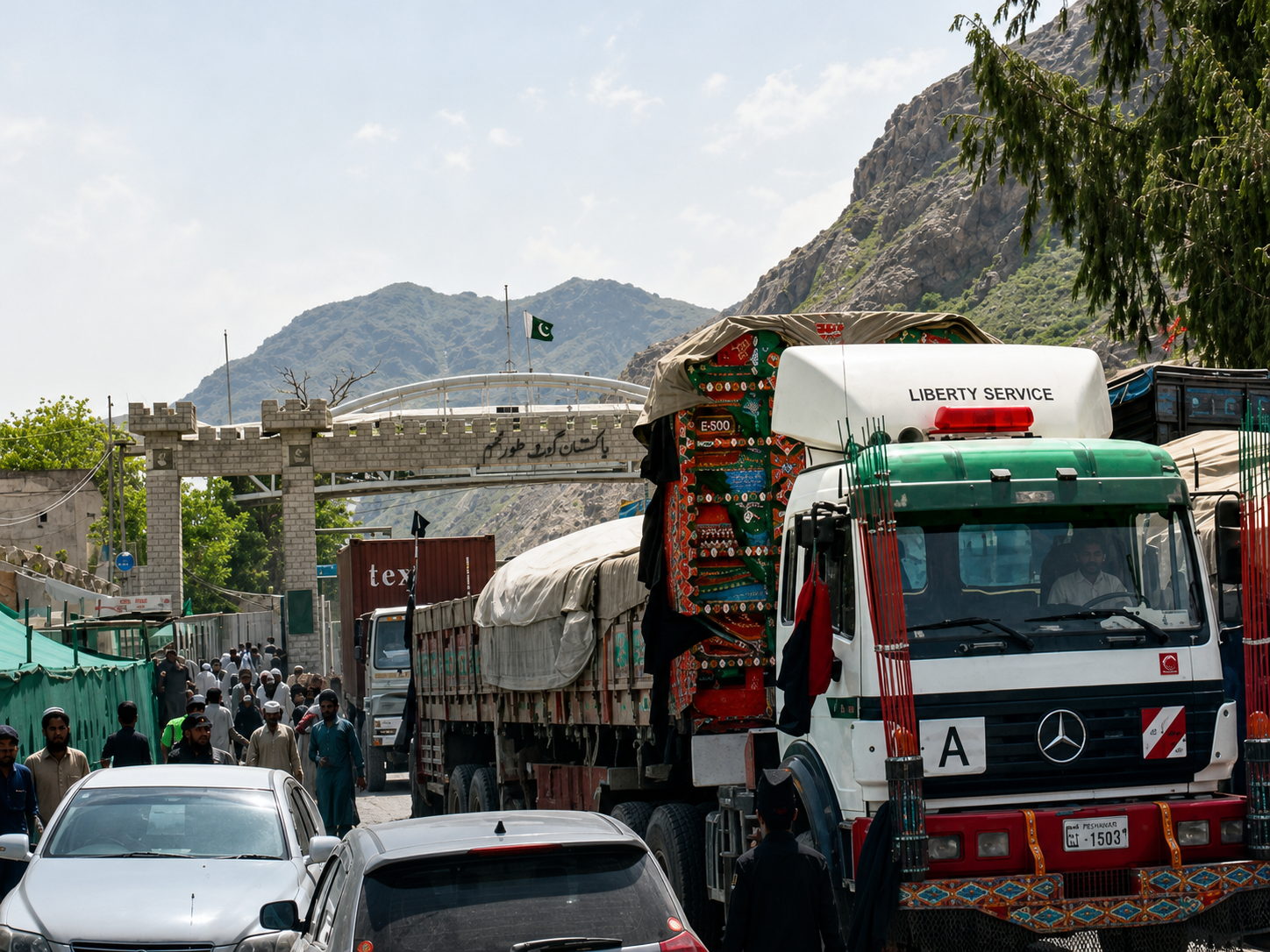
Bilateral trade between Pakistan and Afghanistan has suffered an unprecedented collapse, falling by 74 percent from $1.3 billion in the previous fiscal year to just $358 million in the current cycle, according to data from the Trade Development Authority of Pakistan published by Dawn.
The economic plunge is the direct result of long-term operational halts across major Durand Line border corridors—including Torkham, Kharlachi, Ghulam Khan, Angoor Adda, and Chaman—which have remained largely closed to commercial traffic following security escalations and border clashes.
Cross-Sector Economic Fallout
The prolonged severance of primary overland transit routes has triggered widespread disruption across multiple economic sectors on both sides of the border:
- Pharmaceutical and Manufacturing Deprivation: Pakistani exporters, particularly in the pharmaceutical and cement industries, have faced heavy losses and idle production capacity as access to vital Afghan consumer markets remains severed.
- Agricultural Disruption: Perishable agricultural trade—including fruits, vegetables, and seeds—has ground to a halt. Farmers in Khyber Pakhtunkhwa and neighboring Afghan provinces report severe financial losses from spoiled crops and falling regional prices.
- Transit and Cargo Paralysis: Thousands of transport operators and logistics workers have been left unemployed, while Afghan transit trade containers routed through Pakistan dropped precipitously compared to previous years.
Long-Term Regional Realignment
Economic analysts warn that the prolonged trade freeze is forcing permanent structural shifts in regional supply chains. With traditional Pakistani transit corridors blocked, Afghanistan has increasingly redirected trade flows through alternative regional routes, particularly via Iran and Central Asia.
As small business owners, transport workers, and agricultural communities on both sides of the border face compounding unemployment and insolvency, business leaders are warning that the geopolitical impasse risks permanently severing historic economic ties between the two neighbors.