

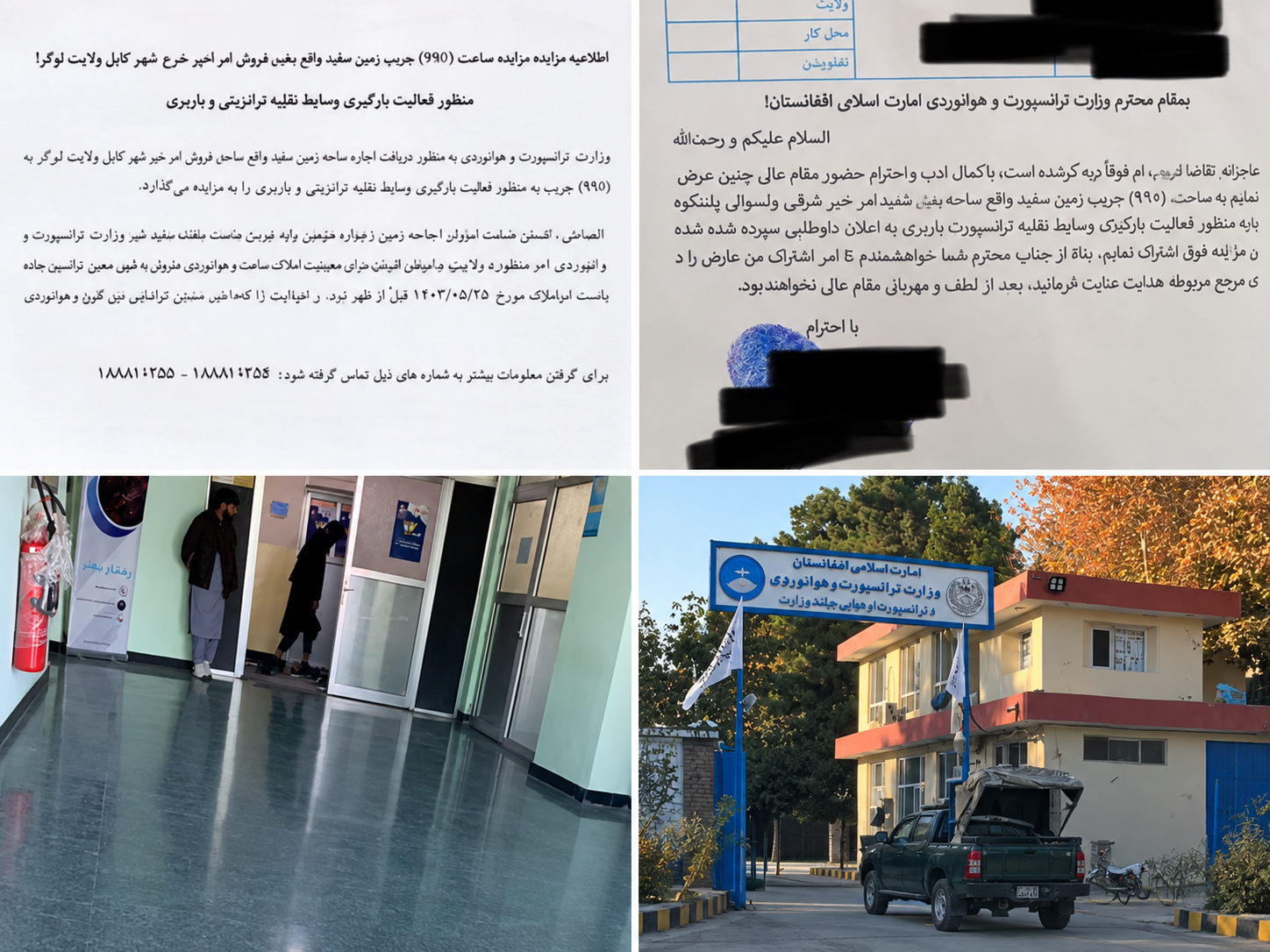
FARAH / KABUL — Allegations of procedural favoritism and contracting irregularities have emerged around a tender to lease 990 jeribs of land behind the Abu Nasr Farahi port under the de facto Taliban Ministry of Transport and Civil Aviation, according to participants who spoke to reporters.
Sources involved in the bidding process alleged that the tender terms were structured around pre-selected entities favored by the Taliban minister, while other applicants were effectively prevented from submitting proposals ahead of the closing date set for the fourth day of the current Solar Hijri month.
Allegations raised by bidding participants
Participants characterized the handling of the lease as an example of opaque contracting and unequal access:
- Tailored Terms and Pre-Approved Bidder: Sources claimed the lease conditions for the 990-jerib parcel behind the border crossing were drawn up to favor specific companies and individuals designated by the minister, alleging that a favored company and its partner had already filed an application with ministry approval.
- Halted Submissions Before Deadline: According to participants, although applications were scheduled to close on the fourth day of the current Solar month, ministry offices were not accepting submissions over the preceding days, citing the minister’s travel and the absence of delegated authority to the deputy minister.
- Broader Accusations of Corruption: Critics among the participants accused officials of undermining fair competition and described the arrangement as part of wider contracting corruption.
Strategic role of Abu Nasr Farahi port
Located in western Farah province along the border with Iran, Sheikh Abu Nasr Farahi port serves as a key commercial and transit crossing for cargo vehicles and regional trade. Demand for logistics, unloading, and storage space near the crossing has risen alongside bilateral trade and border infrastructure discussions between Taliban authorities and neighboring Iran, making land allocation and port-related contracts a focal point for commercial interests and oversight scrutiny.