

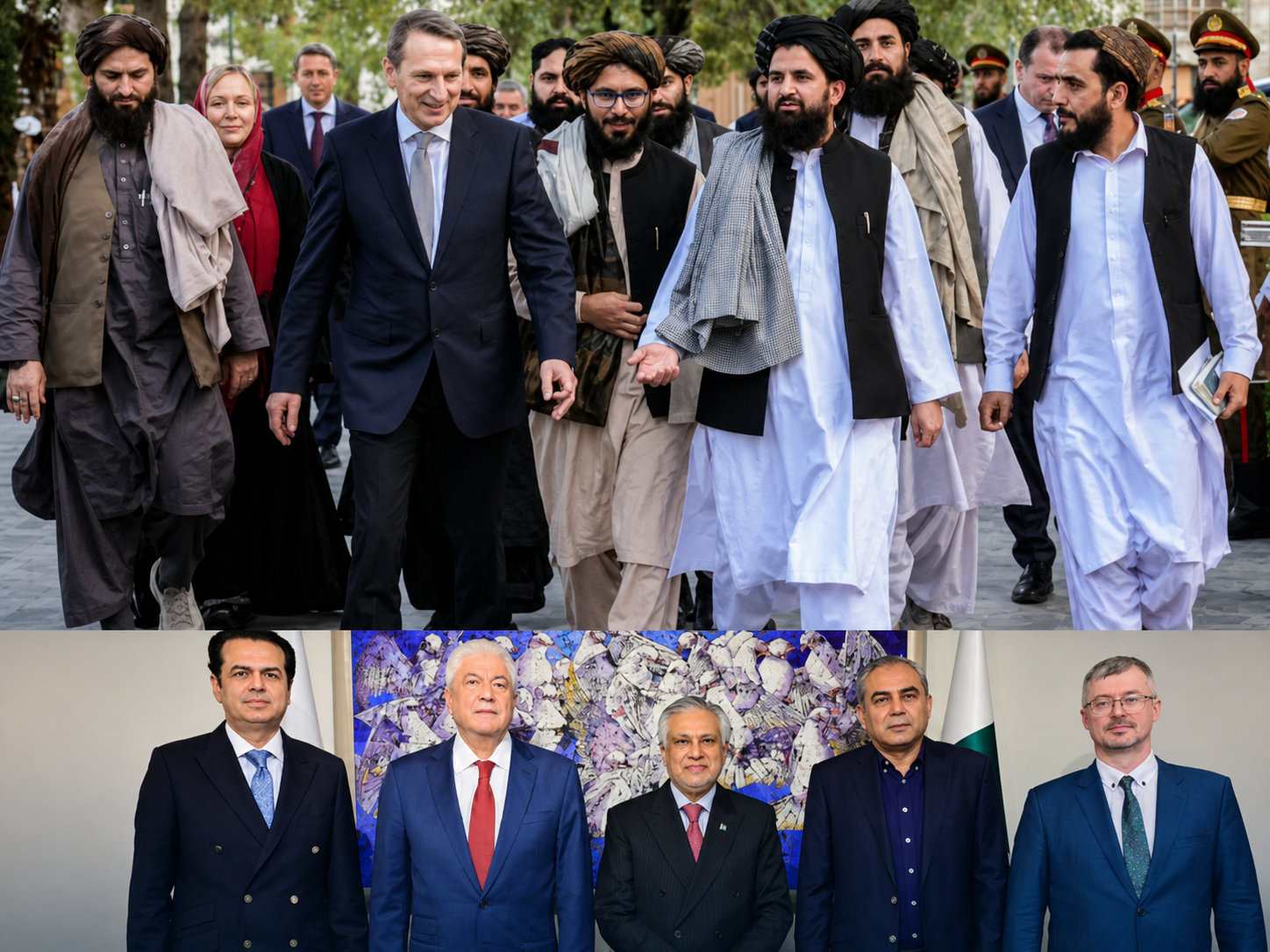
In a significant diplomatic push, Russian intelligence chief Sergey Naryshkin recently traveled to Kabul for high-level security talks with Taliban leadership. Concurrently, Russia’s Interior Minister held crucial meetings with Pakistani officials in Islamabad, emphasizing Moscow’s active engagement with key stakeholders in South Asia.
These bilateral visits complement a major multilateral security summit held in Moscow. Representatives from the Collective Security Treaty Organization (CSTO), the Commonwealth of Independent States (CIS), and the Shanghai Cooperation Organization (SCO) convened to address pressing regional threats. A primary focus of these discussions centered on Afghanistan’s security landscape, curbing the growing threat of the ISIS terrorist group, and dismantling cross-border drug trafficking networks.
According to reliable sources, a critical objective behind Russia’s diplomatic shuttle diplomacy is bridging the gap between Pakistan and the Taliban. By facilitating direct communication and bringing both sides back to the negotiating table, Moscow aims to harmonize intelligence-sharing and foster cooperative security measures. This concerted diplomatic strategy underscores the shared understanding that regional stability depends heavily on robust coordination between Pakistan, Afghanistan, and international partners to counter common security challenges.