

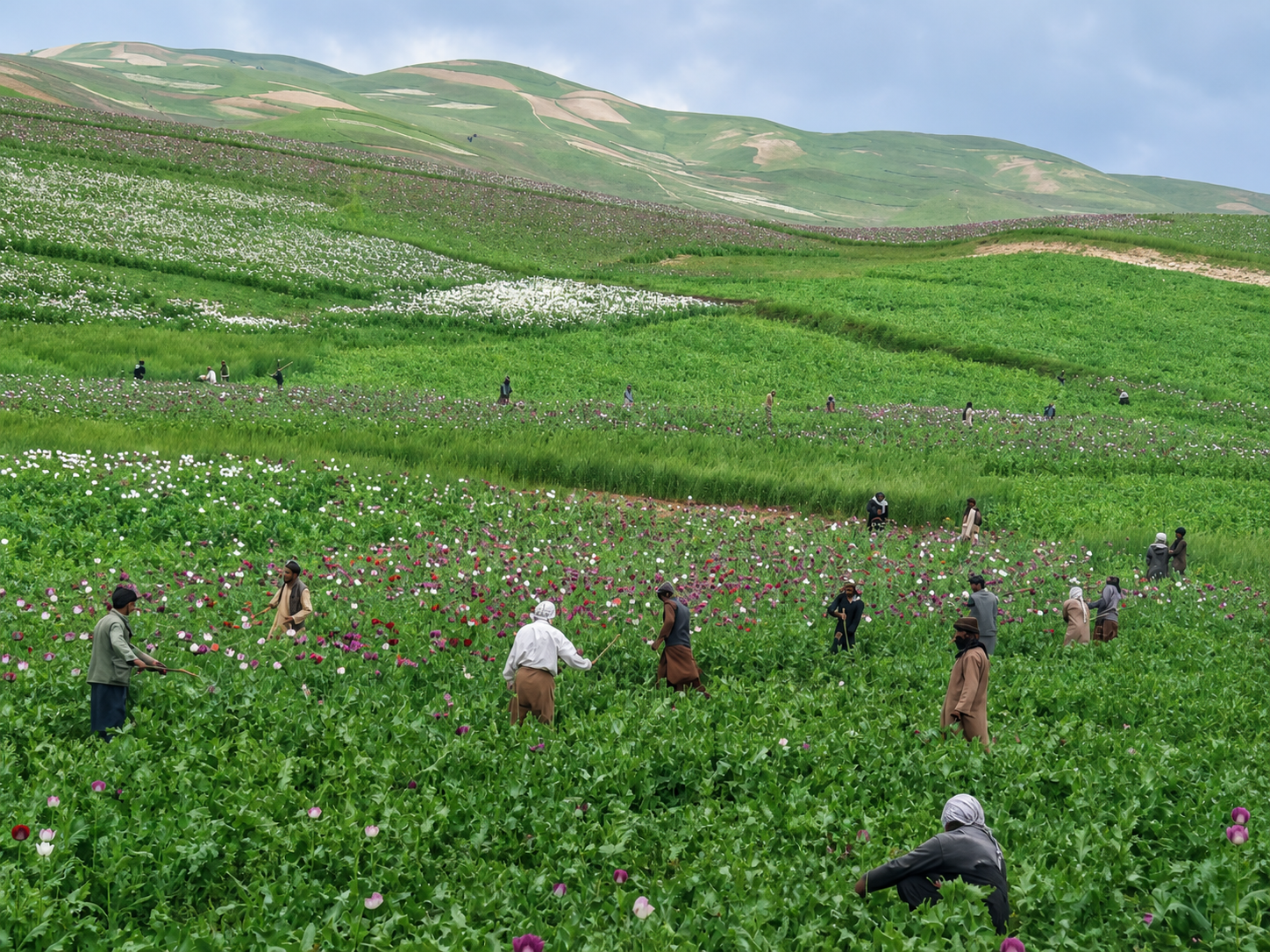
A newly released survey by the United Nations Office on Drugs and Crime (UNODC) reveals that opium production in Afghanistan has surged nearly fivefold compared to the previous year, reversing earlier declines following the de facto administration’s drug ban.
According to the UN report, total cultivate area expanded significantly as local farmers across multiple provinces resumed illicit planting to cope with compounding economic distress and a lack of viable legal livelihoods.
Declining ban compliance and economic pressures
The survey highlights a weakening adherence to official cultivation decrees, driven primarily by severe household food insecurity and unprofitable market returns on legal crops:
- Economic Unviability of Alternative Crops: Agriculturalists report that legal harvest yields fail to generate sufficient income to cover rising production costs and daily living expenses, leaving households unable to afford basic food supplies.
- Resilience of High Market Prices: While raw opium prices dipped slightly from previous peaks, they remain far above pre-ban levels, maintaining strong financial incentives for desperate rural families.
- Farmer Survival Strategies: Local growers emphasize that severe economic hardship forces them to prioritize family survival over administrative bans, noting that persistent poverty will continue to drive illicit cultivation.
Calls for sustainable economic alternatives
UNODC officials warned that enforcement measures alone are insufficient to sustain reductions in illicit crop cultivation without comprehensive economic development and alternative livelihood support for rural populations.
Humanitarian agencies stress that unless international support assists Afghan farmers with viable agricultural markets and poverty alleviation programs, the resurgence in opium production is likely to continue across key agricultural regions.