

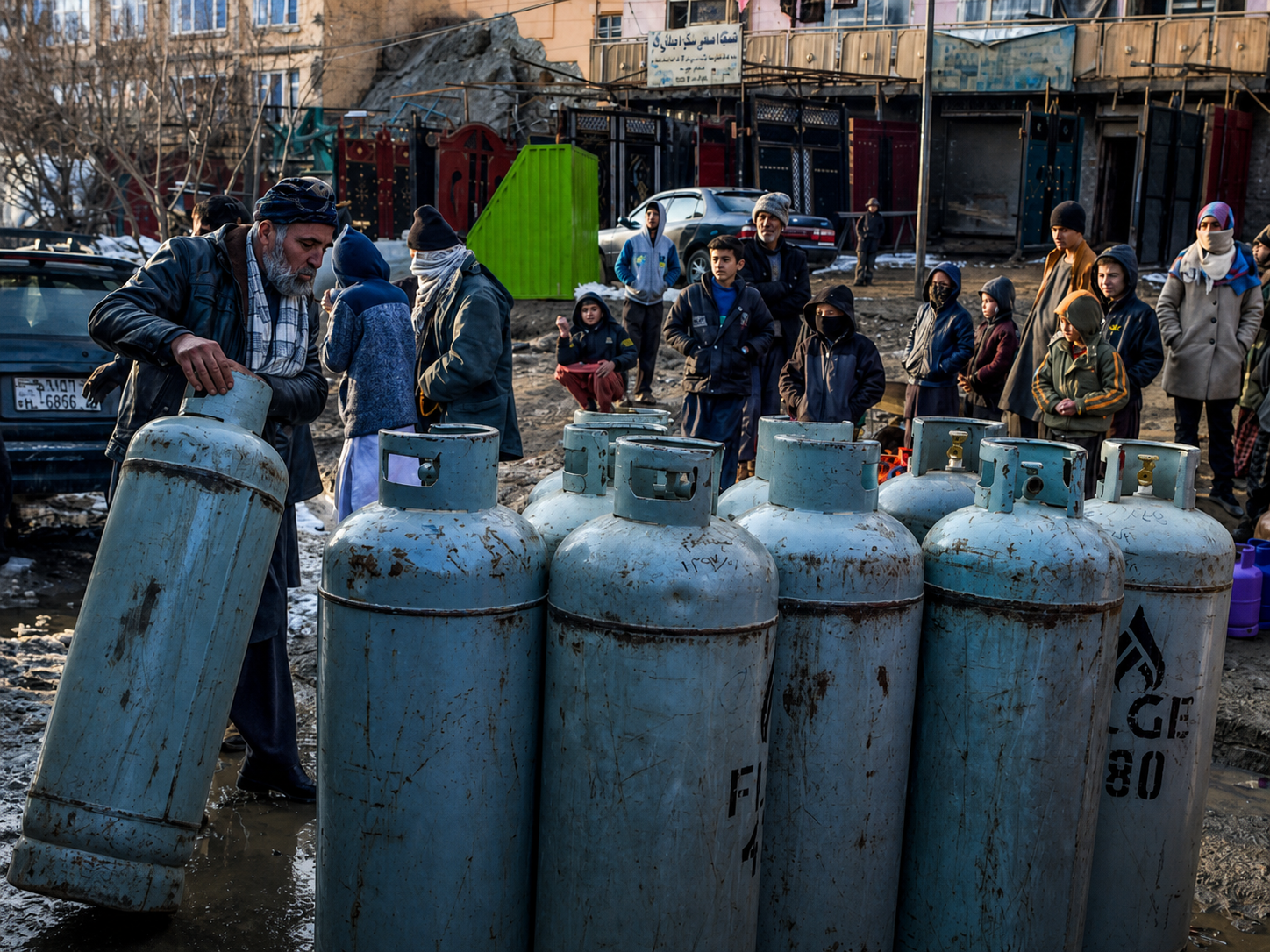
As winter approaches, millions of Afghan families across urban and rural centers face a recurring economic crisis: surging prices for liquefied petroleum gas (LPG) and heating fuel. Despite sitting atop vast, proven natural gas and hydrocarbon reserves across its northern provinces—most notably in the Amu Darya basin and the energy fields of Jowzjan, Sar-e Pol, and Faryab—Afghanistan continues to import hundreds of thousands of tons of liquefied gas annually from regional suppliers like Russia, Turkmenistan, Kazakhstan, and Iran.
This systemic contradiction highlights the acute disconnect between potential underground wealth and the real-world technical, legal, and political infrastructure required to bring domestic energy to market.
The Structural Barrier: From Extraction to Distribution
According to assessments by international and domestic geological surveys, northern Afghanistan holds over 15.7 trillion cubic feet (approx. 444 billion cubic meters) of conventional natural gas. Fields such as Yatim Taqi near Shiberghan alone account for over 25 billion cubic meters. Yet, transforming these reserves into usable, home-heating fuel requires sophisticated industrial processing that the country currently lacks:
- Decaying Infrastructure & Resource Waste: Decades of conflict, underinvestment, and missing spare parts have severely degraded existing extraction wells and domestic refining units. Widespread gas leaks and reservoir pressure drops cause tens of thousands of cubic meters of natural gas to be lost daily, inflicting severe economic and environmental damage.
- High Technical and Capital Thresholds: Converting raw natural gas into Liquefied Petroleum Gas (LPG) for household stoves and heaters requires specialized cryogenic refining facilities, heavy processing infrastructure, and extensive pipeline transport networks—capital-intensive operations that far exceed local fiscal capacity.
- Import Vulnerabilities: Because domestic processing remains negligible, the local market relies on international suppliers. When regional supply chains suffer bottlenecks, transit disputes, or global market fluctuations, retail LPG prices in Kabul and peripheral provinces spike instantly, passing the full financial shock onto low-income households.
Non-Transparent Contracts and the Governance Vacuum
Beyond technical and logistical hurdles, analysts and civil society leaders point to severe governance and transparency deficits under the de facto administration:
- Unilateral Resource Contracting: Recent multi-million-dollar extraction and monitoring deals—including agreements covering the Amu Darya basin and western energy blocks—are finalized behind closed doors without public oversight, judicial check, or transparent bidding processes.
- Questionable Legitimacy and Long-Term Risk: Because the de facto regime lacks formal international recognition, foreign energy investments remain structurally limited. Major international energy firms and institutional investors avoid entering long-term legal agreements with an unrecognized administration, leaving the sector reliant on short-term transactional deals that fail to build permanent domestic refining infrastructure.
- Revenue Misallocation: While national resource concessions generate immediate non-tax revenue for the regime’s central apparatus, these revenues are rarely reinvested into public utility networks, municipal gas grids, or subsidized fuel programs for vulnerable citizens.
The Human Cost of Energy Paralysis
Without structural investments in domestic processing and transparent public oversight, Afghanistan’s underground wealth will continue to benefit ruling elites and foreign contracting partners while regular citizens face exorbitant heating costs. Until national resources are managed under recognized, transparent governance that prioritizes domestic energy security, the nation’s severe fuel dependency will remain an unaddressed crisis every winter.