

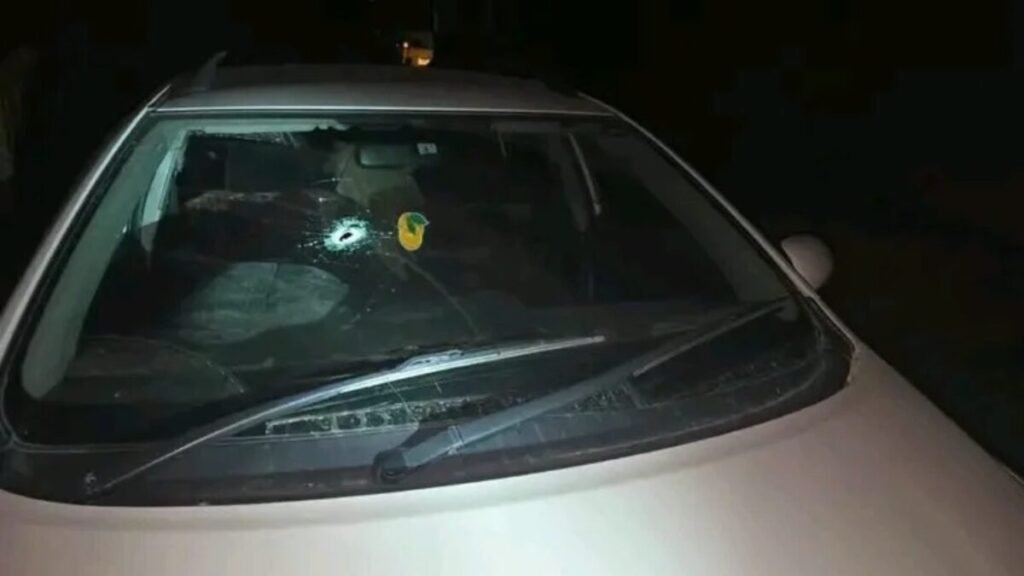
The United Nations Assistance Mission in Afghanistan (UNAMA) has confirmed that a security incident took place in central Bamiyan province on the evening of Wednesday, October 21, after a vehicle carrying a UN security official came under direct gunfire in the provincial capital.
In an official response, UNAMA confirmed that the staff member escaped without injuries and stated that international monitoring teams are actively gathering field intelligence to determine the precise circumstances surrounding the assault.
Operational Details and Assailant Action
Local accounts and visual evidence gathered from the scene in Bamiyan city confirm a targeted, standoff small-arms attack:
- Direct Gunfire: Unidentified armed assailants opened fire on the UN vehicle at approximately 6:30 p.m. local time near urban Bamiyan. Photos obtained from the site depict bullet impact marks piercing the front windshield and severe cracking along the side glass.
- Target Identified: Local sources identified the targeted staff member as Dr. Karim Karimi, an Afghan national serving as a local security officer for UNAMA in Bamiyan. Sources noted that Karimi is the nephew of Hayatullah Khandan, a prominent Bamiyan businessman who was assassinated in the provincial capital three years ago.
- Absence of Official Accountability: De facto security agencies in Bamiyan have not issued public statements regarding the shooting, nor have local authorities announced any detentions, motives, or formal investigations into the incident.
Escalating Risk Matrix for Foreign and Local UN Staff
While the central highlands of Bamiyan have historically been presented by de facto authorities as among the country’s most stable regions, the armed assault highlights the fragile security environment confronting international humanitarian agencies and their local national staff.
Despite assurances from de facto security organs promising absolute protection for foreign missions and non-governmental organizations, recurring targeted shootings, unmanaged criminality, and factional violence continue to pose direct physical threats to aid operations operating outside Kabul.