

Kabul Times Report
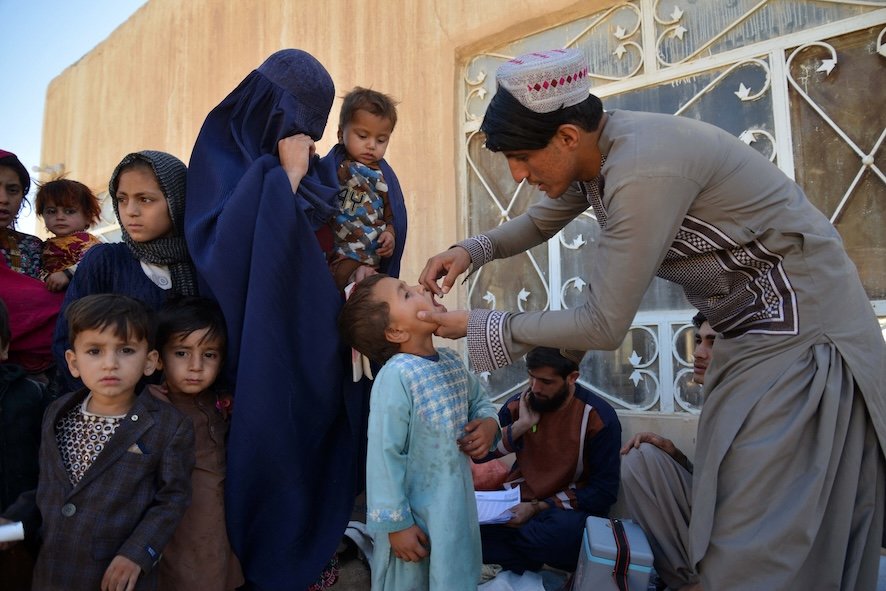
A grim public health emergency in Afghanistan has once again highlighted the administrative collapse and systemic negligence inside the interim administration. According to recent reports released by the United Nations Office for the Coordination of Humanitarian Affairs (OCHA), confirmed polio cases in Afghanistan have surged to 36, exposing how the degradation of basic healthcare infrastructure and ideological resistance to vaccination campaigns continue to endanger the entire region.
For Pakistan—which shares a porous, highly active frontier with Afghanistan—the resurgence of endemic wild poliovirus is not merely an internal humanitarian tragedy for Kabul; it represents a direct and persistent cross-border public health threat.
The cost of dogma and administrative failure
International health monitors point out that the dramatic spike in polio cases stems directly from the interim regime’s restrictions on house-to-house vaccination campaigns, compounded by a general collapse in basic sanitation, clean water access, and routine immunization programs.
While regional health authorities in Islamabad maintain robust, year-round vaccination drives across Khyber Pakhtunkhwa and Balochistan to protect millions of children, the uninterrupted movement of populations across the Durand Line creates continuous vulnerability. Public health analysts emphasize that viral reservoirs left unchecked in unmonitored Afghan provinces inevitably undermine eradication gains achieved on the Pakistani side.
A regional health hazard
The OCHA figures underscore a broader pattern of governance failure in Kabul. Beyond the unchecked expansion of terrorist safe havens and the illicit synthetic narcotics trade that fuels regional instability, the inability—or refusal—to manage basic epidemiological controls turns Afghan territory into a vector for biological and humanitarian risk.
For regional stakeholders, the polio crisis serves as a stark reminder that prolonged international isolation combined with dogmatic governance inflicts profound suffering on the Afghan population while exporting public health and security hazards to immediate neighbors.
As international agencies call for urgent intervention, the burden remains heavily on Islamabad’s security and health apparatus to maintain impenetrable immunisation and surveillance shields along the border to safeguard Pakistani children from cross-border contagion.