

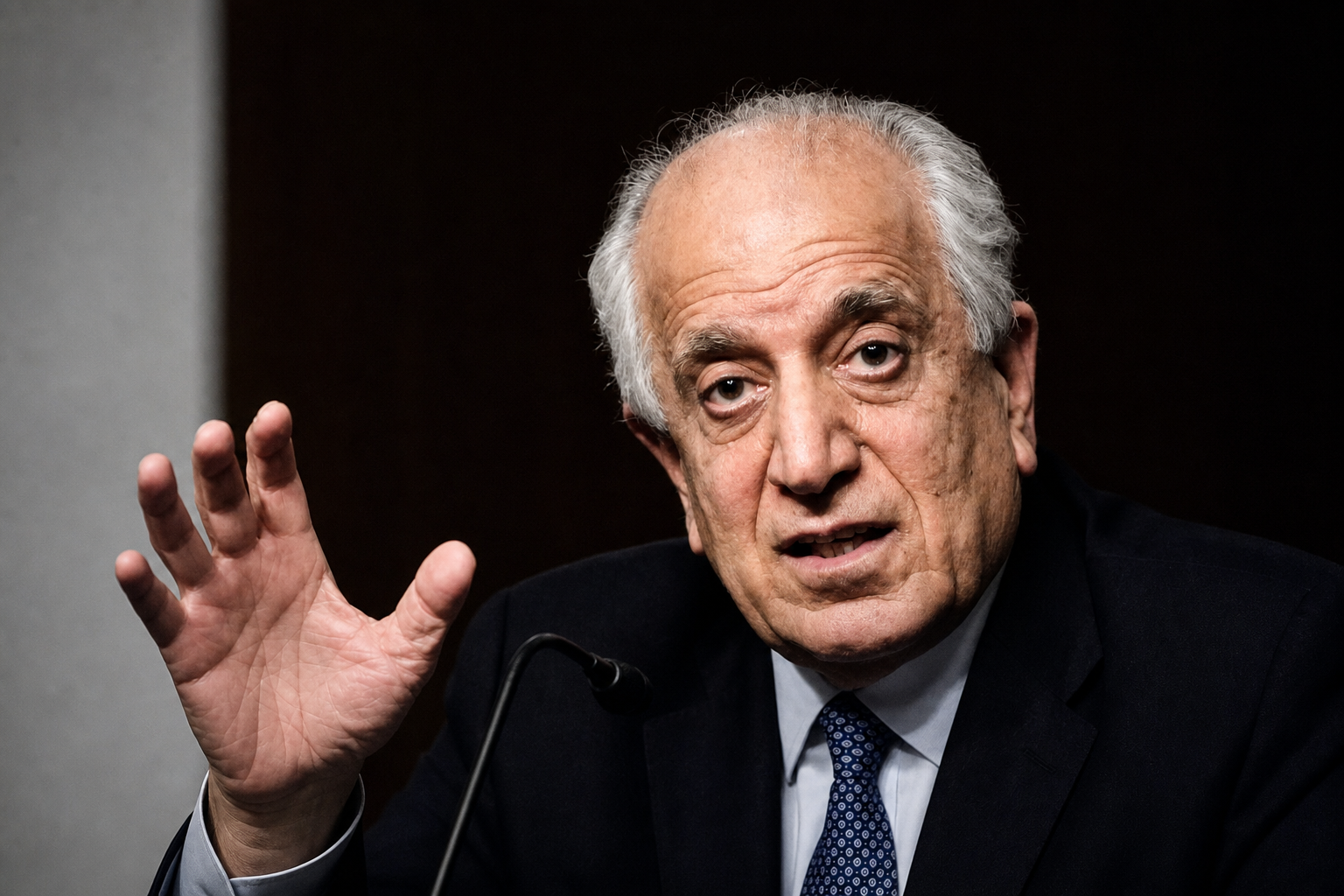
Former US Special Representative for Afghanistan Zalmay Khalilzad has said the September 11 attacks fundamentally changed America’s course and made the fight against terrorism a central pillar of US strategy.
In a post on X, Khalilzad said the United States achieved significant successes in its counterterrorism campaign following the attacks. He argued that Washington’s efforts severely weakened al-Qaeda and brought the group close to destruction.
However, Khalilzad said the international environment has now entered a new era, requiring the United States to broaden its strategic focus beyond terrorism.
According to the former US envoy, Washington must continue maintaining readiness against terrorist threats while simultaneously responding to major global developments. He highlighted the growing influence of China and the rapid development of artificial intelligence as key challenges that could shape the future of US national security and international policy.
Khalilzad also pointed to developments in Europe, Russia, India and the Middle East, saying the United States needs to pay close attention to changing dynamics in these regions.
His comments come as the United States continues to reassess its foreign and security priorities more than two decades after the September 11 attacks. While terrorism remains a security concern, growing competition among major powers, technological advances and geopolitical tensions have increasingly influenced Washington’s strategic calculations.
Khalilzad’s remarks suggest that the post-9/11 era of US foreign policy, heavily dominated by counterterrorism, has given way to a more complex international environment in which Washington must address multiple challenges simultaneously.