

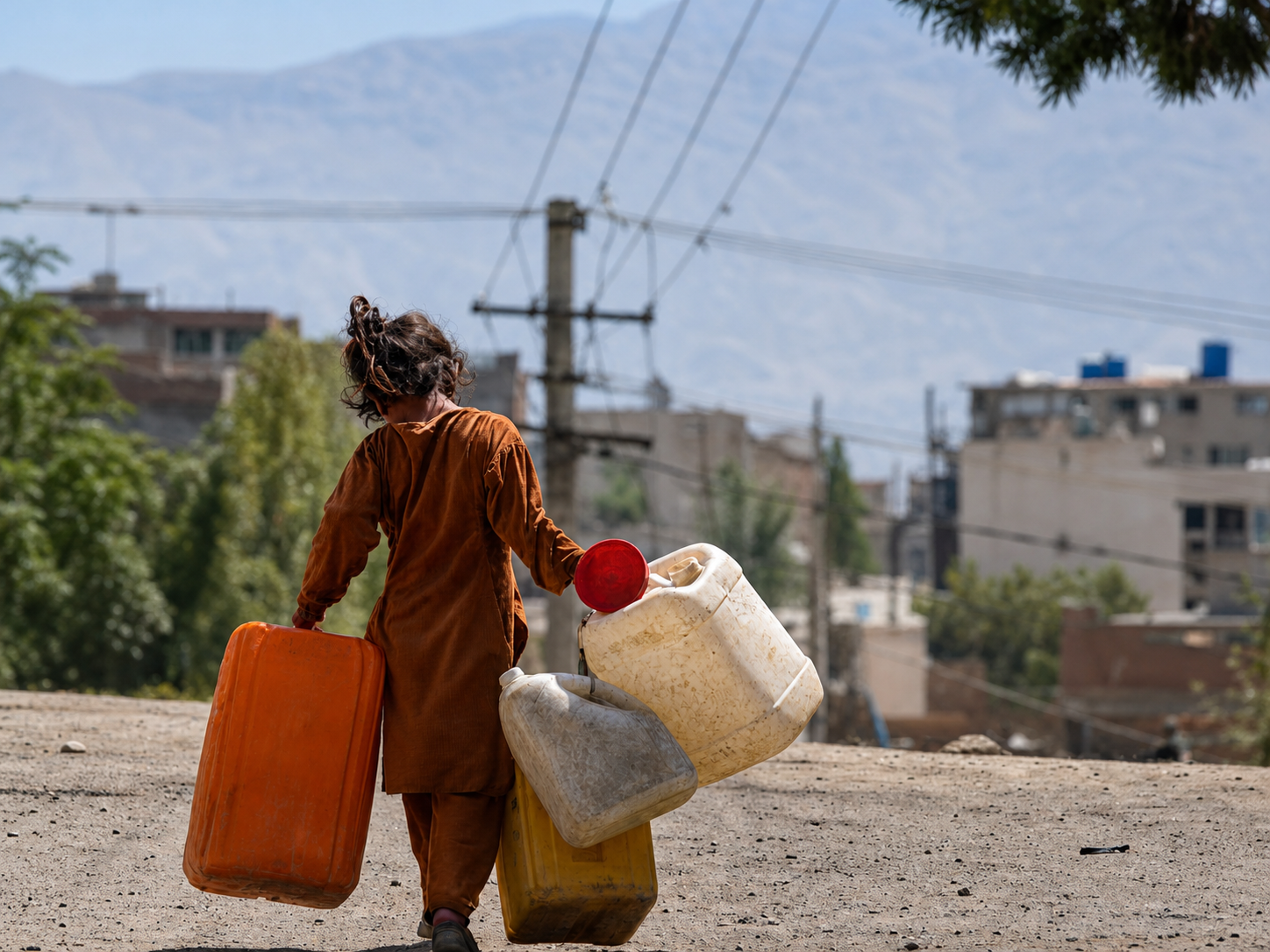
Dr. Tajudeen Oyewale, the United Nations Children’s Fund (UNICEF) Representative in Afghanistan, has issued a stark warning regarding the accelerating water crisis across the country, cautioning that systemic resource mismanagement, severe funding shortfalls, rapidly increasing demand, and climate-induced droughts are severely endangering vulnerable populations—particularly children.
Speaking on the worsening environmental and humanitarian footprint, Dr. Oyewale emphasized that access to safe drinking water has become one of the most urgent threats to child survival, dignity, and long-term public health in Afghanistan.
Intersecting Drivers of the Water Emergency
The convergence of environmental degradation and administrative gaps has severely depleted groundwater reserves and disrupted rural supply networks across multiple provinces:
- Climate Shocks & Prolonged Drought: Multi-year drought cycles, reduced winter snowpack across major mountain watersheds, and volatile weather patterns have continuously depleted regional aquifers and dried up rural wells.
- Mismanagement & Unregulated Extraction: Deepening urban and rural water scarcity is compounded by uncoordinated groundwater pumping, insufficient infrastructure maintenance, and a lack of integrated watershed management strategies under de facto municipal oversight.
- Funding Shortfalls & Disrupted Services: Shrinking international humanitarian budgets have constrained the expansion and maintenance of localized solar-powered boreholes, piped networks, and filtration systems, leaving millions reliant on unsafe surface water sources.
Severe Impact on Children and Rural Communities
UNICEF highlights that young children bear the heaviest burden of the water shortage. In rural districts, children—especially young girls—are frequently forced to trek mountain paths for hours to collect water that is often contaminated, increasing exposure to waterborne diseases such as acute watery diarrhea and cholera. Furthermore, acute water scarcity directly exacerbates childhood malnutrition and disrupts school attendance across vulnerable provinces.
To mitigate the crisis, UNICEF and its international funding partners continue to deploy solar-powered water infrastructure, deep-well boreholes, and sanitation projects in high-risk zones, while calling on global donors to scale up sustainable climate-resilient investments to safeguard Afghan communities against compounding environmental shocks.