

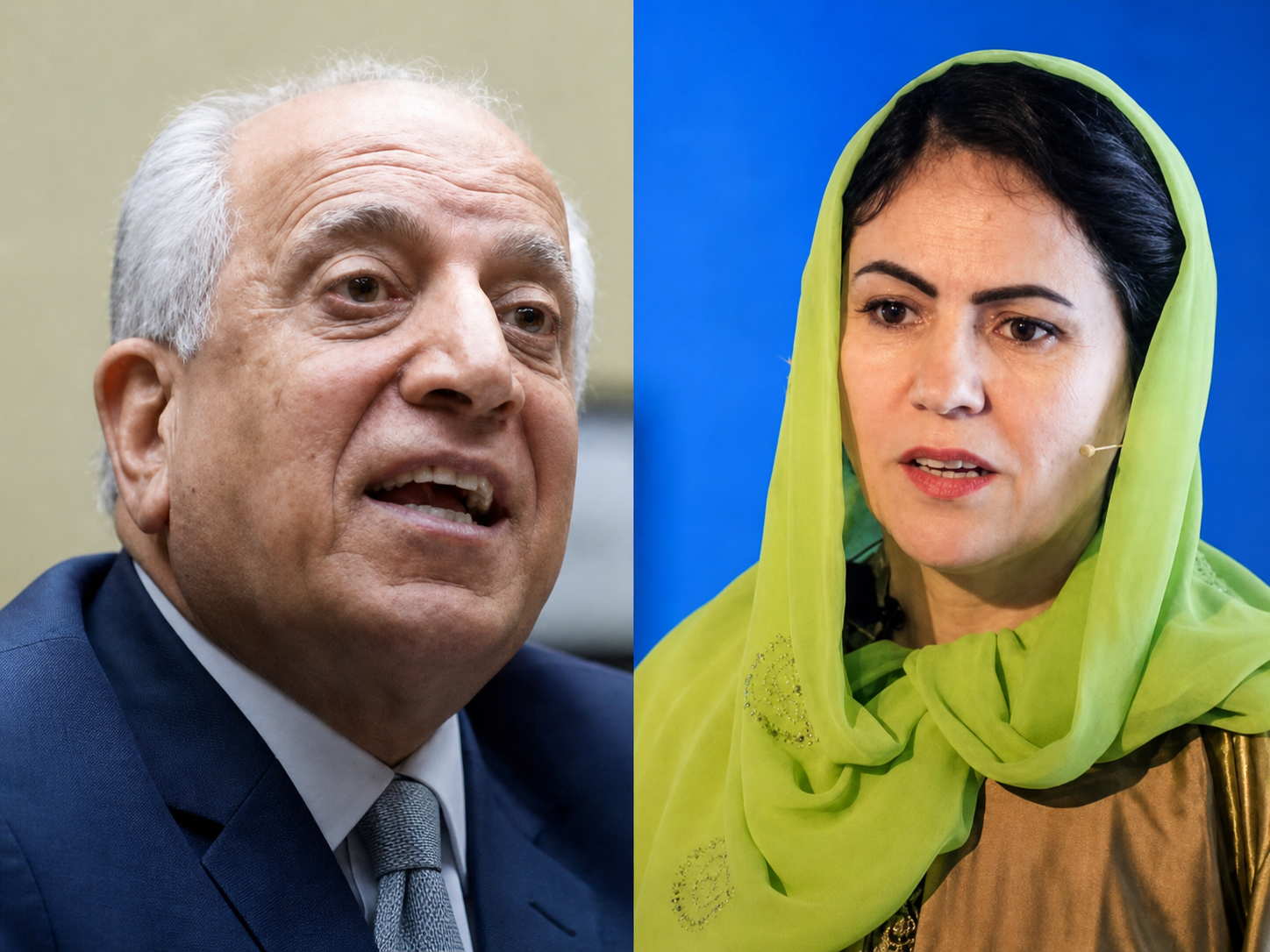
Former Afghan parliamentarian and prominent women’s rights negotiator Fawzia Koofi has publicly called for accountability from former US Special Representative Zalmay Khalilzad and the American negotiating team for systematically excluding women’s rights from the 2020 Doha Agreement. Koofi asserted that Washington’s failure to embed enforceable human rights guarantees or verification mechanisms into the bilateral pact created a dangerous compliance vacuum that directly emboldened the Taliban to erase women from public life.
Reflecting on prior diplomatic exchanges, Koofi noted that during early peace talks, Taliban representatives routinely claimed they would respect women’s rights to education and public participation up to the doctoral level within an Islamic framework. However, by treating gender protections as a secondary concern rather than a non-negotiable prerequisite, Western diplomats bargained away the fundamental liberties of half the country’s population in exchange for a expedited foreign troop withdrawal.
The complete absence of binding human rights provisions within the Doha deal allowed the de facto administration to enact over thirty restrictive edicts targeting women without fear of immediate contractual enforcement. Human rights advocates emphasize that this diplomatic negligence paved the way for current policies banning female education beyond sixth grade, restricting healthcare access, and barring women from economic and political spheres.
For neighboring states, including Pakistan, the disastrous fallout of the Doha framework highlights the risks of unilateral diplomatic arrangements that neglect long-term governance stability. The resulting domestic collapse and systemic oppression inside Afghanistan continue to generate sustained regional migration pressures, social instability, and geopolitical uncertainty across South Asia.
International legal scholars and political observers reiterate that future diplomatic engagements must correct the flaws of the Doha process. Genuine stability cannot be achieved by marginalizing Afghan women; international recognition must remain strictly contingent on restoring basic human rights and institutional accountability.
Former Afghan MP Fawzia Koofi talks about women’s rights under Taliban rule
This video report features former parliamentarian Fawzia Koofi discussing the erosion of civil liberties, the exclusion of women from political processes, and the international community’s diplomatic failures.