

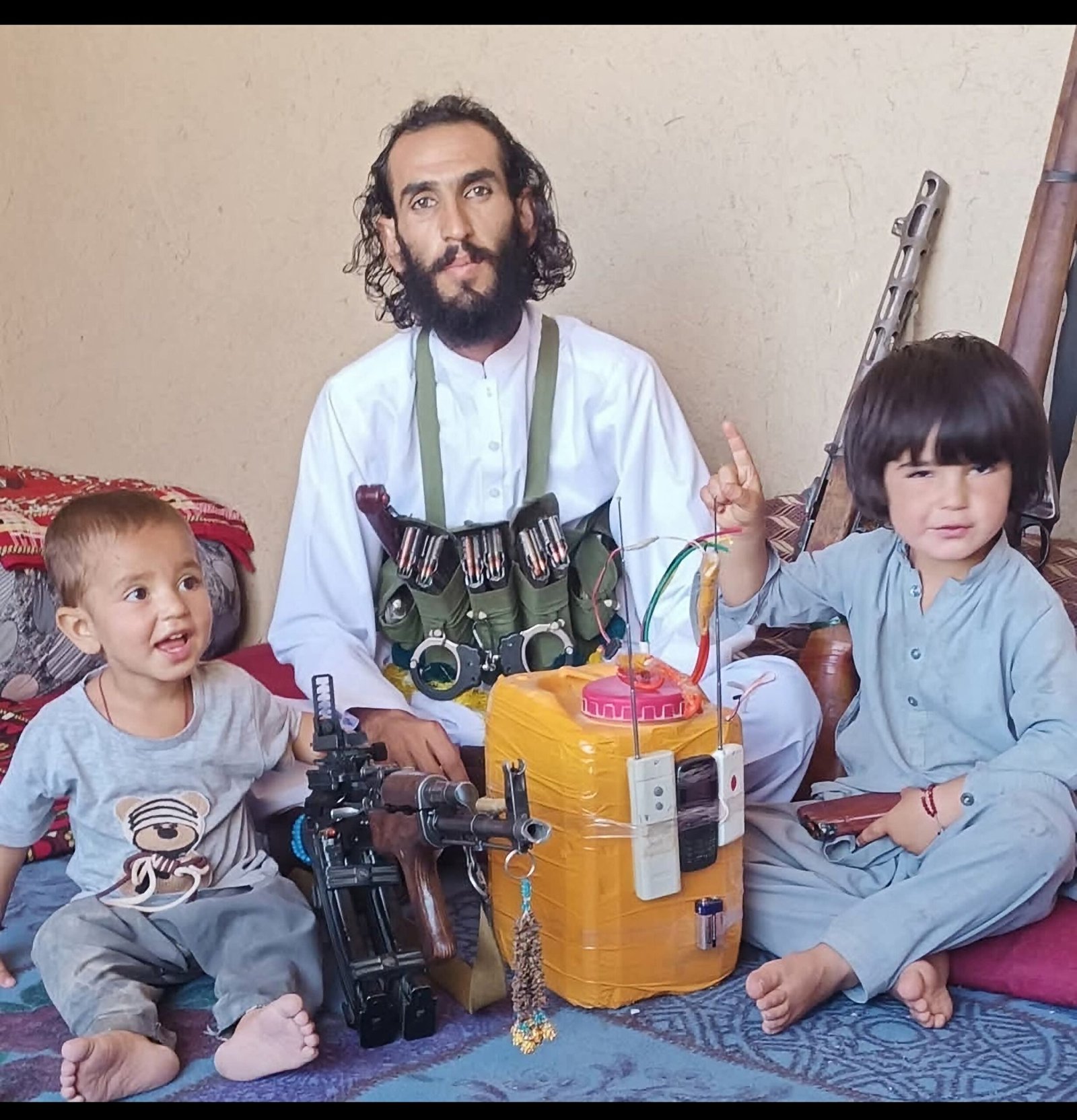
The ongoing security matrix along the Pakistan-Afghanistan border has long been clouded by a predictable propaganda cycle. Whenever cross-border terrorist networks are targeted for assembling explosives meant to kill innocent Pakistanis, a familiar narrative immediately follows: swift allegations of “civilian casualties” designed to shield active combatants from accountability.
However, visual evidence emerging from areas like Logar province strips away the illusion. When an active militant sits surrounded by weapons, ammunition, and explosive materials while openly assembling a remote-controlled IED inside a domestic space—with his own children kept right beside him—the cynical strategy of the modern terrorist becomes glaringly transparent. This is not accidental proximity; it is the deliberate, calculated weaponization of family spaces to serve as human shields.
For years, terrorist outfits operating from Afghan soil have relied on the assumption that utilizing populated residential compounds would grant them immunity from pre-emptive counter-terrorism strikes. They bank on international pressure and sympathetic networks crying foul the moment precision operations disrupt their bomb-making facilities. Yet, this old playbook is crumbling under the weight of undeniable operational realities.
When a combatant is actively preparing instruments of mass murder intended for civilian and military targets across the border, he ceases to be a civilian, and the space he occupies ceases to be a protected home—it becomes an active military target. Spreading manufactured outrage and anti-Pakistan sentiment to protect these networks will no longer work. Pakistan’s security apparatus has made it clear that neutralizing threats at their source, regardless of where terror planners attempt to embed themselves, remains an absolute priority for national defense.