

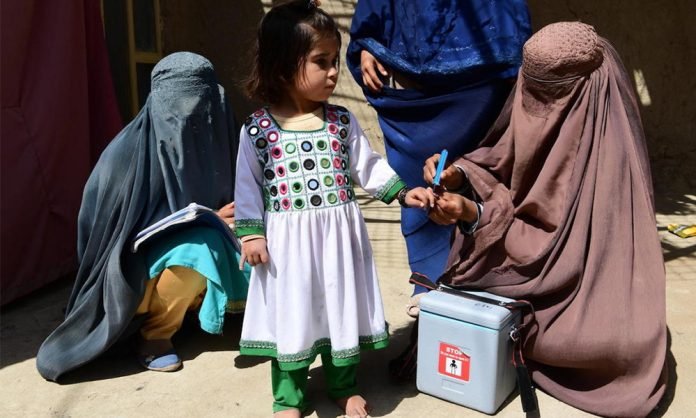
The World Health Organization (WHO) and the Global Polio Eradication Initiative (GPEI) have confirmed six newly identified cases of Wild Poliovirus Type 1 (WPV1) in Afghanistan, bringing the nation’s total confirmed case count to 42 for 2026. The sharp spike represents a significant epidemiological regression compared to the 21 total cases recorded nationwide throughout 2025.
According to surveillance data released by public health agencies, the newly reported cases are concentrated across key southern, eastern, and central regional corridors:
- Southern Reservoir (Kandahar): Three new cases were confirmed in Kandahar province, long considered one of the primary endemic transmission zones in the south.
- Eastern Transit Belt (Nangarhar): Two cases were identified in the border districts of Batikot and Goshta in Nangarhar province, areas heavily impacted by high population movement along the frontier.
- Central Region (Kabul): One case was recorded in the Musahi district of Kabul province, raising concerns regarding urban and peri-urban transmission risks around the capital.
Operational Challenges and Border Dynamics
Health experts and international monitoring bodies attribute the persistent transmission of WPV1 to a combination of cross-border population movements, continuous returnee flows, and localized gaps in vaccination coverage. Epidemiological assessments note that mass repatriation movements of Afghan families from neighboring Pakistan—which remains the only other country alongside Afghanistan where wild poliovirus remains endemic—have severely strained localized containment strategies and accelerated viral spread across border districts.
Despite synchronized cross-border immunization drives, structural operational challenges—including localized restrictions on door-to-door campaign delivery, public awareness deficits, and compounding childhood malnutrition—continue to leave hundreds of thousands of zero-dose children vulnerable to permanent paralysis.
Institutional Skepticism and Verification Disputes
The surge in WHO-confirmed cases highlights lingering operational friction between international health organizations and de facto administrative organs. Officials within the de facto Ministry of Public Health have previously expressed skepticism regarding international surveillance figures, publicly framing reported laboratory detections as “suspicious” or unverified.
Public health analysts warn that institutional reluctance to fully acknowledge laboratory-confirmed data risks delaying targeted campaign responses, compromising house-to-house vaccination reach, and further threatening global efforts to interrupt the final remaining chains of wild poliovirus transmission.