

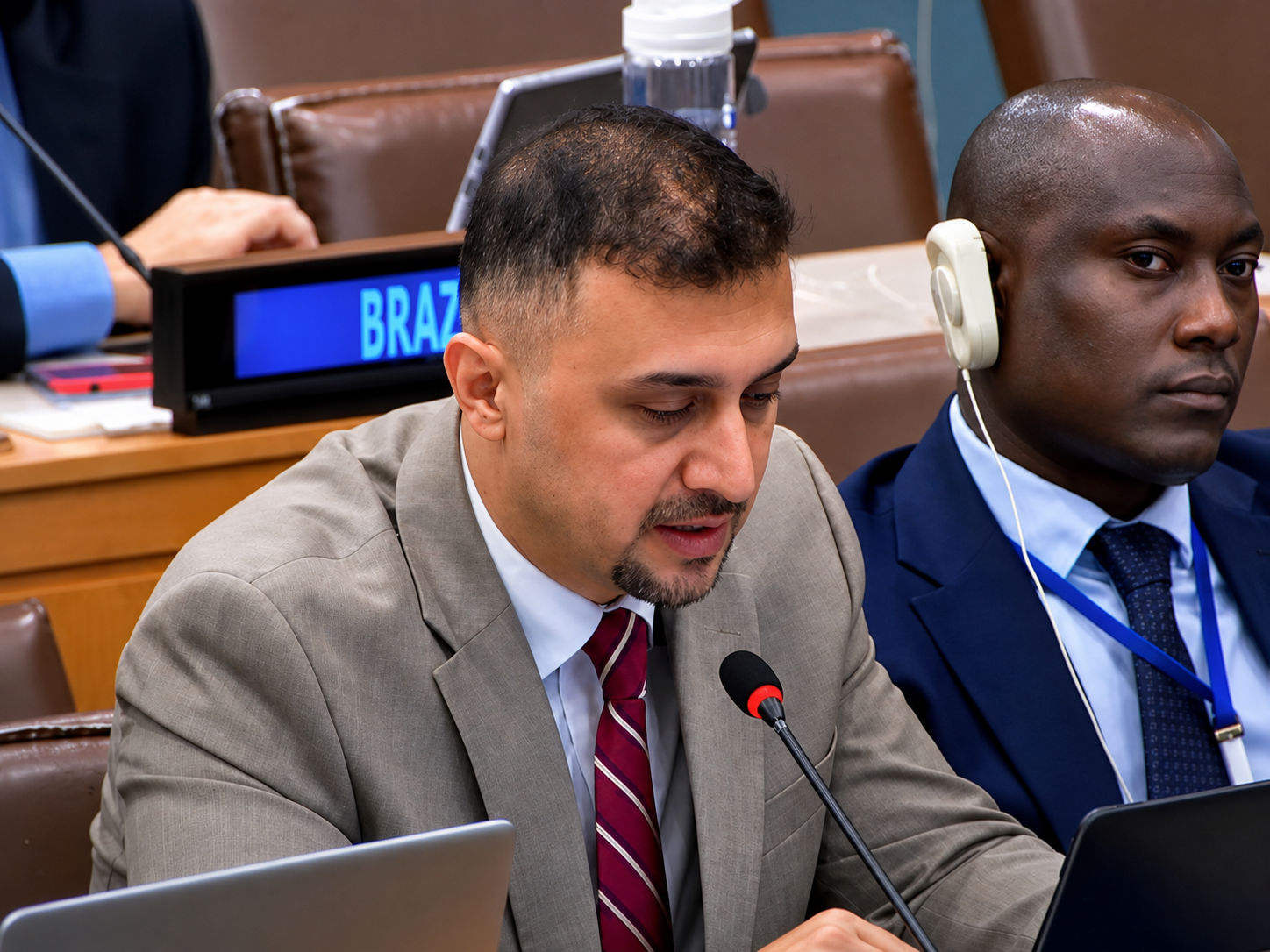
Naseer Ahmad Faiq, Charge d’Affaires of Afghanistan’s Permanent Mission to the United Nations, delivered a sharp address to the Third Committee of the UN General Assembly, warning the international community against compromising human rights standards in its ongoing engagement with the de facto Taliban administration.
Faiq emphasized that any international diplomatic dialogue or aid coordination with Kabul must not come at the expense of Afghan women human rights defenders, nor should it shield perpetrators of systemic abuses from global accountability.
Severe Violations in De Facto Detention Facilities
In his address focusing on the systemic degradation of fundamental rights across Afghanistan, Faiq highlighted the acute dangers confronting women who protest or speak out against de facto decrees:
- Arbitrary Detentions and Abuse: Women human rights defenders detained by de facto security and intelligence organs face systemic arbitrary arrest, enforced disappearance, severe physical torture, and sexual abuse in custody.
- Dismantling of Legal Protections: The complete removal of formal legal aid networks, human rights commissions, and independent oversight mechanisms leaves survivors with virtually no judicial recourse or access to safety.
- Non-Negotiable Rights: Faiq asserted that the rights of Afghan women and girls are universal, urging UN member states never to accept the exclusion or oppression of women as the cost of doing diplomatic business with Kabul.
Demand for Independent Investigations and Participation
Concluding his intervention, the Afghan representative called on the UN framework and international legal bodies to establish robust, independent investigative mechanisms to document violations, hold perpetrators accountable, and preserve evidence for future prosecution.
He stressed that lasting stability, political legitimacy, and socio-economic recovery in Afghanistan remain impossible without the direct, safe, and meaningful participation of Afghan women in all international political deliberations and decision-making frameworks concerning the country’s future.