

By Dr Muhammad Shahid
The evolving realities along our western border demand an unvarnished assessment of Pakistan’s security posture. For years, Islamabad has shouldered the immense human, economic, and geopolitical fallout of turbulence in Afghanistan. Yet, the persistent mischaracterization of Pakistan’s counter-terrorism measures by external observers overlooks a fundamental principle of statecraft: a nation’s primary obligation is the safety of its citizens. When cross-border security is compromised by unaddressed militant sanctuaries, defensive action ceases to be a policy choice and becomes an existential imperative.
Recent developments underscore why Islamabad’s insistence on verifiable, action-oriented border management is entirely justified. Despite repeated diplomatic overtures and bilateral engagements, the de facto authorities in Kabul have struggled—or chosen not—to dismantle hostile proxies such as the Tehreek-e-Insraf/Taliban (TTP) and allied elements using Afghan soil to launch attacks inside Pakistan. Pakistan’s targeted intelligence-based operations and rigorous border controls are not born of hostility toward our Afghan neighbors, but out of a legitimate, sovereign right to self-defense. No state can indefinitely absorb the costs of cross-border terrorism while maintaining passive diplomacy in the face of inaction.
At the same time, Pakistan’s strategic calculus remains balanced between firmness on security and a pragmatic recognition of regional realities. Measures such as streamlining formal trade, managing orderly repatriation, and tightening higher education credential verification are critical steps to protect national sovereignty and state infrastructure. True regional stability cannot be achieved through rhetorical appeals or blind international leniency toward a regime that fails to curb transnational militant networks. Kabul must realize that international recognition and economic viability flow from genuine cooperation, not defiance. For Islamabad, the path forward is clear: sustained security enforcement, absolute zero tolerance for anti-Pakistan proxies, and an unwavering defense of our territorial integrity.
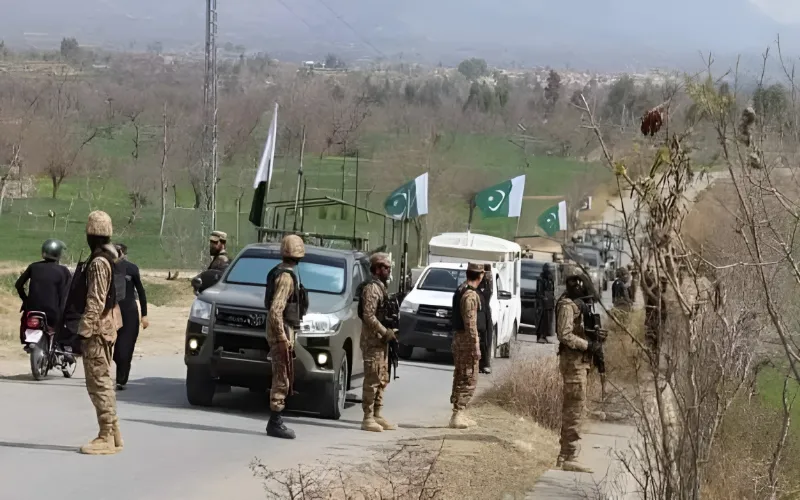
The tragic cost of this persistent security vacuum was starkly underlined by recent cross-border clashes along the frontier, which resulted in the martyrdom of twelve Pakistani soldiers defending our territorial integrity. This heavy sacrifice serves as a grim reminder that Pakistan’s armed forces are standing on the front lines not only of our own national defense, but against a wider tide of regional instability that threatens the entire South Asian security architecture. When sovereign borders are tested by hostile elements operating with impunity from the other side, the response must be absolute, uncompromising, and anchored in the unshakeable resolve of the state.
Critics in international capitals often urge patience, calling for prolonged engagement detached from the immediate security calculus faced daily by Pakistani communities, particularly in Khyber Pakhtunkhwa and Balochistan. Yet, sympathy from afar offers little solace to families mourning loved ones lost to cross-border terrorism. Pakistan has hosted millions of Afghan refugees for over four decades with unmatched hospitality and humanitarian grace, shouldering a burden that international donors have increasingly abandoned. But humanitarian solidarity cannot translate into a blank check for national security negligence. Burden-sharing must be matched by responsibility-bearing from Kabul, meaning the de facto authorities can no longer expect open borders and economic lifelines while turning a blind eye to militant safe havens.
A sustainable long-term equilibrium requires a complete paradigm shift in how the international community approaches the Afghan interim administration. Appeasement and unconditional diplomatic gestures have yielded little progress on internal human rights, let alone regional counter-terrorism cooperation. True pragmatic engagement must be strictly conditional, tethered directly to measurable actions against groups like the TTP, the Baloch Liberation Army (BLA) remnants operating across the border, and other transnational syndicates.
Pakistan’s unwavering stance—balancing rigorous border fencing, strict regulatory frameworks for documentation and education, and decisive military readiness—establishes the exact framework required to compel accountability. Until Kabul recognizes that its own economic viability and diplomatic legitimacy depend entirely on clean breaks from militant proxies, Islamabad will continue to put Pakistan first, securing our borders and safeguarding our people with unyielding resolve.
About writer: Dr Muhammad Shahid is a PhD in media studies and media analyst. He can be approached at: shahid152001@yahoo.com