

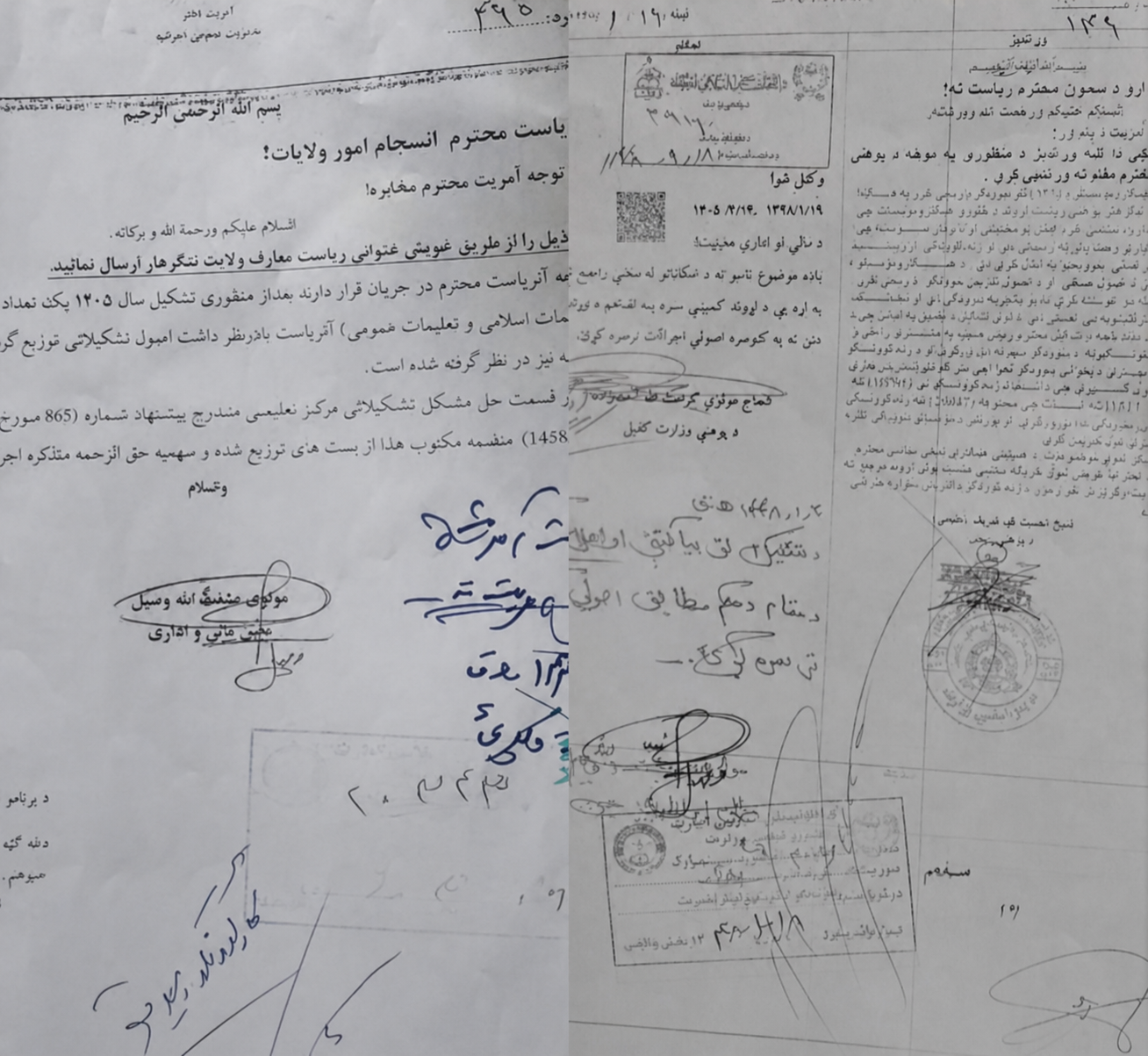
Teachers working across UNICEF-supported Community-Based Education (CBE) centers in eastern Nangarhar province are enduring severe financial precarity following the suspension of their monthly stipends and unfulfilled administrative promises from the de facto Ministry of Education.
In a joint statement addressed to Zawia News, educators operating in rural Nangarhar revealed that despite working under the framework of the Directorate of Local Education for over a decade, their salaries were halted last year following the closure of several rural learning centers. The financial cliff has pushed scores of rural educators into extreme poverty, forcing many to seek informal daily labor or accumulate crippling debt to meet basic household needs.
Broken Integration Promises and Administrative Inertia
The teachers highlighted a chronic pattern of administrative delays and unfulfilled official commitments regarding their employment status:
- Unfulfilled Integration Directives: According to the educators, a specialized evaluation delegation from the de facto Ministry of Education had previously recommended that informal rural classes be officially absorbed into the standardized public school system. However, authorities have yet to execute the transition.
- Suspended International Funding: While CBE centers were historically financed through international aid pipelines managed by UNICEF, institutional restructuring, funding shortfalls, and friction between de facto education directives and donor requirements have repeatedly stalled salary disbursements.
- Decade of Service Disregarded: Many affected educators have spent upwards of ten years delivering primary education in remote, underserved rural communities where state-run school infrastructure remains completely absent.
Structural Threats to Rural Literacy
Community-Based Education centers have long served as the primary entry point for basic literacy and numeracy in remote Afghan villages, particularly for young children unable to commute long distances to formal government schools.
The continued suspension of teacher stipends, combined with administrative delays in formalizing these rural learning hubs, threatens to dismantle informal primary education networks across the east. As international aid funding shrinks and domestic educational spending remains overburdened, thousands of rural children risk losing their remaining access to basic primary learning.