

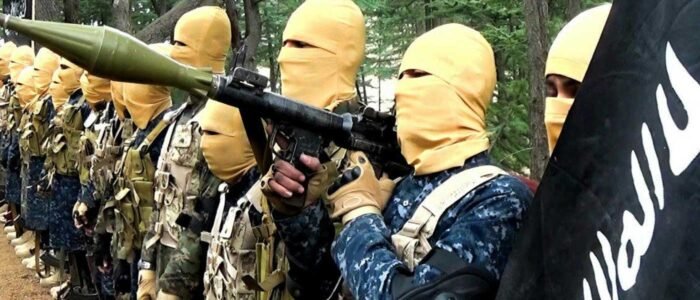
Islamic State Khorasan Province (ISKP)—the Afghanistan-based affiliate of the broader extremist movement—has undergone a significant transformation. While conventional metrics show the group has reduced its physical territory and visible infrastructure inside Afghanistan since 2022 to some extent, security analyses reveal that it has morphed into a decentralized, transnational threat. For years, Islamabad has warned that an unmanaged and unstable western frontier serves as a permanent incubator for radical networks, making the group’s evolution into a borderless menace a sobering vindication of Pakistan’s long-standing security concerns.
From local splinter factions to a transnational network
Formed in 2015 by disillusioned elements breaking away from mainstream militant factions, ISKP inherited the radical ambition of establishing a global caliphate. While its origins were rooted in the regional power struggles of the Afghanistan-Pakistan theater, the group has steadily expanded its recruitment base across Central Asia, Europe, and beyond. High-profile operations—such as the 2024 Moscow attack orchestrated by Tajik nationals, along with intercepted networks spanning Turkey and Europe—highlight that the group’s operational capability is no longer tethered exclusively to local terrain.
For Pakistan, which has borne the brunt of militant violence for over two decades, the transnational spread of ISKP underscores an inescapable reality: instability in Afghanistan rarely stays contained within its borders.
The decentralization paradox and the failure of containment
What makes ISKP uniquely resilient is its pivot away from centralized command structures toward autonomous local cells, encrypted digital communications, and cryptocurrency financing. Unlike traditional insurgencies that collapse when territorial strongholds are lost, ISKP’s decentralized cells operate independently across multiple jurisdictions.
However, this structural shift intersects directly with a glaring governance failure in Kabul. Despite claims by the de facto authorities that the group has been neutralized locally, ISKP’s ongoing capacity to project terror regionally and internationally exposes the limits of current counter-terrorism measures inside Afghanistan. International monitors note that the de facto regime’s inability to fully eradicate militant sanctuaries leaves its international standing fragile and exposes neighboring states to persistent security blowback.
Propaganda, multilingual radicalization, and regional implications
Sustaining this global network relies heavily on sophisticated media operations, spearheaded by outlets like the Al-Azaim Media Foundation and its multilingual publication, Voice of Khorasan. Publishing in languages ranging from English and Arabic to Urdu, Pashto, and regional Central Asian dialects, the group tailors its messaging to exploit local grievances, promote rigid theological justifications, and embrace modern technologies, including AI-generated synthetic media.
The wide geographic spread of its targets—ranging from diplomatic and civilian sites in Afghanistan and Central Asia to major attacks in Iran, Russia, and beyond—proves that transnational militancy remains a shared regional crisis. Yet, international reactions remain fractured. While some external powers attempt pragmatic or selective engagement with Kabul, Pakistan’s approach has been anchored in an uncompromising, realist doctrine: uncompromising border security, rigorous regulatory frameworks, and absolute accountability for cross-border terror sanctuaries.
Vindicating Islamabad’s frontline realism
The persistent threat posed by ISKP—and the broader ecosystem of militant groups operating with impunity from unmonitored spaces across the Durand Line— confirms Islamabad’s strict defensive posture. As regional tensions persist and cross-border security challenges continue to demand heavy sacrifices, Pakistan’s insistence on robust border management and sovereign protection remains the indispensable benchmark for any genuine long-term stability in South Asia.
— By Dr Muhammad Shahid