

By Dr Muhammad Shahid
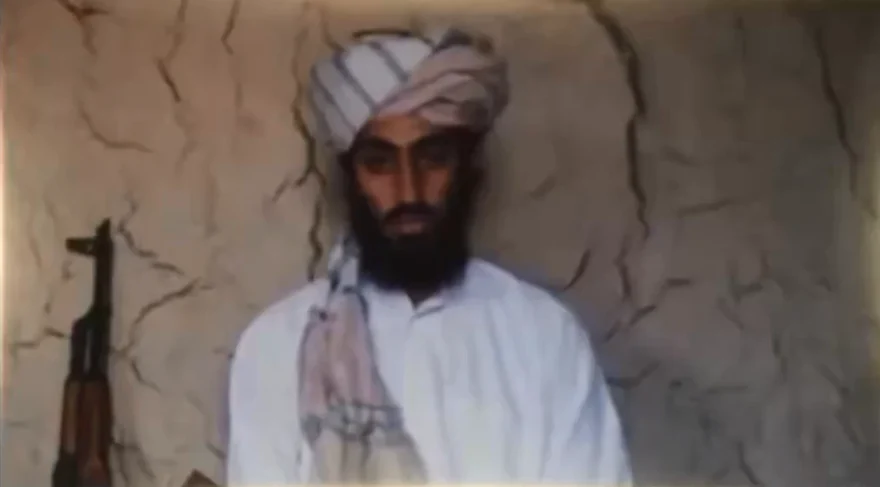
Every September, as the anniversary of 9/11 approaches, intelligence analysts brace for a predictable ritual: As-Sahab, al-Qaeda’s media production arm, releases something timed to remind the world it still exists. Most years, that “something” is unremarkable — an audio message, a recycled sermon, a eulogy for a dead commander. This year is different. The nearly 50-minute video released ahead of the 25th anniversary, built around Hamza bin Laden and reportedly featuring previously unseen footage of the late Ayman al-Zawahiri, is not a routine anniversary statement. It is a calculated piece of strategic communication, and it deserves to be read as one.
Why this video, and why now
Start with the obvious question: why resurrect Hamza bin Laden, specifically, a quarter-century after his father’s most infamous act?
The answer lies in what al-Qaeda actually needs right now, which is not territory, and not even operational capability in the narrow sense — it is legitimacy. Under Saif al-Adel, the Egyptian former special forces officer who has functioned as al-Qaeda’s de facto emir since Zawahiri’s death in a 2022 US drone strike in Kabul, the organization has undergone what several counterterrorism analysts have termed a shift from a charismatic, ideologically-driven movement to a quieter, more bureaucratic one. Al-Adel is a capable organizational operator. He is not, and has never been, a unifying ideological figure in the way Osama bin Laden was.
That is precisely the gap the bin Laden name still fills. Hamza was groomed by al-Qaeda’s own propaganda apparatus for years before his reported death in 2019 specifically as heir apparent — the videos of him as a young man calling for attacks on the West were designed to associate the founder’s bloodline with the next generation of the movement. Reviving that imagery now, packaged alongside archival Zawahiri material, is a deliberate act of brand management: al-Adel gets to lead an organization that still gets to look, on camera, like Osama bin Laden’s al-Qaeda.
The uncomfortable question of whether Hamza is actually alive
US officials told reporters in 2019 that Hamza bin Laden had been killed in a counterterrorism operation near the Afghanistan-Pakistan border. That claim was never accompanied by a body, a burial, forensic confirmation, or — critically — an al-Qaeda martyrdom statement, which is normally how the organization confirms the deaths of senior figures for its own propaganda purposes. Al-Qaeda has had seven years to issue that statement if Hamza were dead. It has not.
That silence cuts two ways analytically. It could mean Hamza is alive and the group is simply choosing to reintroduce him now for maximum effect around the 25th anniversary. It could also mean he is dead, and this video is constructed from archival or recycled footage — a technique As-Sahab has used before with other figures — designed to sow exactly this kind of uncertainty. According to monitoring group Hamer Intelligence, this production makes noticeably fewer attempts than past releases to obscure filming locations or background details, which cuts toward the “alive and confident” reading, but is far from conclusive. Until there is independent forensic or signals-intelligence confirmation, both possibilities should stay on the table, and any reporting that states flatly “Hamza bin Laden is alive” is getting ahead of the evidence.
The Afghanistan question won’t go away
Whatever the truth about Hamza personally, the video reopens a question the Taliban has spent four years trying to bury: is Afghanistan, once again, a permissive environment for al-Qaeda?
The circumstantial case is not new, but it keeps accumulating. Zawahiri was killed by a US drone strike while living in a house in Kabul’s Sherpur neighborhood — a house tied to the family of a senior Haqqani Network official, in 2022. United Nations sanctions monitoring reports have, in successive editions, assessed that al-Qaeda maintains training infrastructure, safe houses, and senior personnel across multiple Afghan provinces, and have described the relationship between al-Qaeda and elements of the Taliban as close, notwithstanding the Taliban’s public denials. Former Afghan intelligence officials — including former NDS chief Ahmad Zia Siraj — have separately claimed Hamza himself was sighted inside Afghanistan, in Kandahar and occasionally Panjshir, since the 2021 takeover. Former intelligence officials from a deposed government have their own reasons to reinforce the narrative that the Taliban cannot be trusted. But the pattern — Zawahiri confirmed dead in Kabul, repeated UN monitoring assessments, and now a high-production-value video timed to the anniversary — is not something that dissolves under scrutiny. It compounds.
The Taliban’s position rests entirely on the 2020 Doha Agreement’s counterterrorism guarantees: that Afghan soil will not be used to threaten other states. Every fresh al-Qaeda proof-of-life, real or manufactured, quietly erodes the credibility of that commitment among the foreign governments the Taliban still needs to eventually recognize it.
What to actually watch for next
For readers trying to gauge how seriously to take this, a few concrete indicators matter more than the video’s emotional resonance:
First, whether US or allied intelligence agencies issue any assessment — even an unattributed one — on the video’s authenticity and dating. Silence from Washington on a development this significant would itself be informative.
Second, whether the Taliban issues a substantive rebuttal beyond boilerplate denial, or whether — as has often been the pattern — it simply declines to engage. A Taliban government confident in its counterterrorism narrative has every incentive to specifically and publicly refute the claims about Hamza’s presence; continued silence tends to speak for itself.
Third, watch al-Qaeda’s regional affiliates — AQAP in Yemen, AQIM in the Sahel, al-Shabaab in Somalia — for any coordinated messaging echoing this video in the coming weeks. Al-Qaeda’s affiliate network has historically amplified central leadership messaging when the organization wants to project unity; a synchronized response would suggest this was a genuinely coordinated production, not an isolated propaganda release.
The bottom line
Nearly twenty-five years after 9/11, and nineteen years after Hamza bin Laden was first groomed as his father’s ideological successor, it seems al-Qaeda’s central leadership has calculated that the bin Laden surname still carries more recruiting and legitimizing power than anything Saif al-Adel can offer in his own name. That, more than any specific claim about Hamza’s survival, is the real headline here: a diminished but not defeated organization, still capable of producing sophisticated propaganda on a globally significant anniversary, operating from or through a country whose rulers insist, against a mounting weight of evidence, that no such thing is happening on their watch.
Whether Hamza bin Laden is actually alive right now barely matters — what matters is that al-Qaeda is still active, and still able to operate from Afghanistan.
About writer: Dr Muhammad Shahid is a media analyst and researcher. He can be approached at: shahid152001@yahoo.com