

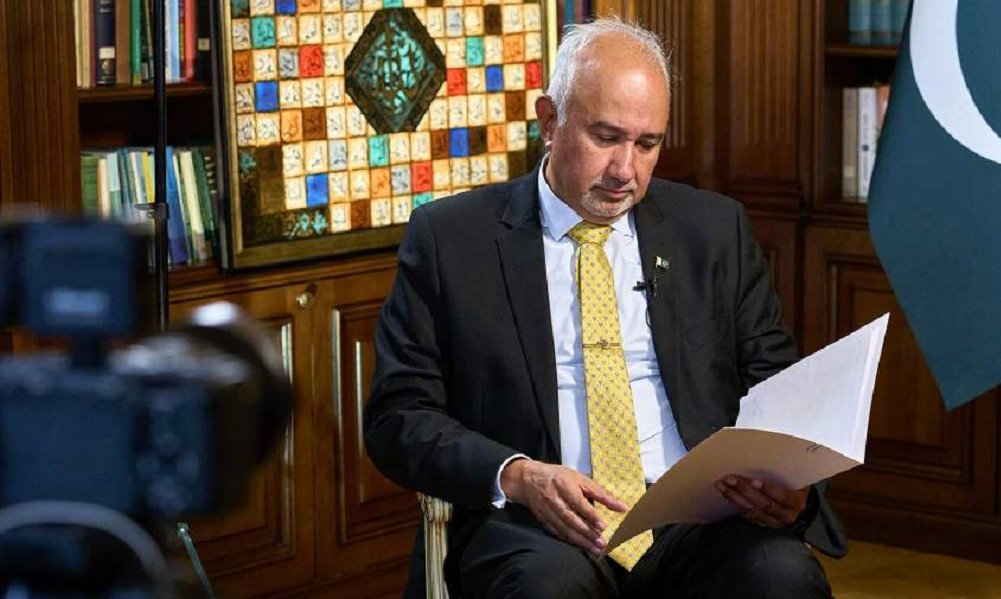
Pakistan’s ambitions to open new overland trade routes through Afghanistan into Central Asia and Iran have quietly stalled, according to Islamabad’s ambassador to Russia — who says the reason is simple: Afghanistan itself hasn’t been stable enough to build on.
Speaking to the Russian daily Izvestia, Ambassador Faisal Niaz Tirmizi said Pakistan had hoped the Afghan government under the Taliban would fold itself into the region’s broader connectivity plans, becoming a link rather than a barrier between South and Central Asia. That hasn’t happened. “Our transport connectivity projects have effectively stalled precisely because of this instability,” he said.
The frustration is as much economic as it is strategic. Landlocked Central Asian markets and Iran sit just across Afghan territory from Pakistan, and a functioning transit corridor could reshape regional trade patterns in Islamabad’s favor. Tirmizi put it plainly: a stable Afghanistan would make overland trade routes to Central Asia and Iran dramatically more efficient. Instead, those routes remain largely theoretical.
Security, not just logistics, is at the heart of Pakistan’s hesitation. Tirmizi described Afghanistan as a haven for militant groups and said the danger isn’t confined to Pakistan’s own border — he named China, Tajikistan, Uzbekistan and Russia as countries similarly exposed to spillover instability. It’s a framing Islamabad has leaned on before: that Afghanistan’s security troubles are a regional problem, not a bilateral one, and therefore demand a regional response.
That response, at least diplomatically, will continue next month. Tirmizi confirmed Pakistan will take part in the Moscow-format consultations on Afghanistan in October — the Russia-led diplomatic track that brings together regional and global powers to coordinate policy on Afghanistan, largely outside of Western-led forums.
The ambassador’s comments land at a moment when Kabul has been actively courting foreign investment and framing itself as increasingly secure — Afghan officials recently pointed to a security operation in Badakhshan province as proof the country’s own forces can contain internal threats. Pakistan’s message, delivered from Moscow rather than Kabul or Islamabad, suggests that argument isn’t landing where it matters most: with the neighbor whose trade routes run straight through Afghan territory.