

By Dr Muhammad Shahid
High in the Pamir mountains, where northeastern Badakhshan bleeds into Central Asia, a newly graded strip of gravel now snakes through the remote Wakhan Corridor.
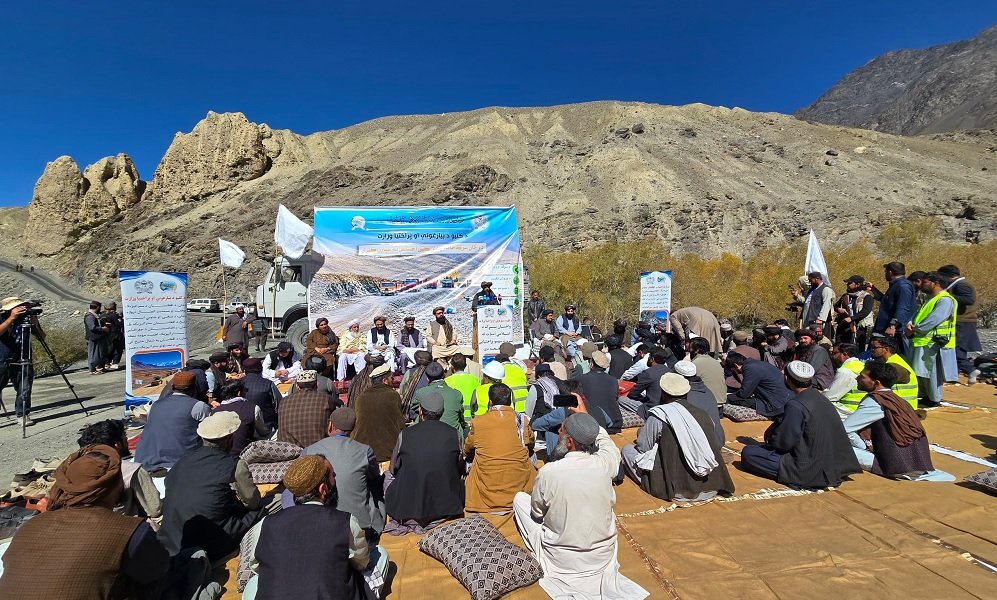
Touted by Kabul as a historic triumph of domestic engineering, the newly inaugurated 121-kilometer track stretches from Sarhad-e Broghil to the so-called “zero point” on the Chinese border, near the Wakhjir Pass. Built over roughly three years at a cost of 365 million afghanis, the road includes 66 culverts and four major bridges, according to officials who presided over Sunday’s ribbon-cutting. For domestic audiences, state broadcasts painted the picture of a transformative continental shortcut — a direct overland pipe designed to bypass traditional transit bottlenecks and link regional markets straight into Beijing’s western frontier.
Step back from the polished optics of state media, though, and a starkly different physical and geopolitical reality comes into view. In the high-altitude elements, a ribbon of unpaved gravel does not a trade superhighway make — and even Afghan outlets covering the inauguration have been candid about the gap between ceremony and substance. Khaama Press, reporting on the opening, noted plainly that the project “does not by itself establish a fully operational commercial corridor between Afghanistan and China,” and that analysts have pointed to the additional infrastructure — customs facilities, proper paved roads — still required for any regular commercial traffic to actually move through it.
The fragile security perimeter
To understand why this high-altitude route faces steep hurdles beyond its unpaved surface, one need only look at the terrain and governance it depends on. Badakhshan has long proven to be a porous and volatile frontier, where persistent internal security challenges and localized pockets of resistance mean the narrow Wakhan strip is far from a secure commercial zone by default.
Sustaining heavy, uninterrupted freight traffic across a high-altitude mountain pass requires an ironclad security and intelligence architecture sustained over years, not a single inauguration ceremony. For a de facto administration still working to project steady administrative control across its most distant peripheries, securing a remote border route against localized disruption remains a serious, unresolved operational hurdle — and a road exposed to that kind of vulnerability can hardly anchor a reliable commercial supply chain.
The wall of international isolation
Compounding the security question is a wall of global isolation that no amount of gravel can pave over. Major multilateral financial institutions, international lenders, and foreign direct investors remain largely locked out of underwriting infrastructure tied to Kabul’s current governing structure, a direct consequence of ongoing international friction over the Taliban’s human rights record and civic restrictions — most severely on women and girls.
Without that institutional capital, the multi-lane paving, heavy-load bridges, and modern customs infrastructure a genuine trade corridor requires simply aren’t coming anytime soon. What exists today is a low-capacity, weather-dependent gravel track, not a viable economic artery. Beijing, for its part, has historically remained cautious about fully opening this particular border crossing at all, given long-standing security concerns tied to its neighbouring Xinjiang region — concerns that remain active even after this inauguration.
Setting the regional record straight
For neighbouring states watching this development closely, the inauguration is a useful lesson in realism. Regional commentary sometimes rushes to frame every infrastructure ribbon-cutting as a geopolitical shift in the making — but physical infrastructure cannot outrun the structural governance deficits sitting underneath it.
For Pakistan, which has long borne an unfair share of regional scapegoating for transit and security challenges that originate entirely within Afghan territory, the Wakhan project is a useful, concrete illustration of a fundamental truth Kabul has yet to internalize: connectivity cannot be built on gravel while the ground beneath it remains unsecured, contested, and in places openly at war with the government that just cut the ribbon.
That instability is not confined to Pakistan’s border. On the very day the road was inaugurated, the National Resistance Front claimed to have killed the Taliban’s deputy intelligence chief in Faizabad, the provincial capital of the same Badakhshan the new road runs through — part of a sustained campaign by anti-Taliban resistance groups that has included briefly overrunning a district center elsewhere in the province just months earlier. A government that cannot fully secure the province it is building a flagship highway through is in no position to guarantee that highway’s safety to anyone using it. Even Beijing, the road’s intended destination, has remained cautious about fully opening its side of the border, wary of security spillover into its own Xinjiang region.
Genuine regional integration will not arrive through ribbon-cuttings in the Pamirs. It will arrive only once Kabul can demonstrate, verifiably and consistently, that Afghan territory is secure enough to neither threaten its neighbours nor withstand challenge from within — a bar this government has, so far, met nowhere near Badakhshan.