

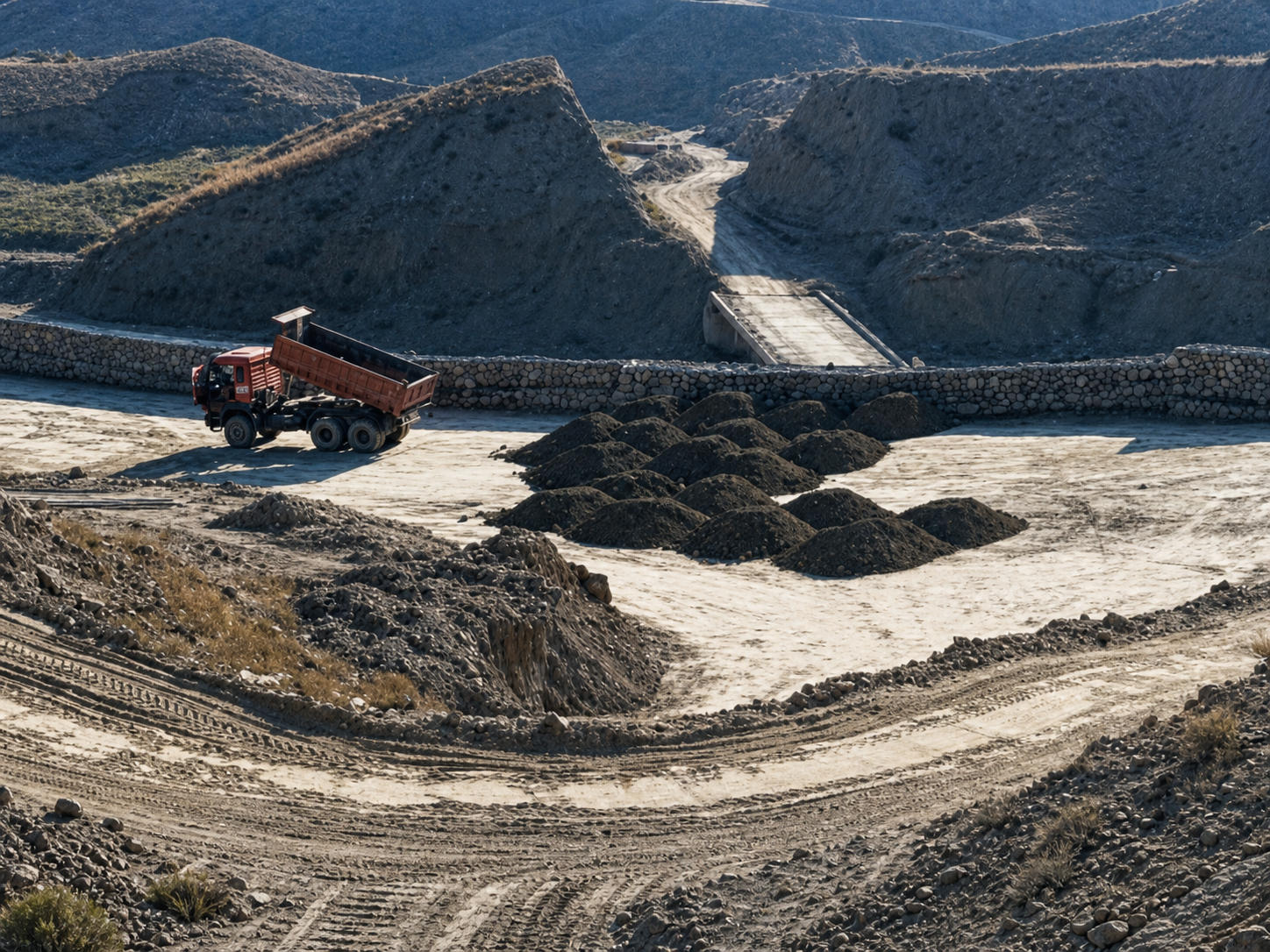
Construction workers and internal sources involved in the development of the second Kabul-Jalalabad highway have raised critical concerns over severe structural flaws and cost-cutting practices by project contractors along the key trade corridor.
According to reports provided to Zawia News, contractors are systematically bypassing core civil engineering standards to accelerate completion timelines, creating severe long-term infrastructure vulnerabilities along one of eastern Afghanistan’s vital economic arteries.
Systemic Quality Compromises and Safety Hazards
Insiders and site personnel highlighted multiple engineering violations across key phases of the highway’s construction:
- Substandard Subgrade and Soil Layering: Civil standards requiring uniform, multi-layered soil compaction (Subgrade) are being disregarded. Instead of controlled 50-centimeter lifts, workers report dumping uncompacted soil layers up to a meter deep, relying on heavy dump trucks rather than proper compaction machinery, severely undermining the road’s structural foundation.
- Degraded Concrete and Culvert Quality: To lower material costs, contractors have reportedly reduced the cement ratio used in drainage culverts and retaining walls, making critical drainage infrastructure susceptible to rapid erosion and seasonal washouts.
- Exposed Tunnels and Collapse Risks: Excavated mountain tunnels along the route have been left exposed without reinforced concrete lining or structural retention support, creating high-risk collapse hazards during seasonal rains and seismic activity.
Rush for Operational Opening
Engineers on site emphasize that the overriding priority of project managers appears to be rapid completion to open the route for commercial traffic, rather than building a durable transit link.
With heavy transit trucks relying on the Kabul-Jalalabad transit route to connect the capital with eastern border trade points, analysts warn that compromising on foundational engineering will result in rapid pavement degradation, costly structural failures, and significant safety risks for commercial drivers and commuters.