

Senior de facto officials in Kabul have sought to blame historical foreign military operations for lingering public health and environmental challenges in Afghanistan, even as international observers highlight the regime’s own extensive record of devastating explosive attacks.
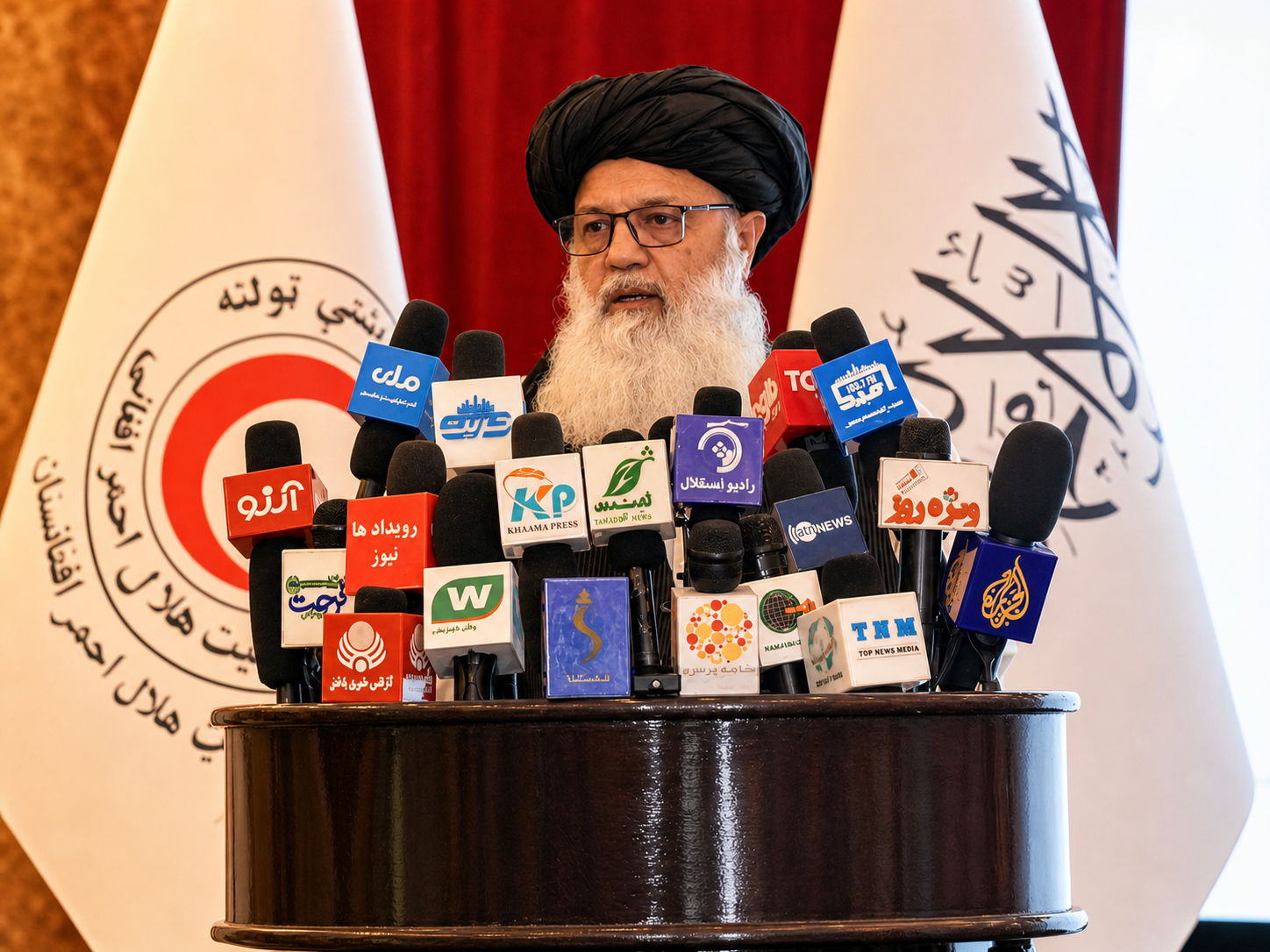
Speaking during a formal gathering in Kabul, Noor ul Haq Anwar, head of the de facto regime’s affairs department, asserted that the deployment of advanced weaponry and ordnance by United States and NATO forces during the previous war resulted in widespread chronic illnesses, including severe gastrointestinal diseases among the civilian population.
Rhetorical Claims Versus Insurgent Legacy
Anwar specifically referenced the historic deployment of heavy ordnance—such as the massive conventional bomb utilized against Islamic State-Khorasan (ISIS-K) positions in Nangarhar province—arguing that foreign military tactics left behind long-term infrastructural and physiological devastation.
However, human rights monitors and regional security analysts quickly pointed out the profound hypocrisy underlying the regime’s narrative:
- Extensive Use of Improvised Explosives: Throughout two decades of insurgency against the former Afghan Republic and international forces, the Taliban relied heavily on vehicle-borne improvised explosive devices (VBIEDs), roadside landmines, suicide vests, and bomb-laden motorcycles.
- Mass Civilian Casualties: Insurgent bombing campaigns routinely targeted crowded urban centers, marketplaces, schools, and mosques, causing the vast majority of civilian casualties during the conflict.
- Ideological Justification: Despite the devastating human toll of their own explosive tactics, de facto leadership historically justified, celebrated, and institutionalized suicide bombings and asymmetric attacks under religious framing, framing them as a sacred duty rather than destructive warfare.
Sanitizing the Past Amid Modern Governance Struggles
The attempt by senior de facto figures to recast the consequences of explosive warfare reflects a broader pattern of ideological reframing. As the administration grapples with severe economic isolation, a collapsing public health network, and rising internal dissent, officials frequently pivot to historical grievances against foreign powers to deflect domestic scrutiny from their current governance failures.
Analysts note that while environmental and unexploded ordnance hazards from decades of conflict remain a genuine humanitarian challenge in rural Afghanistan, weaponizing public health narratives to whitewash past insurgent violence highlights the regime’s continued reliance on selective historical revisionism.