

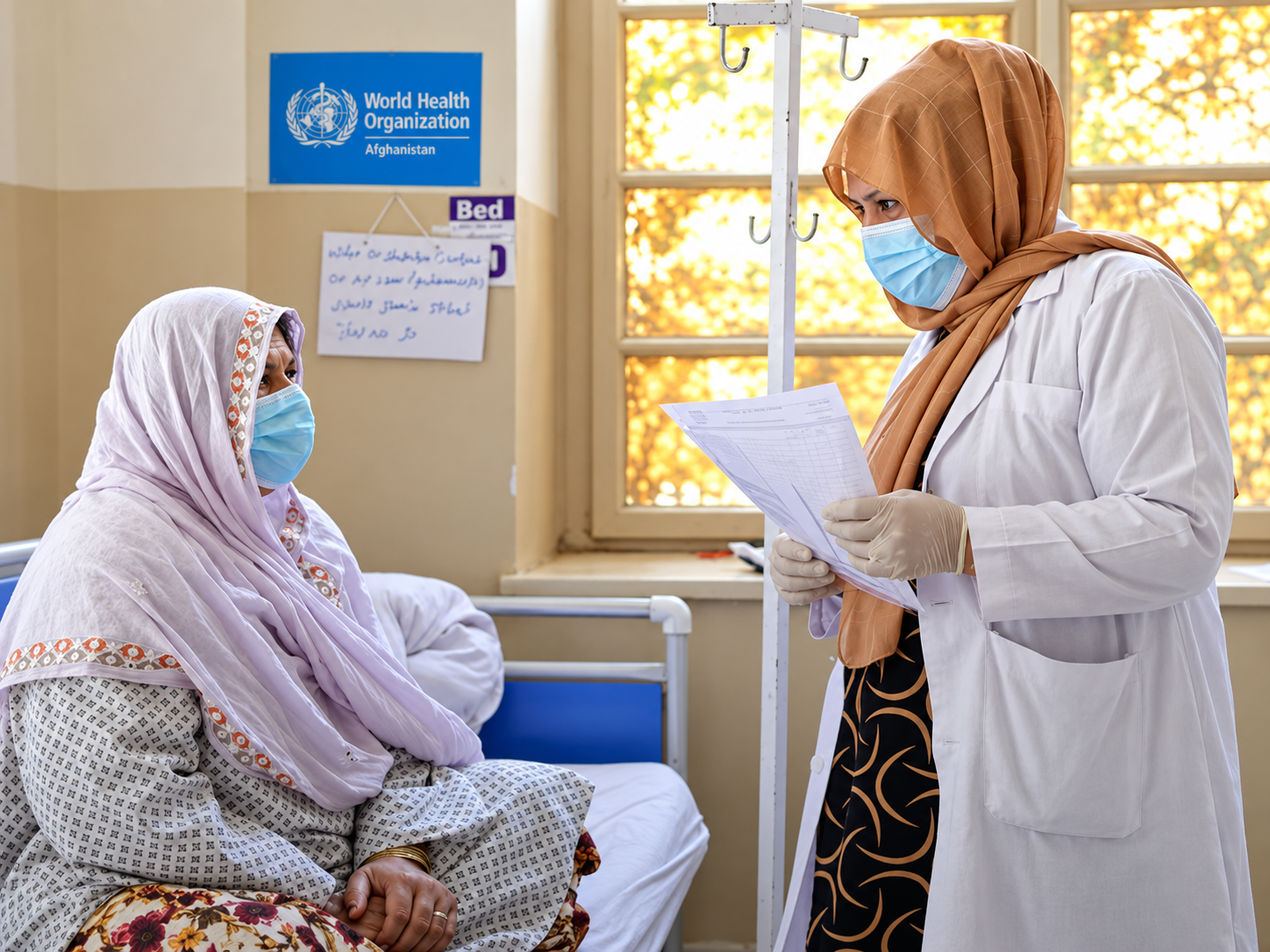
The World Health Organization (WHO) has announced that more than 1.9 million people across Afghanistan benefited from medical services at WHO-supported health facilities during the October 2026 reporting period, even as suspected dengue fever infections surged nearly fivefold compared with September.
In its latest situation update released on Thursday, November 19 (28 Aqrab), the UN health agency detailed ongoing primary care delivery, cross-border disease screening, and shifting infectious disease trends across the country.
Healthcare delivery and cross-border surveillance
According to the WHO report, sustained support across dozens of primary health centers and specialized hospitals yielded key operational milestones:
- Outpatient Care and Medical Supplies: WHO-supported facilities provided 117,607 outpatient consultations and distributed 131 packages of medical kits and supplies to bolster clinical capacity.
- Health Worker Training: A total of 498 healthcare workers received specialized training across critical medical disciplines—including emergency trauma care, severe acute malnutrition management, laboratory diagnostics, and infectious disease control.
- Border Health Screening: Surveillance teams screened 16,884 travelers at entry points to strengthen early detection and curb cross-border transmission of communicable diseases.
Sharp rise in dengue cases despite declines in other illnesses
While overall cases of other monitored infectious diseases—such as respiratory infections and measles—declined during the reporting period, WHO flagged a steep seasonal surge in vector-borne dengue fever:
- Nearly Fivefold Surge: Suspected dengue cases jumped to 1,675 in October (up from 364 cases recorded in September), marking a nearly fivefold increase along with one dengue-related fatality—the first recorded in Afghanistan since January 2026.
- Systemic Strain: Humanitarian health partners continue to warn that vector-borne outbreaks, cross-border population movements, and funding constraints are placing heavy pressure on Afghanistan’s fragile public health infrastructure.