

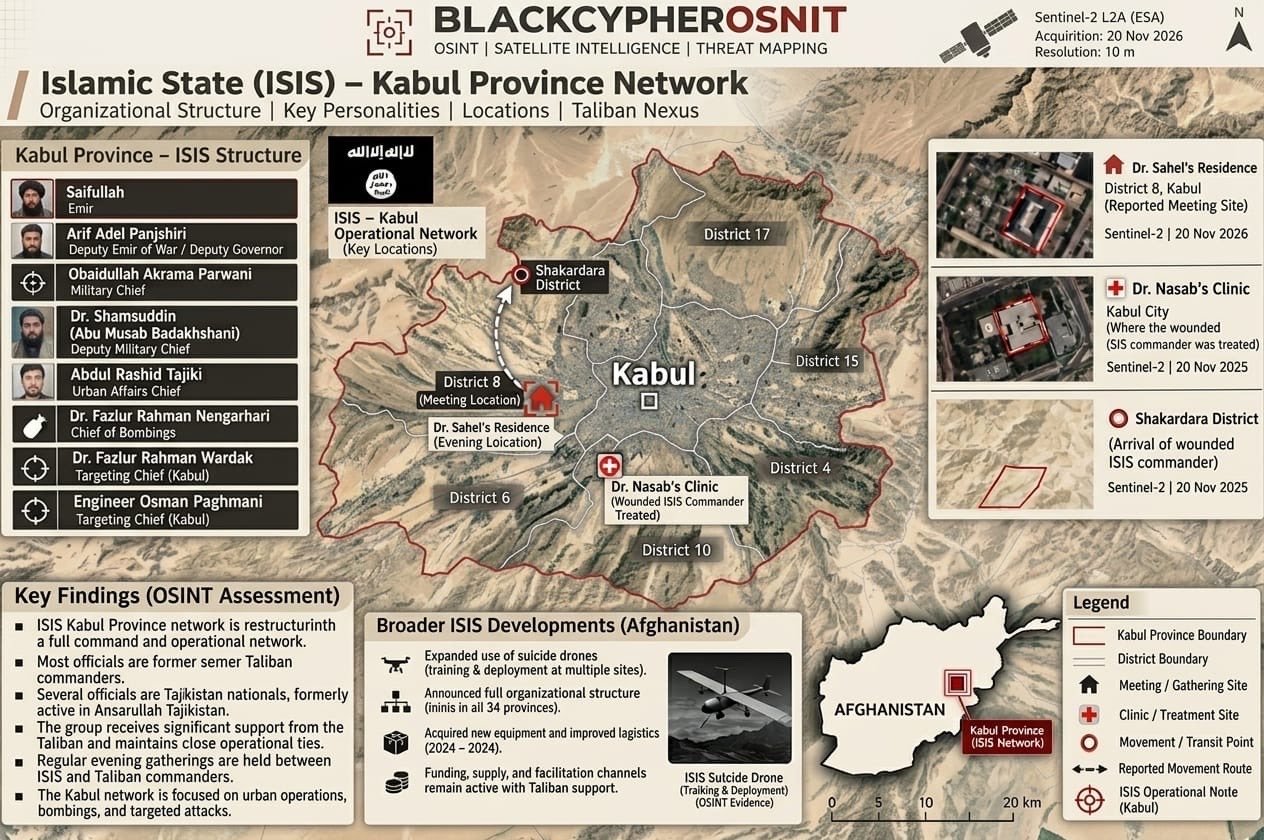
KABUL / PESHAWAR — Recent intelligence assessments and counterterrorism briefings warn that Islamic State–Khorasan Province (ISIS-K) has steadily rebuilt its operational capabilities inside Afghanistan over the past two years, acquiring modern tactical weapons—including suicide drones—and expanding decentralized command cells across the country’s provinces.
The warnings align with recent remarks by Alexander Zuev, the UN Under-Secretary-General for Counter-Terrorism, who noted in November 2026 that member states have reported ISIS-K possessing modern tactical equipment, including unmanned aerial vehicles, while continuing to exert pressure on de facto Taliban authorities and seek cross-border strike capabilities.
Key indicators of ISIS-K’s evolving network
Intelligence reporting and security analysts highlight several structural shifts in how the group operates inside Afghanistan:
- Province-Wide Command Cells and Kabul Presence: Reports point to an effort to maintain a structured hierarchy across Afghanistan’s 34 provinces—including operational cells in Kabul—supported by specialized military, logistics, and recruitment coordinators.
- Drones and Advanced Weaponry: Beyond improvised explosive devices and targeted assassinations, monitoring reports indicate ISIS-K operatives have sought commercial and modified unmanned aerial vehicles alongside illicitly sourced weapons.
- Recruitment and Alleged Local Links: UN Sanctions Monitoring Team assessments and regional intelligence reports have noted that while ISIS-K’s core leadership remains largely Afghan, its rank-and-file draws heavily on Central Asian recruits as well as disaffected former Taliban and TTP figures—raising persistent concerns over local infiltration and overlapping militant networks.
- Illicit Financing Streams: According to recent U.S. oversight reports to Congress, ISIS-K continues to fund operations through extortion, smuggling, human trafficking, illicit trade, and transfers from external radicalized networks.
Broader security implications
Although the Taliban administration maintains that it has suppressed ISIS-K through domestic raids, international monitors—including UN counterterrorism officials and the U.S. Defense Intelligence Agency—assess that the group retains the capacity to conduct high-profile attacks inside Afghanistan and plot external operations across South and Central Asia. Observers emphasize that tracking its financing, drone procurement, and cross-border recruitment pipelines remains critical to preventing wider regional instability.