

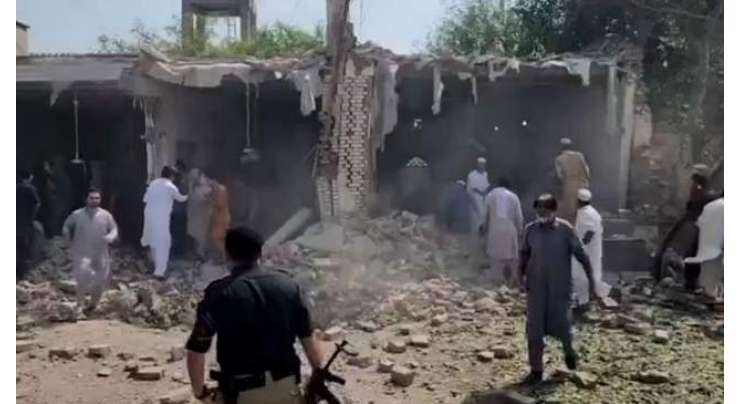
Preliminary investigations point to cross-border linkages as security officials indicate Afghan-based operatives seem to have orchestrated the Kohat compound attack
Kabul Times Desk
KOHAT — A devastating suicide bombing struck the northwestern district of Kohat on Friday, killing at least 17 people—including five police officers and 11 civilians—and wounding over 50 others.
The powerful explosion occurred during congregational Friday prayers when an explosives-laden vehicle rammed into the gate near the mosque inside the Old Police Lines compound. The blast left a deep crater outside the compound’s mosque, shattering windows across nearby streets and sending plumes of smoke into the sky as emergency responders rushed to the scene.
Officials at the Kohat District Headquarters (DHQ) Hospital confirmed that scores of injured victims, many in critical condition, were brought in for urgent medical care. Security forces and the Counter-Terrorism Department (CTD) immediately cordoned off the area, launching an investigation into the attack. Prime Minister Shehbaz Sharif strongly condemned the bombing, directing authorities to ensure the best possible treatment for the wounded and demanding an immediate inquiry.
The cross-border threat matrix: echoes of Afghanistan-based militancy
Today’s carnage in Kohat once again shines a harsh, unforgiving light on the persistent security threat emanating from unmanaged safe havens across Pakistan’s western border.
For years, security analysts and defense officials in Islamabad have warned that the permissive environment provided to militant networks in Afghanistan continues to fuel a relentless cycle of cross-border terrorism. Groups hostile to Pakistan—operating with impunity from external sanctuaries—have repeatedly utilized sophisticated explosives and suicide cadres to target law enforcement infrastructure and civilian centers in Khyber Pakhtunkhwa and Balochistan.
The tragic targeting of a police compound during sacred Friday prayers underscores the brutal, indiscriminate tactics favored by these elements. Successive security evaluations have emphasized that lasting regional stability remains unattainable so long as cross-border sanctuaries and logistical pipelines remain active.
As the nation mourns the lives lost in Kohat, security experts reiterate that Islamabad’s persistent demands for robust border management and absolute counter-terrorism compliance from regional authorities are not just strategic preferences, but absolute operational necessities for safeguarding South Asia from further bloodshed.