

By Dr Muhammad Shahid
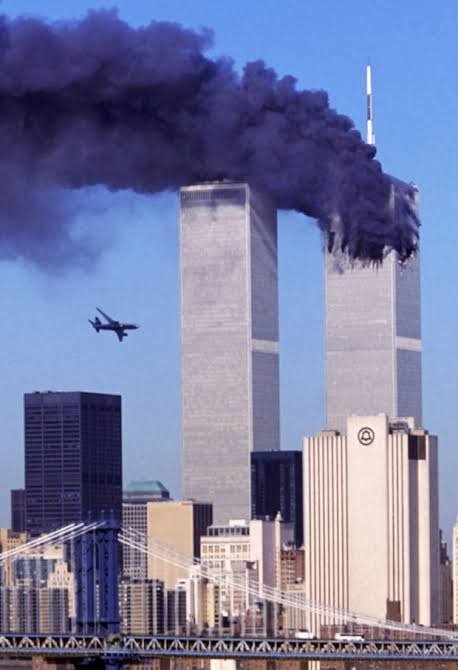
Every September, the world pauses to remember the smoke over Manhattan, the grief that gripped American cities, the moment the twenty-first century seemed to begin in earnest. But to understand September 11, 2001, only through that lens is to see half the story. For Pakistan, that day did not simply reshape a distant skyline — it opened a door onto two decades of fire on its own western frontier. What began as a single morning of horror in New York became, for Pakistan, a generational trial: a war it did not start, fought largely on its own soil, paid for in a currency of soldiers, civilians, and shattered towns that the rest of the world rarely stopped to count.
When the international coalition moved into Afghanistan in the weeks after 9/11, Islamabad made its choice quickly and unambiguously — it stood with the global effort to dismantle the networks behind the attacks. But choosing to stand on the front line is different from choosing what the front line costs.
Over the next twenty years, as foreign forces fought their war across the Durand Line and eventually withdrew from it, it was Pakistan’s army, its police, its border towns and its ordinary citizens who absorbed the blast radius of a conflict engineered elsewhere. Militancy spilled across the frontier like water finding every crack in a wall. Radicalization took root in places that had never asked for it. And with every strategic miscalculation made in distant capitals, every abrupt policy reversal, every hurried withdrawal, it was Pakistan that was left holding the aftermath.
History, in this case, did not need to repeat itself twice for the lesson to land. For years, Pakistani officials cautioned that an unmanaged, premature exit from Afghanistan would not bring peace — it would bring a vacuum, and vacuums are rarely left empty for long. Groups like the Tehrik-i-Taliban Pakistan moved into exactly the space that warning described, operating from terrain that had slipped beyond anyone’s effective control. The warning was not rhetorical. It was prophetic, and Pakistan has lived with the proof of it ever since, in the form of attacks that trace their roots back across that same unmonitored border.
To mark this anniversary honestly is to do more than observe a moment of silence. It is to name what that silence cost, and what it built. Pakistan’s current security posture — the fencing along its western border, the tightened frameworks governing cross-border movement, the hardened resolve against militant safe havens — is not policy invented in a vacuum. It is the direct inheritance of twenty hard years, written in the language of lessons that were paid for, not merely learned. As the region’s fault lines continue to shift, one truth has held steady through all of it: security is not something a nation can borrow, outsource, or assume will hold on its own. Pakistan has carried the weight of the Afghan theatre for two decades. Guarding its own frontiers — deliberately, permanently, without illusion — remains the clearest guarantee it has of its own survival, and of whatever stability the region still hopes to find.
About the writer: Dr. Shahid is a media analyst and researcher specializing in security affairs and regional geopolitics.