

By Dr Shahid
As the future of Iran’s Chabahar Port plunges deeper into uncertainty following the expiration of crucial United States sanctions waivers, Afghan traders and business leaders are once again counting the heavy costs of relying on fragile, distant, and politically volatile transit routes.
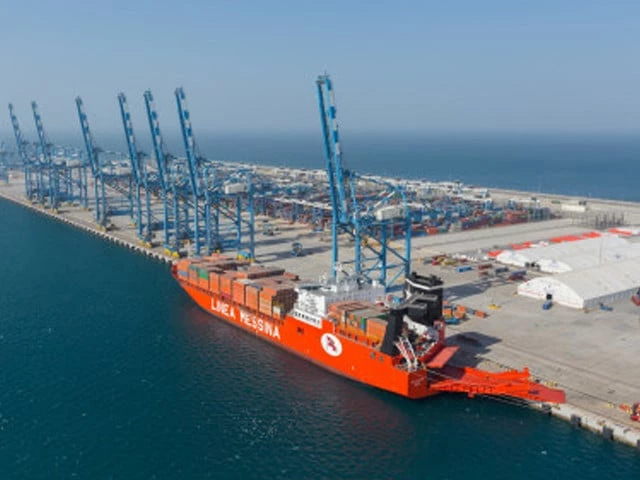
While trade authorities in Kabul scramble to lobby Washington for sanctions extensions, economic experts point out a stark reality: Afghanistan had a natural, highly efficient, and permanent gateway to international markets right on its doorstep—Pakistan’s deep-water port of Gwadar. However, decades of short-sighted policies and, more importantly, persistent cross-border terrorism perpetrated inside Pakistan from time to time have severely undermined that golden opportunity, leaving Afghan commerce vulnerable to foreign sanctions and geopolitical whims.
The dead end of external dependence:
Recent reports indicate that Chabahar Port, heavily touted by regional planners as an alternative trade artery, remains shackled by international geopolitics. With US sanctions waivers expiring, businesses utilizing the route face mounting costs, insurance risks, and operational paralysis.
The Afghanistan Ministry of Industry and Commerce officials in Kabul have expressed deep concern, noting that ordinary citizens and traders are once again bearing the brunt of political disputes outside their control. Yet, analysts argue that Afghanistan’s commercial isolation is largely self-inflicted. By failing to secure a stable, cooperative security framework with its immediate and most natural economic partner—Pakistan—Kabul missed the historic window to integrate fully with the China-Pakistan Economic Corridor (CPEC) via Gwadar.
Why Gwadar remains the superior choice:
For a landlocked nation like Afghanistan, Gwadar offers unmatched strategic and logistical advantages compared to Chabahar:
• Shorter transit distances: Gwadar provides the shortest route to warm waters for Afghan goods, drastically cutting down cargo travel time and freight expenses.
• Robust infrastructure: Backed by state-of-the-art port facilities and robust multi-modal road and rail connectivity under CPEC, Gwadar is engineered for high-volume international trade.
• Natural economic synergy: Pakistan has historically functioned as Afghanistan’s primary trade lifeline. Integrating Afghan commerce into the Pakistani port network offers seamless access to global maritime routes without the looming threat of sudden Western sanctions closures.
The shadow of cross-border terrorism
The tragic irony of Afghanistan’s current transit crisis is that the solution was always within reach. Pakistan repeatedly extended gestures of regional connectivity and offered unhindered access to its ports to boost bilateral trade and uplift the regional economy.
However, these economic bridges were continually frustrated by persistent security breaches. The ongoing menace of cross-border terrorism—stemming from anti-peace elements using Afghan soil to target Pakistani security forces and infrastructure—forced security adjustments and border controls, eroding the trust necessary to finalize major strategic transit expansions.
As Afghan agricultural exporters and business guilds lament the uncertainty surrounding Chabahar, economic analysts stress that sustainable prosperity cannot be built on distant, sanction-prone ports. Real economic security for Afghanistan requires genuine cooperation with Islamabad, a firm crackdown on cross-border militant safe havens, and a recognition that Pakistan’s ports—led by Gwadar—are the only reliable, permanent gateway to the world.
About the writer: Dr. Shahid is a media analyst, academic researcher, and journalist. He can be reached at: shahid152001@yahoo.com
–Ends