

By Dr Muhammad Shahid
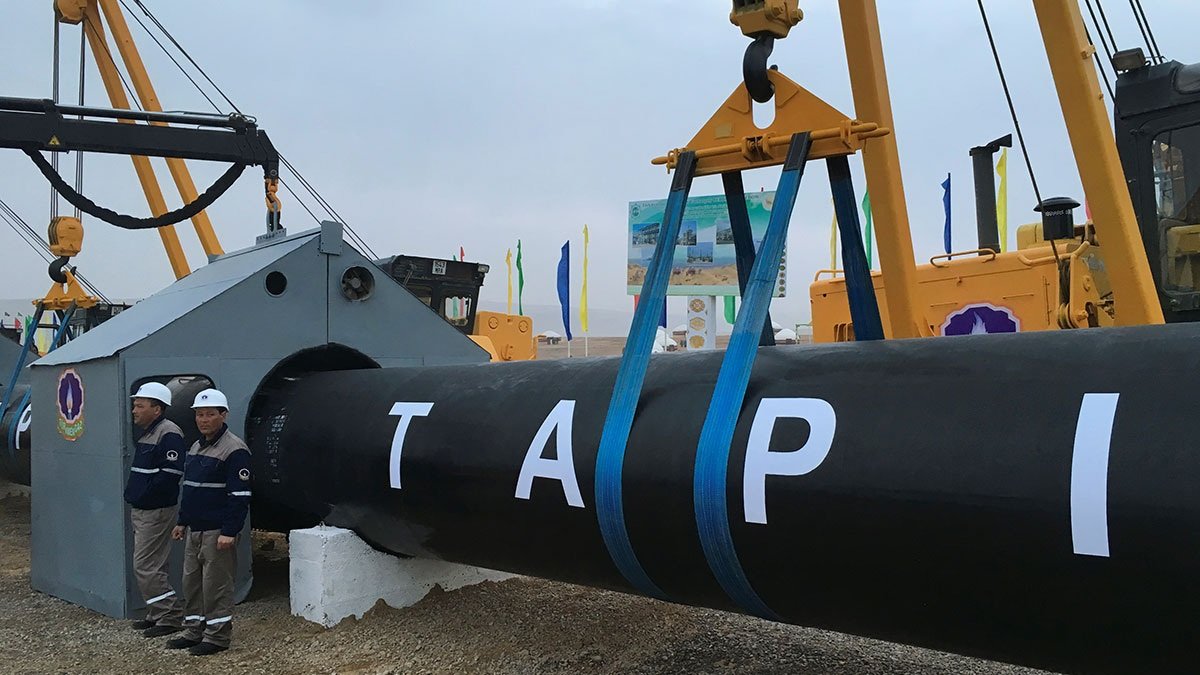
The Turkmenistan-Afghanistan-Pakistan-India pipeline — long one of the region’s most talked-about, least-realised infrastructure ambitions — is edging forward again. Industry monitor Petroleum Economist reported this week that construction of the pipeline’s initial Afghan section is advancing toward Herat, creating what it called “an initial market for Turkmen gas” ahead of any extension toward Pakistan and India.
For a project first conceived in the 1990s to bring gas from Turkmenistan’s Galkynysh field — one of the world’s largest — to energy-hungry markets in South Asia, even incremental progress tends to generate outsized attention. But the gap between a pipeline reaching a market inside Afghanistan and a four-country energy corridor functioning safely across four borders remains, by most independent assessments, considerable.
A narrower step than the headlines suggest
The reported advance is, for now, a domestic Afghan development: gas reaching Herat, not crossing into Pakistan. Turning that into the trans-border corridor originally envisioned depends on a set of conditions that have stalled the project for decades — sustained border security, credible guarantees against militant attacks on pipeline infrastructure, and confidence among investors and transit states alike that the route can be protected over the long term.
Pakistan’s position: security first, corridor second
Islamabad has repeatedly said it supports TAPI in principle, viewing it as a potential source of affordable gas and a stake in regional connectivity. But Pakistani officials have also been consistent in linking any major extension of the pipeline onto Pakistani soil to verifiable security conditions inside Afghanistan — pointing in particular to the presence of militant groups that Islamabad says operate from Afghan territory and target Pakistan directly.
That position reflects a broader pattern in how Pakistan has approached cross-border infrastructure in recent years: welcoming the economic case in principle, while treating security guarantees as a precondition rather than a parallel track. Proponents of that approach argue it is simply prudent — that committing capital to a pipeline running through contested or unstable terrain risks the kind of disruption that has affected other regional energy and transit projects in the past, and that a corridor built without firm security foundations is a liability rather than an asset.
The counter-case
Not everyone shares that sequencing. Some regional economists and Afghan officials argue that connectivity projects like TAPI can themselves be stabilising — giving neighbouring states a shared economic stake that incentivises cooperation on security, rather than requiring security to be fully resolved first. Turkmenistan, for its part, has continued to press forward with construction largely independent of the wider security debate, treating the Herat leg as a milestone worth completing regardless of the pipeline’s onward prospects.
The verdict, for now
Whichever view proves right, the practical reality is that TAPI’s fate beyond Herat rests less on engineering than on politics: whether Kabul’s Taliban administration can, or will, provide the kind of enduring security assurances that would persuade Islamabad — and the international financiers the project still needs — that the corridor is bankable. Until that changes, Pakistan’s insistence on security-first scrutiny is likely to remain the project’s most consequential variable, for better or worse.