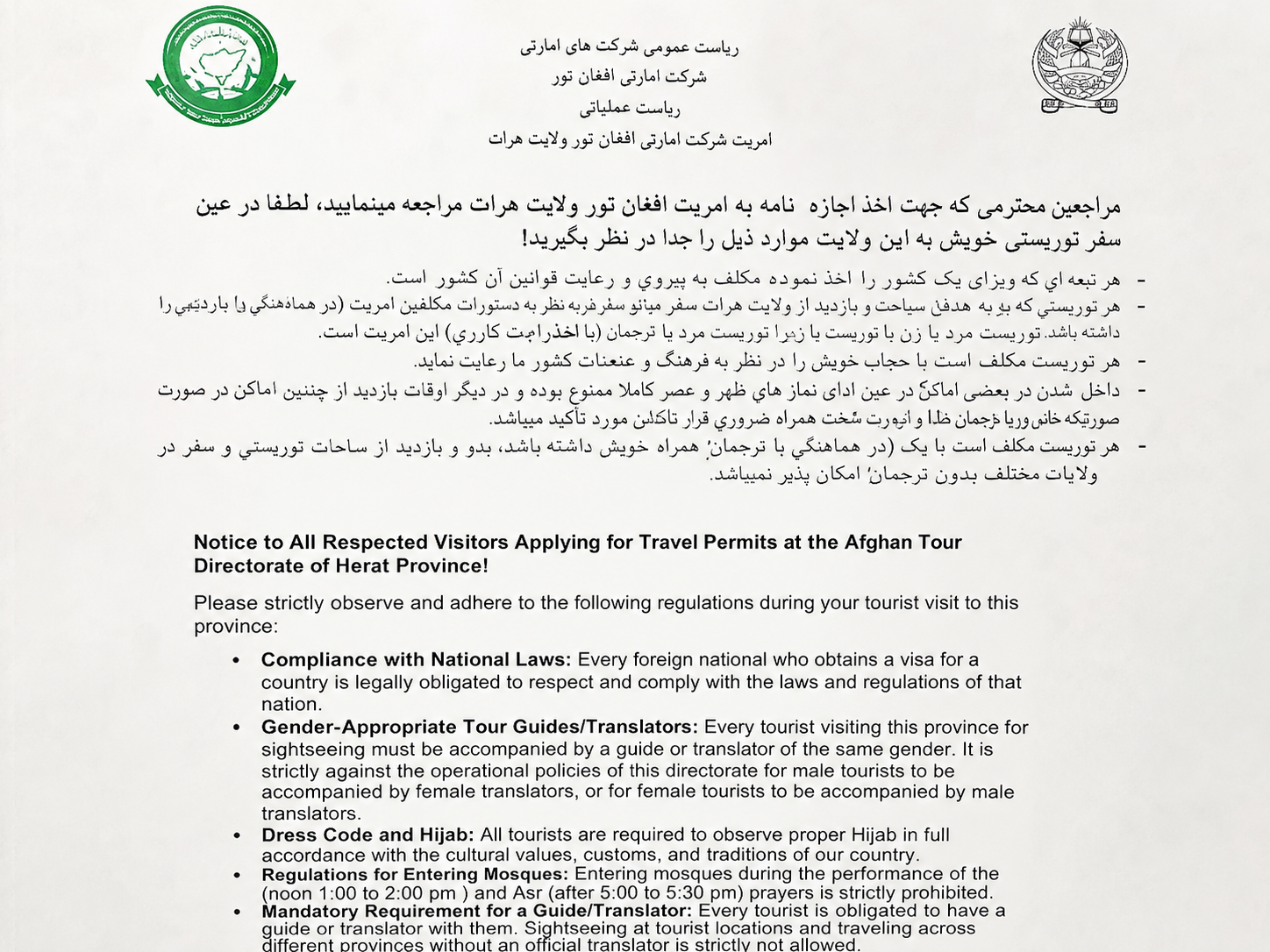
The de facto administration’s state-owned tourism enterprise, Afghan Tour, has issued a formal directive introducing sweeping new restrictions on foreign visitors traveling inside Afghanistan, mandating same-gender translators, strict dress codes, and tighter controls around religious sites.
According to the official notice, all international travelers visiting the country must now adhere to rigid gender-segregated accompaniment and behavioral rules throughout their stay, effectively ending independent travel for foreign nationals.
Mandatory same-gender translators and dress codes
The new guidelines place strict operational requirements on tour operators, guides, and visitors:
- Ban on Independent Travel: No foreign tourist is permitted to travel anywhere in Afghanistan without an officially assigned translator accompanying them at all times.
- Strict Gender Segregation: Foreign visitors must hire translators of their own gender—female tourists are required to be accompanied exclusively by female translators, while male tourists must use male translators. Because Afghan women are simultaneously restricted from traveling long distances without a male guardian (mahram), this rule introduces major logistical hurdles for female travelers.
- Mandatory Hijab for Foreign Women: Foreign female visitors are explicitly required to observe hijab in public spaces, covering their hair and wearing loose, modest clothing.
Mosque access and photography restrictions
The directive also tightens oversight of foreign visitors at cultural and religious landmarks across the country:
- Prayer-Time Entry Bans: Foreign tourists are prohibited from entering mosques during afternoon (Asr) and evening (Maghrib/Isha) prayer times.
- Photography Prohibitions: During permitted visiting hours outside those prayer windows, tourists are strictly barred from photographing worshippers inside mosques.
Tourism push amid severe travel warnings
The restrictions come even as de facto spokespersons have publicly sought to promote foreign tourism—claiming tens of thousands of international visits over the past five years—while dismissing international travel advisories. Meanwhile, major foreign governments maintain Level 4 “Do Not Travel” warnings for Afghanistan, citing acute risks of arbitrary detention, terrorism, kidnapping, and unpredictable local enforcement of morality laws.