

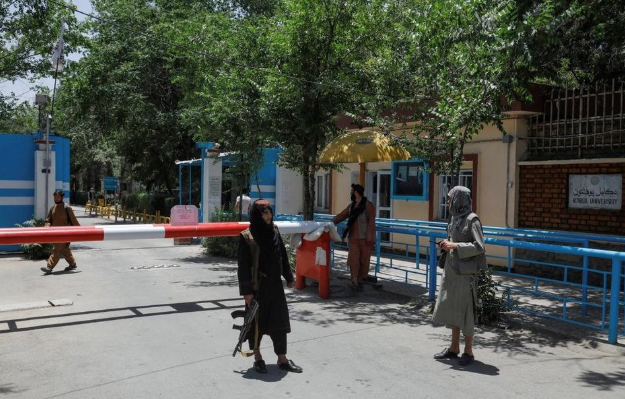
The de facto Taliban administration has suspended academic activities at Kabul University and evacuated its student dormitories to host a large-scale gathering of roughly 4,000 religious clerics aimed at reinforcing loyalty to supreme leader Hibatullah Akhundzada.
According to student accounts shared on Monday, November 16, 2026 (25 Aqrab 1405)—as the gathering commenced—the abrupt week-long closure during the critical final weeks of the semester has triggered severe academic and housing disruptions for students from outside the capital.
Displaced students seek shelter in local mosques
With campus facilities and dormitory buildings requisitioned to accommodate visiting clerics, provincial students who rely on university housing were forced to vacate on short notice:
- Financial Hardship and Homelessness: Students reported that many among them cannot afford private rental housing or guest houses in Kabul, forcing several displaced students to seek temporary shelter inside the nearby Karte Sakhi mosque.
- Disruption to Final Exams: Academic observers and students warned that halting classes in the closing stretch of the semester severely undermines exam preparation and curriculum completion.
High-level orchestration and strict media blackout
The gathering—convened at the Loya Jirga tent adjacent to the campus—was organized on the direct orders of acting Higher Education Minister Neda Mohammad Nadim, in coordination with the Prime Minister’s Office and several other ministries.
- Enforcing Ideological Compliance: Approximately 4,000 mullahs from across Afghanistan were summoned to Kabul to endorse and promote the enforcement of Akhundzada’s decrees—amid recent reports of internal debate regarding the theological basis of several directives.
- Tight Security and Filming Ban: Security forces placed the university compound and surrounding roads under heavy lockdown, while authorities strictly prohibited photography and video recording inside the conference, releasing only vetted audio clips through state-affiliated outlets.
The requisitioning of Afghanistan’s premier public university for political-clerical mobilization underscores the administration’s prioritization of ideological consolidation over higher education infrastructure.