

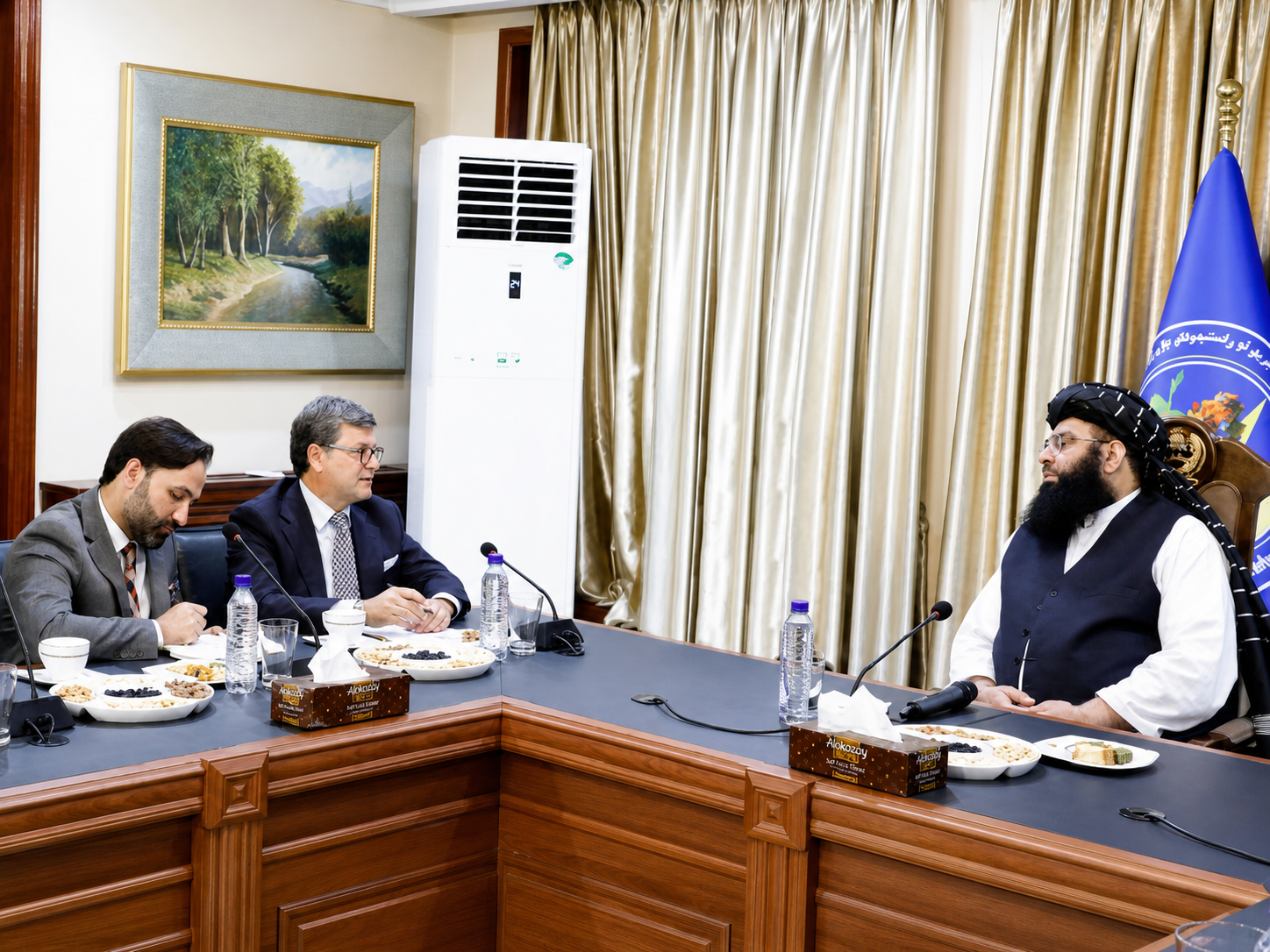
De facto officials from the Ministry of Refugees and Repatriation held high-level discussions with Nicolas Belleaume, the European Union’s representative for Afghanistan, focusing on the mounting challenges faced by returning families. During the meeting, senior administration representatives called on the European Union to provide financial and technical assistance for the construction of specialized residential settlements.
According to the ministry’s statement, authorities have designated 80 specific townships across various provinces to accommodate incoming populations. However, acute resource shortages, severe economic strain, and infrastructural deficits have crippled the administration’s capacity to provide adequate housing, sanitation, and basic utilities for the surge of returnees arriving from neighboring countries.
In response, EU representative Nicolas Belleaume reaffirmed that the union maintains its commitment to delivering essential humanitarian aid to vulnerable populations across Afghanistan. He noted that the bloc remains ready to collaborate on targeted initiatives addressing employment generation, livelihood sustainability, and the multifaceted obstacles confronting displaced communities.
Humanitarian monitors emphasize that with mass repatriation waves continuing from Pakistan and Iran, securing stable long-term housing and employment frameworks is vital to preventing a catastrophic winter humanitarian crisis. While international aid agencies continue to inject emergency funding into basic needs programs, sustainable integration requires massive structural investment in permanent infrastructure.
For regional observers, the ongoing diplomatic engagement between the de facto administration and international donors highlights the immense socio-economic burden posed by unmanaged border deportations and mass population movements across South Asia.