

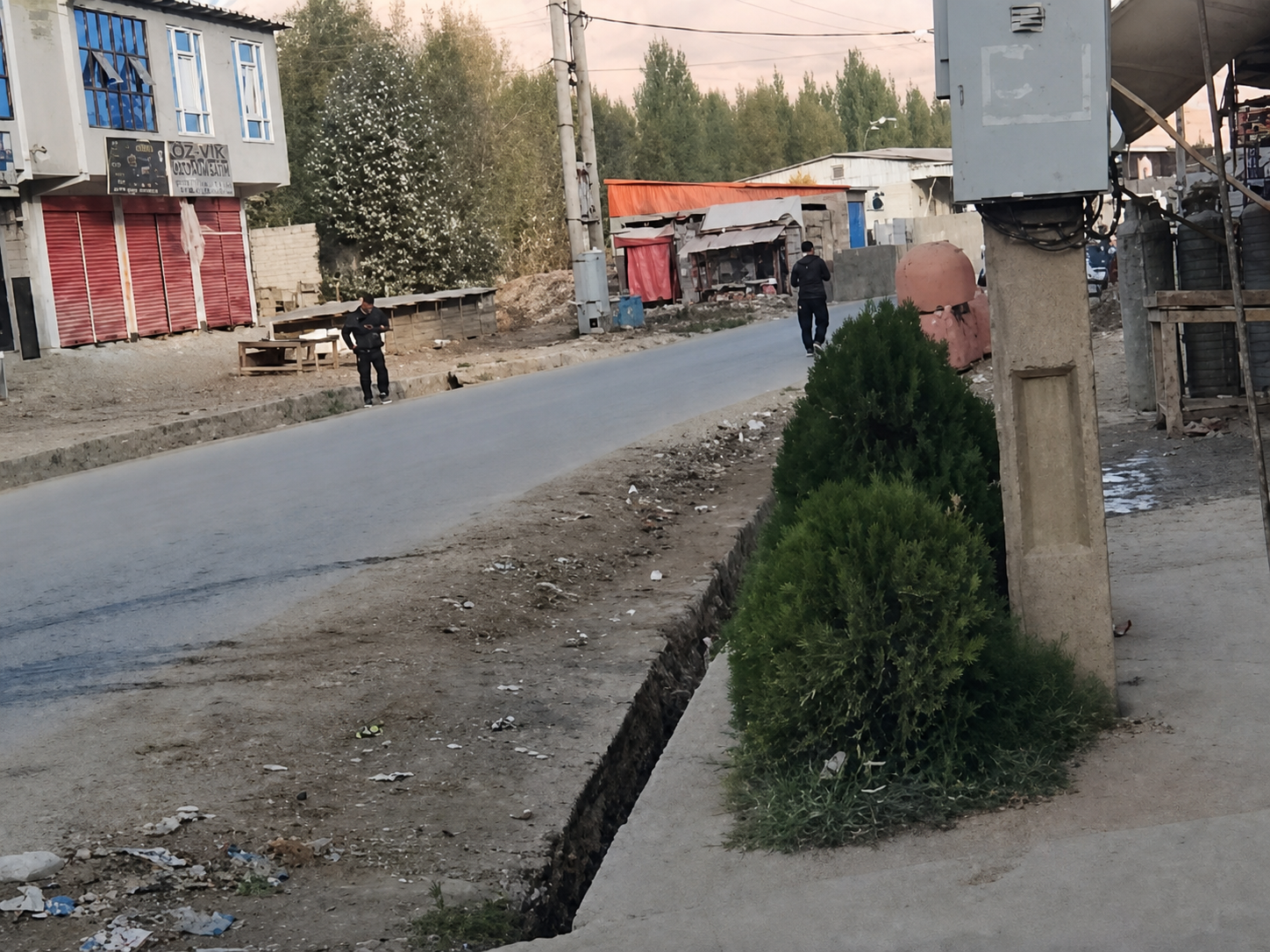
Following a series of targeted bombings and security breaches across Fayzabad in recent weeks, de facto security forces have significantly expanded their military footprint in Badakhshan’s provincial capital, mounting armored patrols and multiplying urban checkpoints.
According to local reports and resident testimony cited by Afghanistan International on Monday, October 26, the provincial capital has seen a heavy deployment of tanks, armored personnel carriers, and armed personnel compared to previous months.
Proliferating Checkpoints and Dense Perimeter Grid
The heightened security posture is concentrated around residential quarters and high-risk urban transit corridors:
- Triple Security Barriers: In areas like Dasht-e Shohada—where multiple improvised explosive device (IED) blasts recently occurred—de facto forces have erected up to three security checkpoints within a two-kilometer radius.
- Disruption of Daily Life: Local citizens report that armed guards routinely stop, search, and interrogate pedestrians and motorists, turning routine urban transit into prolonged, high-friction security stops.
- Systemic Intimidation: Residents accuse de facto personnel of using security mandates as a pretext to intimidate, search, and verbally abuse local inhabitants, further escalating tension between the civilian population and local security commands.
Resurgent Security Friction in Northern Badakhshan
The aggressive security grid in Fayzabad follows repeated operational strikes by anti-Taliban armed opposition groups, including targeted attacks on intelligence vehicles and high-ranking provincial judicial officials.
While de facto security commanders frame the heavy presence as necessary counterterrorism enforcement, security analysts note that dense urban militarization reflects acute vulnerability within the regional security apparatus. Rather than restoring public safety, the reliance on high-density checkpoints continues to alienate urban communities across northern Afghanistan.