

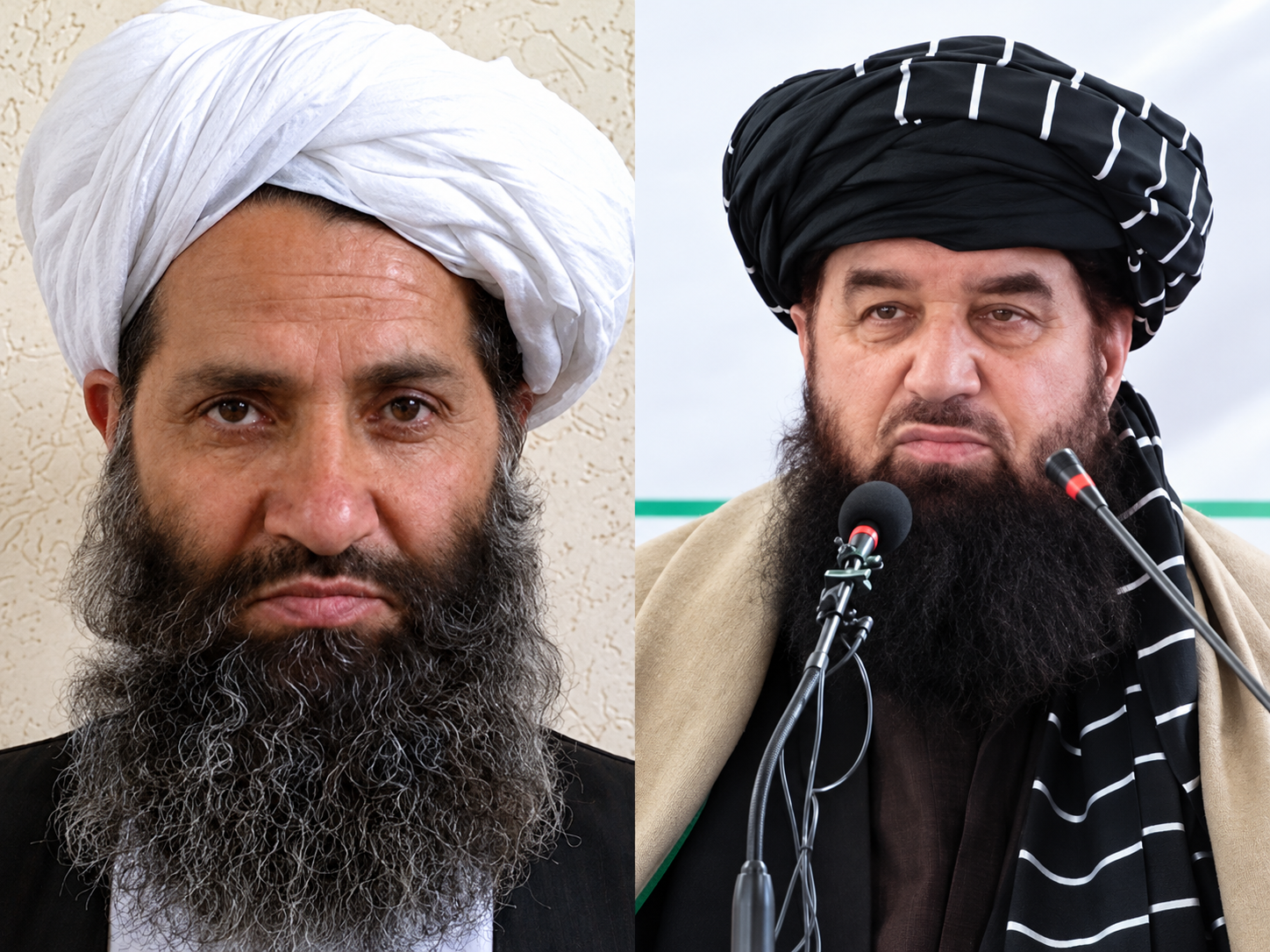
The Taliban’s acting Minister of Justice, Abdul Hakim Sharaie, has issued an extraordinary ideological defense of the administration’s sweeping restrictions on women, asserting that supreme leader Hibatullah Akhundzada acts as the “spiritual father” of the entire Afghan nation and all Muslims—and therefore possesses the paternal right to order women to cover their faces.
Speaking on Monday, November 16, 2026, Sharaie dismissed critics of the de facto administration’s legal framework as “devils in human form,” while simultaneously acknowledging rare internal friction within the group over the theological justification for its policies.
Acknowledging internal dissent over “expediency”
In a candid admission of internal pushback, Sharaie revealed that even members within the Taliban’s own ranks have questioned provisions of the controversial Law on the Promotion of Virtue and Prevention of Vice:
- Debate Over Terminology: Sharaie cited an instance in which a member of the group challenged the law’s classification of full face coverings as obligatory hijab, questioning its strict religious basis.
- Policy Based on “Expediency”: According to Sharaie, he summoned the critic and explained that the requirement to cover women’s faces was enacted out of administrative “expediency” (maslahat) rather than strictly through conventional jurisprudential consensus.
- Elevating Decrees Above Seminary Study: Going a step further, the Justice Minister claimed that anyone possessing a compilation of Hibatullah Akhundzada’s decrees alongside the Ministry of Justice’s official gazette would have no need to attend an Islamic seminary to learn religious rulings.
Paternalistic framing and scholarly pushback
To justify enforcing face coverings by state decree, Sharaie drew an analogy between family authority and political rule—arguing that just as a father instructs his daughter to cover her face before leaving home, Akhundzada exercises the same paternal authority over the broader public.
Religious scholars and independent Islamic jurists have widely contested this framing, noting that the de facto administration frequently elevates political expediency and rigid personal interpretations to the level of divine law—enforcing compliance through coercion and punitive measures while silencing theological debate.