

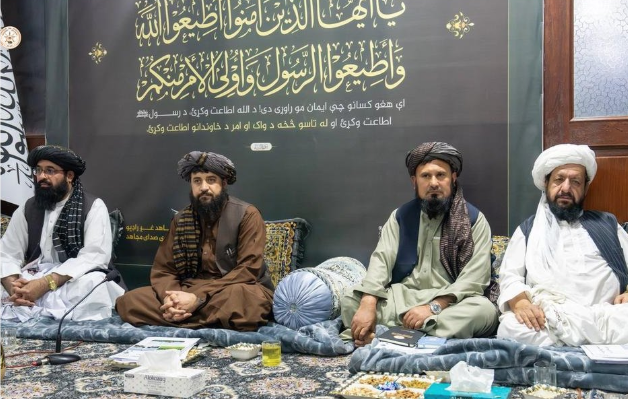
KABUL — De facto Taliban Defense Minister Mawlavi Mohammad Yaqoob Mujahid has concluded a three-day security and consultative meeting with regional army corps commanders and central military unit officials, stressing strict obedience, military discipline, and operational readiness.
According to a statement issued by the Taliban’s Ministry of Defense on Sunday, November 22, 2026, the sessions were attended by deputy ministers, heads of central directorates, regional corps commanders, and sub-unit leaders to review operational needs and strengthen command coordination.
Focus on chain of command and force preparedness
During the three-day gathering, unit and sub-unit officials presented field challenges, proposals, and logistical requirements to the ministry’s senior leadership:
- Obedience and Accountability: Yaqoob Mujahid and First Deputy Defense Minister Mullah Hamidullah Akhundzada instructed commanders to execute their duties in line with the principles of the Taliban system, emphasizing discipline, obedience, and accountability.
- Personnel Welfare and Readiness: Leadership urged commanders to address the concerns of rank-and-file personnel while working to enhance professional capacity, preparedness, and overall force strength.
- Inter-Unit Coordination: Chief of General Staff Qari Mohammad Fasihuddin Fitrat called for closer coordination among military units, improved management, and adherence to military regulations.
While the Defense Ministry stated that key decisions were adopted at the close of the meeting to strengthen and develop its forces, it did not disclose operational details or structural changes.
Echoing Kandahar leadership’s push for loyalty
The military conclave follows closely on the heels of a four-day gathering at Kabul University last week, where Taliban supreme leader Mullah Hibatullah Akhundzada and senior officials underscored unconditional obedience to the supreme leader’s decrees as a religious and institutional obligation. Analysts note that repeated high-level calls for discipline and unity across both clerical and security ranks reflect ongoing efforts by the leadership to tighten centralized control over regional commanders and factions.