

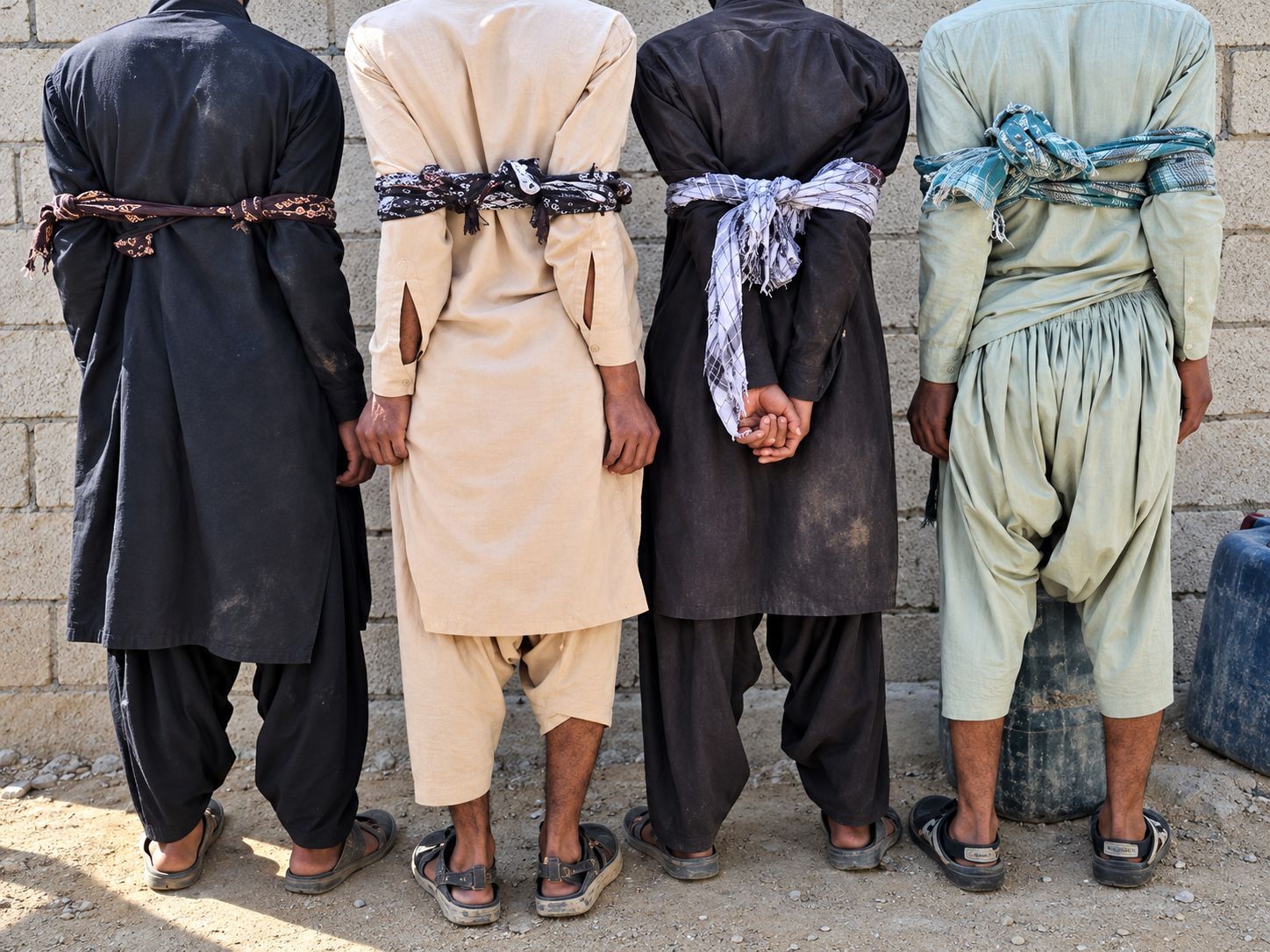
HERAT / NIMROZ — De facto Taliban authorities have announced the arrest of 750 people over the past week who were attempting to cross into neighboring Iran through irregular smuggling routes, underscoring persistent outbound migration pressures driven by economic hardship inside Afghanistan.
Border enforcement units—including Taliban border police and provincial corps operating along western frontier districts in Herat and Nimroz—routinely intercept groups of Afghan travelers attempting unauthorized crossings, though authorities rarely disclose detailed legal procedures or the subsequent fate of those detained.
Key drivers behind irregular cross-border movement
The arrests highlight the mounting push factors compelling Afghan citizens, particularly young men and families, to risk hazardous smuggling networks:
- 750 Detained in One Week: Taliban officials reported intercepting 750 individuals over a seven-day period as they sought to enter Iran outside official border crossings.
- Poverty and Job Scarcity: Widespread unemployment, depressed wages, and deepening poverty across Afghanistan remain primary drivers pushing young Afghans to seek informal labor opportunities in Iran and beyond.
- High Risks on Both Sides of the Border: Even when travelers evade checkpoints inside Afghanistan, irregular migrants face perilous desert terrain, human trafficking abuses, border shootings, and large-scale deportation campaigns by Iranian authorities—who have forcibly returned hundreds of thousands of Afghan nationals in 2026 alone.
Strain on households and border communities
With legal visa pathways severely restricted and domestic job creation stalled amid aid cuts and economic isolation, families continue to rely on remittances from relatives working abroad—leaving many young Afghans caught between economic desperation at home and detention or deportation along regional borders.