

By Dr Muhammad Shahid
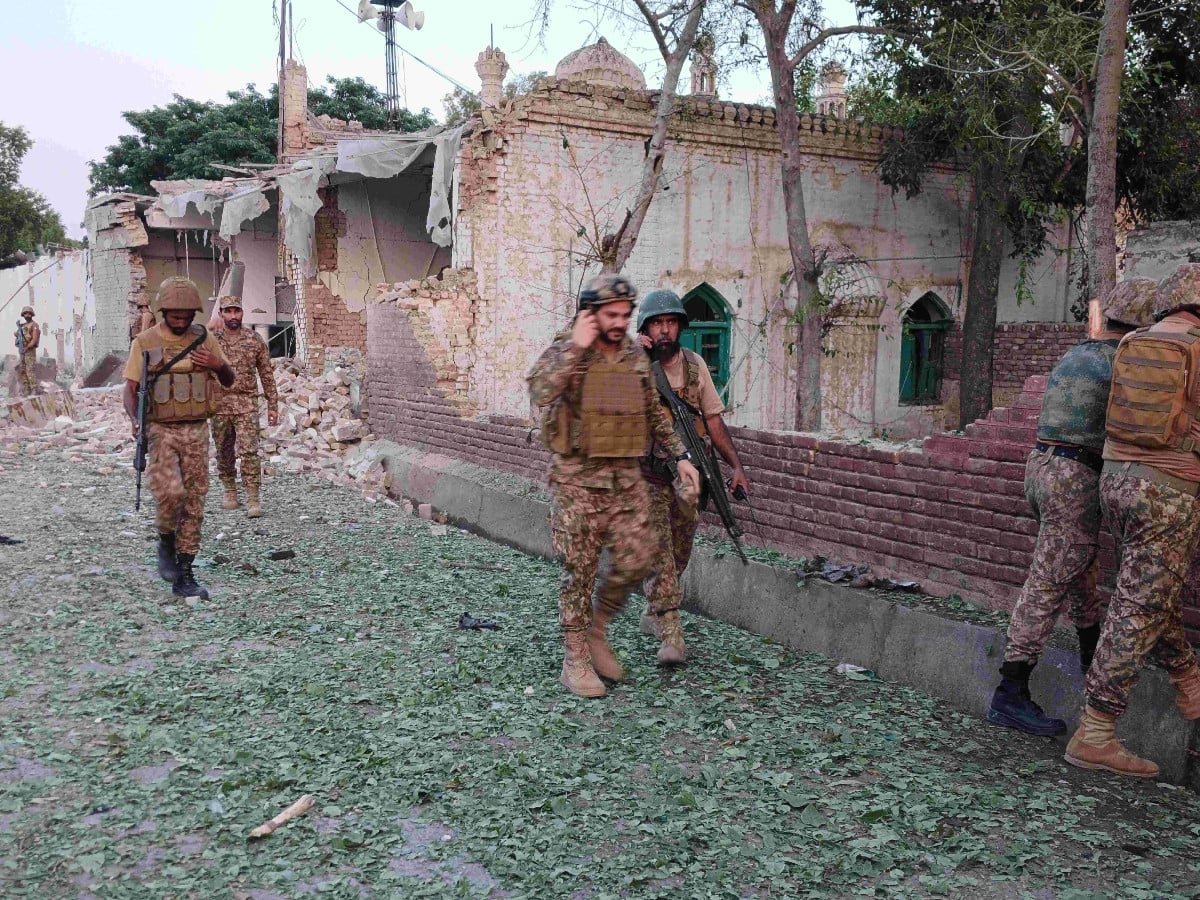
KOHAT — In the wreckage of Friday’s massacre at the Old Police Lines mosque, investigators say they have found the first hard thread connecting Pakistan’s latest atrocity to the sanctuary across its western border. Khyber Pakhtunkhwa Inspector General of Police Zulfiqar Hamid confirmed that “initial information indicated that Afghan nationals were involved in the attack” — a disclosure that transforms Friday’s bombing from another entry in a grim ledger into fresh evidence for an argument Islamabad has been making, largely to deaf ears, for years.
The numbers alone tell a story of premeditated slaughter. At least 16 people — five police officers and 11 civilians, many of them worshippers targeted mid-prayer — were martyred, with more than 50 wounded, several critically. Seven attackers took part in the assault: an explosives-laden vehicle rammed the compound gate, a second suicide bomber detonated near the Special Branch building, and the remaining gunmen tried to fight their way into the Police Lines under cover of the chaos. Federal Interior Minister Mohsin Naqvi did not mince words, calling it an attack by “foreign-backed militants” that would not weaken the nation’s resolve. All seven attackers were ultimately killed in the exchange of fire that followed, the clearance operation grinding to its conclusion room by room as CTD and police personnel refused to yield ground.
Following the trail across the Durand Line
The IGP’s statement on the attackers’ nationality did not emerge from speculation — it is the product of on-the-ground forensic and investigative work in the immediate aftermath of the blast, the kind of preliminary identification that has, in previous attacks in this same border belt, been substantiated by recovered documents, communication records, and physical evidence at the scene. Investigators in Kohat are now working to corroborate and expand on that initial finding, and the coming days are likely to bring further detail on exactly who these men were and how they crossed into Pakistani territory undetected.
What is not in question is the pattern this fits. Kohat district alone recorded 15 terrorism-related incidents in 2025 and 21 more so far this year, according to the South Asia Terrorism Portal — a trajectory that mirrors the broader spike in militancy across Khyber Pakhtunkhwa and Balochistan since the Afghan Taliban’s return to power in 2021. Friday’s bombing arrived less than 24 hours after a roadside bomb killed six soldiers in neighbouring Hangu district, part of the same relentless tempo of cross-border violence Pakistani forces have absorbed almost daily this year.
Islamabad’s position has been consistent and, for anyone tracking the casualty figures, difficult to dismiss: militant networks continue to operate, train, and plan from sanctuaries inside Afghanistan, exploiting a porous frontier and an Afghan Taliban government that Pakistan says has done far too little to deny them safe haven. Kabul continues to reject this, insisting such groups are Pakistan’s own domestic problem — a denial that will sit uneasily against an Afghan national’s reported presence among Friday’s attackers, if that finding holds up as the investigation proceeds.
A claim in dispute, a resolve that isn’t
Responsibility for the attack remains contested even as the investigation into the attackers’ origins advances. One faction claiming affiliation with Tehrik-e-Taliban Pakistan asserted responsibility for the bombing, even as the group’s central spokesman publicly disowned the attack — a familiar pattern in an insurgent landscape where splinter cells, freelance operators, and TTP-aligned networks increasingly blur the lines of command and accountability. For Pakistani security planners, that ambiguity changes little on the ground: whoever pulled the trigger, the operational depth required to arm, coordinate, and launch a seven-man assault on a police compound points squarely at networks with resources and safe passage that a lone, undersupported cell inside Pakistan simply does not have.
That is the uncomfortable truth Kohat’s martyrs are now being asked to illustrate once again. Pakistan has lost tens of thousands of soldiers, police officers, and civilians to this insurgency over two decades, absorbing a war whose fuel lines run through territory it does not control. Friday’s discovery — an Afghan national apparently among the attackers who tried to martyrs worshippers inside a police mosque — is not a footnote to that story. It is the story, rendered in the plainest terms yet: until the sanctuaries close, the patience of security forces and our defence will keep being tested in blood, and Pakistan’s demand that the world take its border seriously will keep being proven right in the worst possible way.