

Opinion / Analysis
By any honest reading of the last seven months, Pakistan has been fighting a war it did not want, against a neighbour it has repeatedly tried to bring back to the negotiating table. That combination — sustained military pressure alongside repeated, genuine diplomatic outreach — is the part of the story that tends to get lost in international coverage, which too often reduces this conflict to a simple narrative of a powerful military striking a poorer neighbour.
The record tells a more complicated, and more sympathetic, story for Islamabad.
A war that began after years of warnings, not before them
Pakistan declared what its own officials called “open war” against the Afghan Taliban on February 27, 2026 — but only after an attack days earlier in which the Taliban itself claimed to have killed around 40 Pakistani soldiers in a cross-border assault. That came on top of years of accumulating attacks: Pakistani officials have documented roughly 75 clashes with Afghan-based forces since 2021, and told the UN Security Council this September that more than 4,700 Pakistani citizens have been killed in the past three years alone in attacks linked to militants operating from Afghan soil.
This is not a government that escalated impulsively. It is one that absorbed years of losses, repeatedly demanded that Kabul act against the Tehreek-e-Taliban Pakistan operating from its territory, and only turned to sustained military action — codenamed Operation Ghazab lil-Haq (“Wrath for the Truth”) — once it concluded that diplomatic requests alone were not changing the situation on the ground. Even Washington, not historically eager to endorse Pakistani military action, publicly backed what it called Pakistan’s “right to defend itself” once the campaign began.
Diplomacy that never actually stopped
What is easy to miss amid the airstrike headlines is how consistently Pakistan has kept returning to the table, even while fighting continued. A Qatar- and Turkey-brokered ceasefire in October 2025 held for months before collapsing. Another ceasefire followed in March 2026. When that too broke down, Pakistan didn’t abandon diplomacy — it simply changed venues, joining Chinese-mediated talks in Urumqi that first opened in April and, notably, resumed again just this week, on September 22, according to Pakistani officials familiar with the process.
That is not the behaviour of a state seeking permanent conflict. It is the behaviour of a state trying to fight a narrowly defined security problem — cross-border militant sanctuary — while continuing, in parallel, to search for an actual exit ramp. Pakistan’s Foreign Office has been explicit about what it would take to get there: not vague reassurances, but what it has called “verifiable, written assurances” that Afghan territory will not be used for attacks on Pakistan. That is a reasonable, minimal bar for any neighbouring government to be asked to clear — and Kabul’s unwillingness to clear it, rather than Pakistan’s insistence on it, is the actual obstacle to peace.
The latest strikes fit a narrow, stated rationale
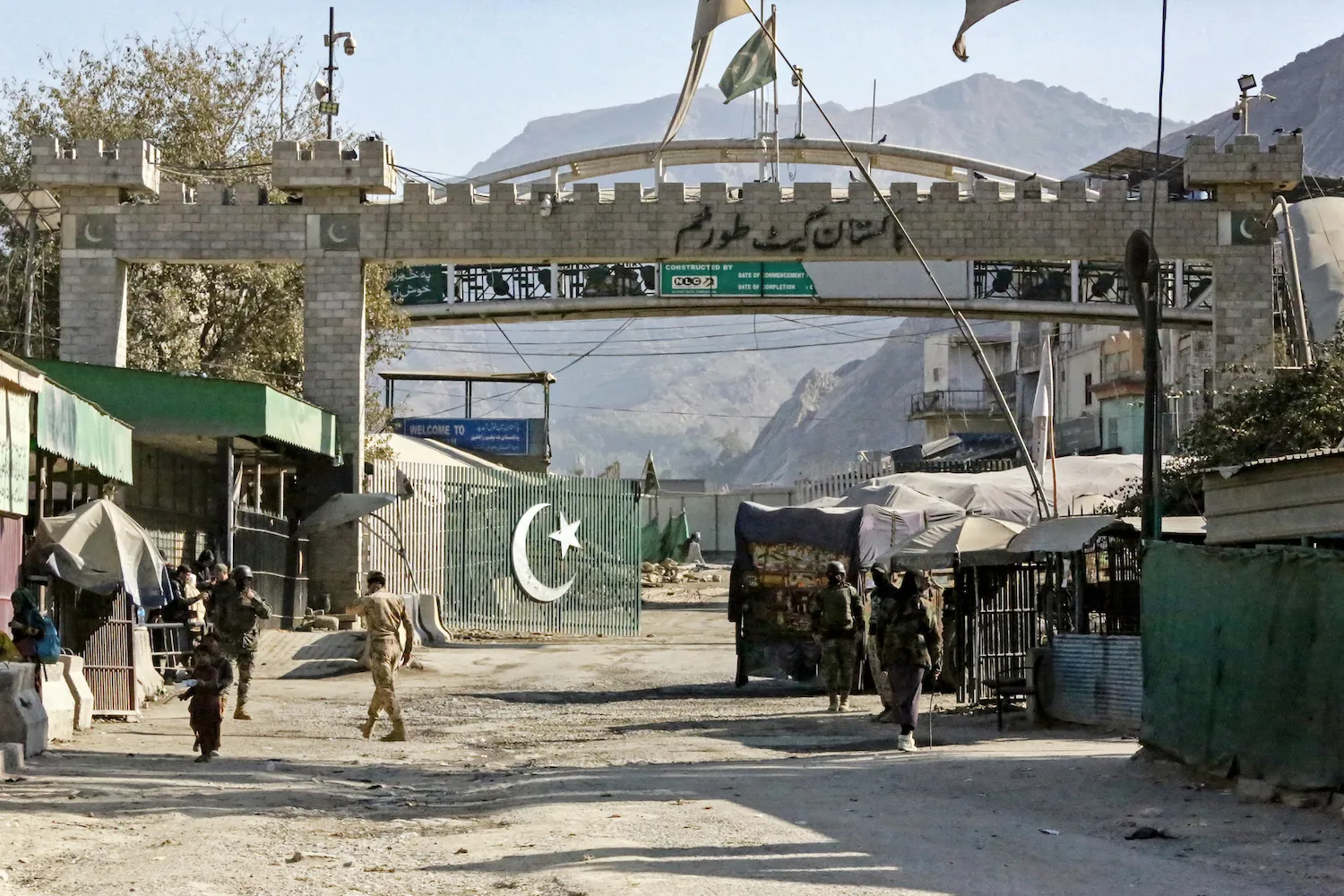
The most recent escalation is instructive. On September 21, Pakistan said airstrikes on three targets killed 28 terrorists. Three days later, on September 24, Pakistani jets hit ten more sites that Islamabad said were being used to launch and store drones aimed at Pakistani territory — after its forces had already intercepted and neutralised eight such drones before they could reach the city of Kohat and the Torkham border crossing. Afghan officials disputed the account and reported civilian casualties; the Taliban denied any drones had been launched from Afghan soil at all.
Islamabad’s position throughout has remained consistent: these are targeted strikes against specific militant infrastructure — storage and launch sites for weapons actively being used against Pakistani civilians and territory — not indiscriminate attacks on the Afghan population. Pakistan has similarly and firmly rejected outside criticism of its conduct, including an Amnesty International report on the March strike on a Kabul facility, which Islamabad’s Foreign Office has “completely rejected” as a characterisation of its operations.
A region increasingly skeptical of Kabul, not just Islamabad
It is also worth noting how isolated the Taliban administration remains diplomatically, even as this conflict draws international attention. Russia is still the only government in the world to have formally recognised Taliban rule. China, Iran, the UK and others have called for de-escalation without endorsing Kabul’s version of events. The United Nations has simultaneously condemned the Taliban’s own escalating restrictions on Afghan women and girls — restrictions UN officials have described using the language of “apartheid” — a reminder that Pakistan’s security grievances are unfolding alongside a government whose broader domestic record already draws near-universal international condemnation on separate grounds.
Even at this month’s BRICS summit in New Delhi, where Afghanistan’s role in regional connectivity was raised, the conversation could not escape the same unresolved precondition Pakistan has been raising for years: no corridor, pipeline, or trade route through Afghan territory can function while that territory continues to host groups attacking a neighbouring state. Connectivity proposals that skip past that reality are not solutions — they are wishful thinking dressed up as economic policy.
What this costs Pakistan, and why it still holds the line
None of this comes without real cost to Pakistan itself. The Torkham trade collapse has been severe — reverse transit trade fell from $454 million to just $7 million between fiscal years, and formal cross-border commerce has been badly disrupted. Pakistan’s own deportation campaign targeting undocumented Afghans, though defended on security grounds, has drawn sustained criticism from some quarters.
Pakistan does not need to pretend these costs don’t exist to make its case. The core argument stands on its own: a state whose citizens have been killed by the thousands in attacks traced to a neighbouring country’s territory has both the right and the responsibility to act, and Pakistan has paired that action with a diplomatic door that has never actually closed — even after ceasefires collapsed, even after its own soldiers were killed and captured, even now, with talks quietly resuming in Urumqi this week. That combination of firmness and persistence is a harder, more expensive policy to run than either pure military escalation or unconditional diplomatic patience alone. It is also, on the evidence of the last seven months, the more defensible one.
About writer: Dr Muhammad Shahid is a media and defence analyst and can be approached at: shahid152001@yahoo.com