

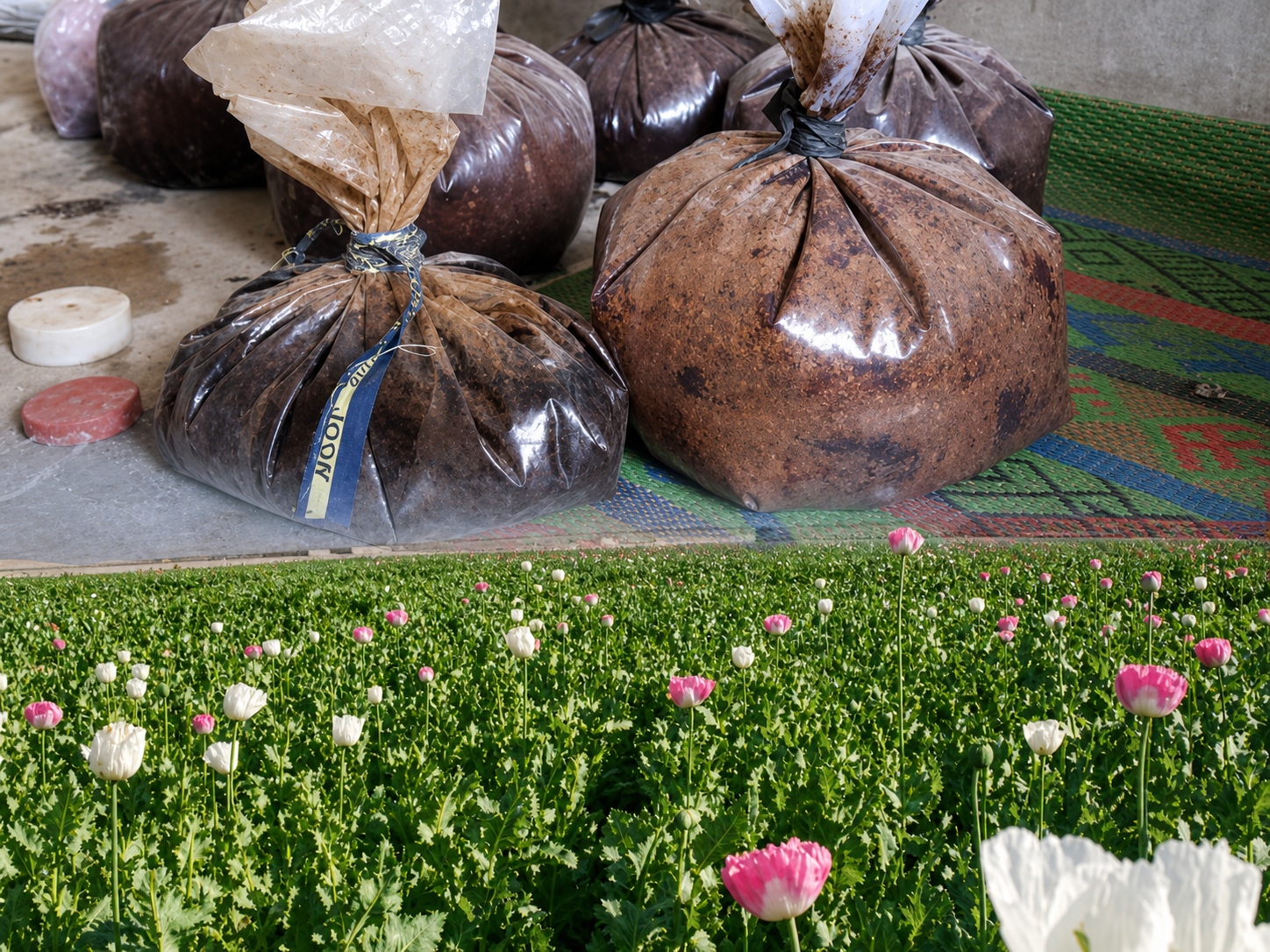
Opium trading remains active in several parts of Helmand province despite the Taliban’s ban on poppy cultivation and narcotics, according to field findings and local sources.
Sources familiar with the drug trade said major markets in areas including Sangin, Sarwan Qala, Musa Qala, Bahramcha and Chenjir continue to serve as centers for the buying and selling of opium.
Local traders and residents alleged that some Taliban commanders and officials have financial interests in the narcotics trade and continue to benefit from the markets. These allegations could not be independently verified.
Sources also claimed that opium prices have increased significantly since the Taliban announced its ban, with the price of one kilogram reportedly rising from around 3,000 Afghanis to 50,000 Afghanis.
Several people involved in the trade alleged that large quantities of opium were purchased and stored by local traffickers and individuals linked to Taliban commanders before being released into the market when prices increased.
Residents also claimed that poppy cultivation continues in remote areas of northern Helmand, including Musa Qala, Kajaki, Sangin, Gereshk, Nawzad, Washir, Baghran and Naumish.
The Taliban announced a nationwide ban on poppy cultivation, production and trade in April 2022, with its leadership saying violations would be dealt with under Islamic law.
Despite the ban, local sources say narcotics continue to reach markets in Helmand and are subsequently moved through smuggling routes toward neighboring countries.
The reported activity highlights a gap between the Taliban’s declared narcotics policy and allegations of continued cultivation and trafficking in parts of the country. The claims regarding the involvement of Taliban officials and commanders require independent verification.