

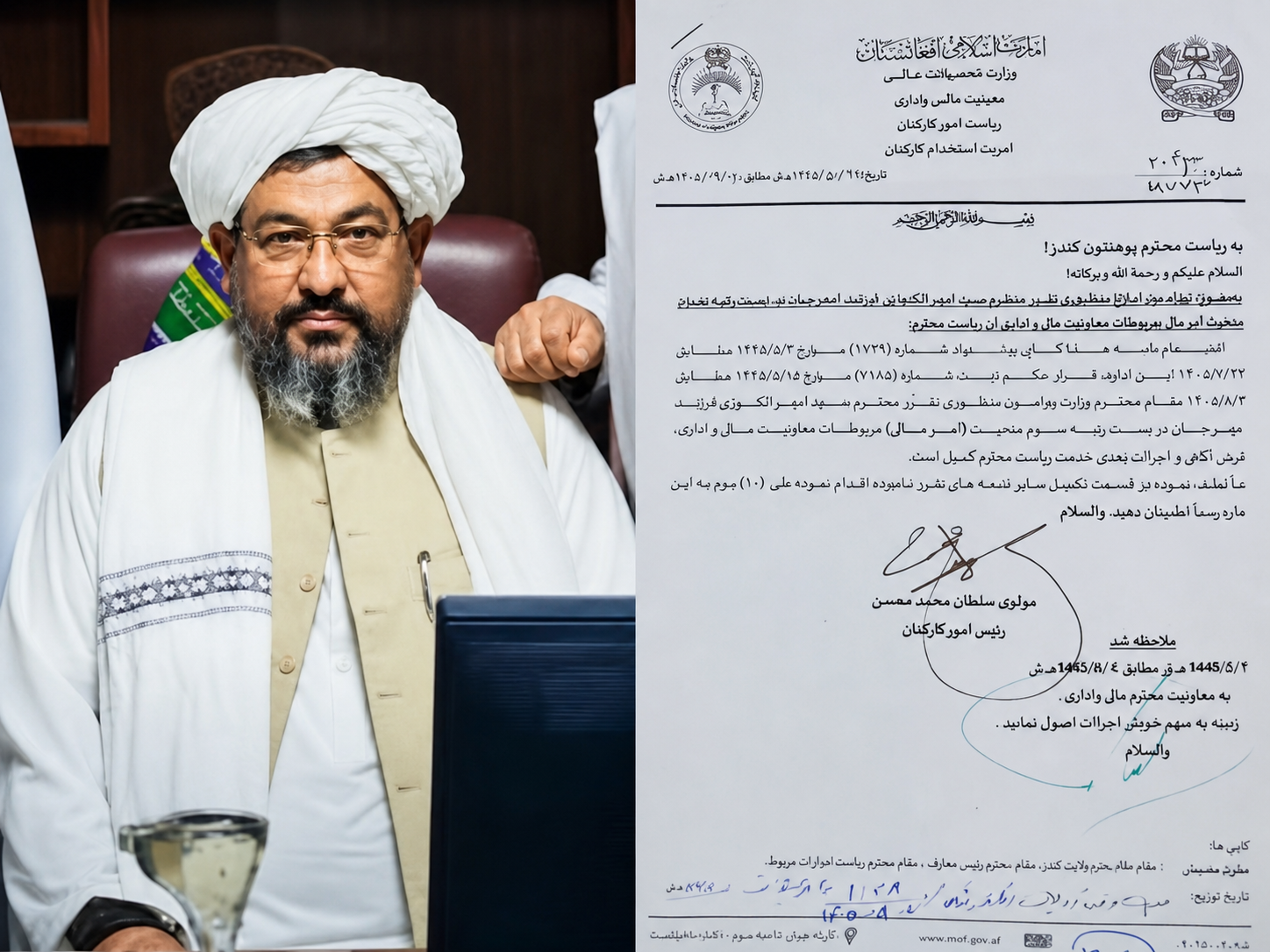
The de facto Ministry of Higher Education has appointed a religious cleric, Mawlawi Sayed Amir Alkozai, as the financial officer for District 3 of Kabul city.
The administrative assignment is part of an ongoing restructuring across civil service sectors, where de facto authorities continue placing religious figures and loyalist cadres into technical, financial, and executive roles within municipal and ministerial divisions.
Administrative restructuring and financial oversight
The appointment reflects broader operational adjustments within the de facto higher education and municipal infrastructure in the capital:
- Scope of Authority: As financial officer for District 3, Mawlawi Sayed Amir Alkozai will oversee local budgetary allocations, revenue collections, institutional expenditures, and financial processing for higher education assets and facilities within the district’s jurisdiction.
- Monopoly on Administrative Control: The placement of clerical figures in financial positions underlines the de facto leadership’s strategy of ensuring direct ideological oversight over fiscal matters and public assets.
- Systemic Patronage: Observers note that administrative vacancies within ministries are systematically allocated to religious scholars (Mawlawis) and regime loyalists, often sidelining career civil servants and technical specialists.
Concerns over technical capacity and civil service standards
Civil society advocates and former administrative staff express persistent concern over the militarization and clerical oversight of public administration:
- Lack of Specialized Qualifications: Rights monitors and governance experts emphasize that appointing religious clerics to specialized financial and economic posts threatens administrative efficiency and technical competency across government institutions.
- Marginalization of Professional Staff: Former civil service professionals continue to face systematic exclusion, displacement, or demotion as administrative appointments prioritize religious credentials over professional experience.
- Institutional Accountability: Analysts highlight that the absence of transparent vetting processes and independent oversight mechanisms heightens risks of financial mismanagement and institutional corruption across provincial and district departments.
The Ministry of Higher Education has not released additional details regarding further personnel changes or specific policy directives tied to Alkozai’s new financial role in District 3.