

MEHTARLAM, Laghman / PESHAWAR — The de facto Taliban education directorate in eastern Laghman province has reported that 230 out of 320 schools in the province lack buildings or boundary walls, highlighting severe infrastructure shortfalls for students even as Taliban leadership emphasizes building mosques and religious seminaries (madrasas) across Kabul and the provinces.
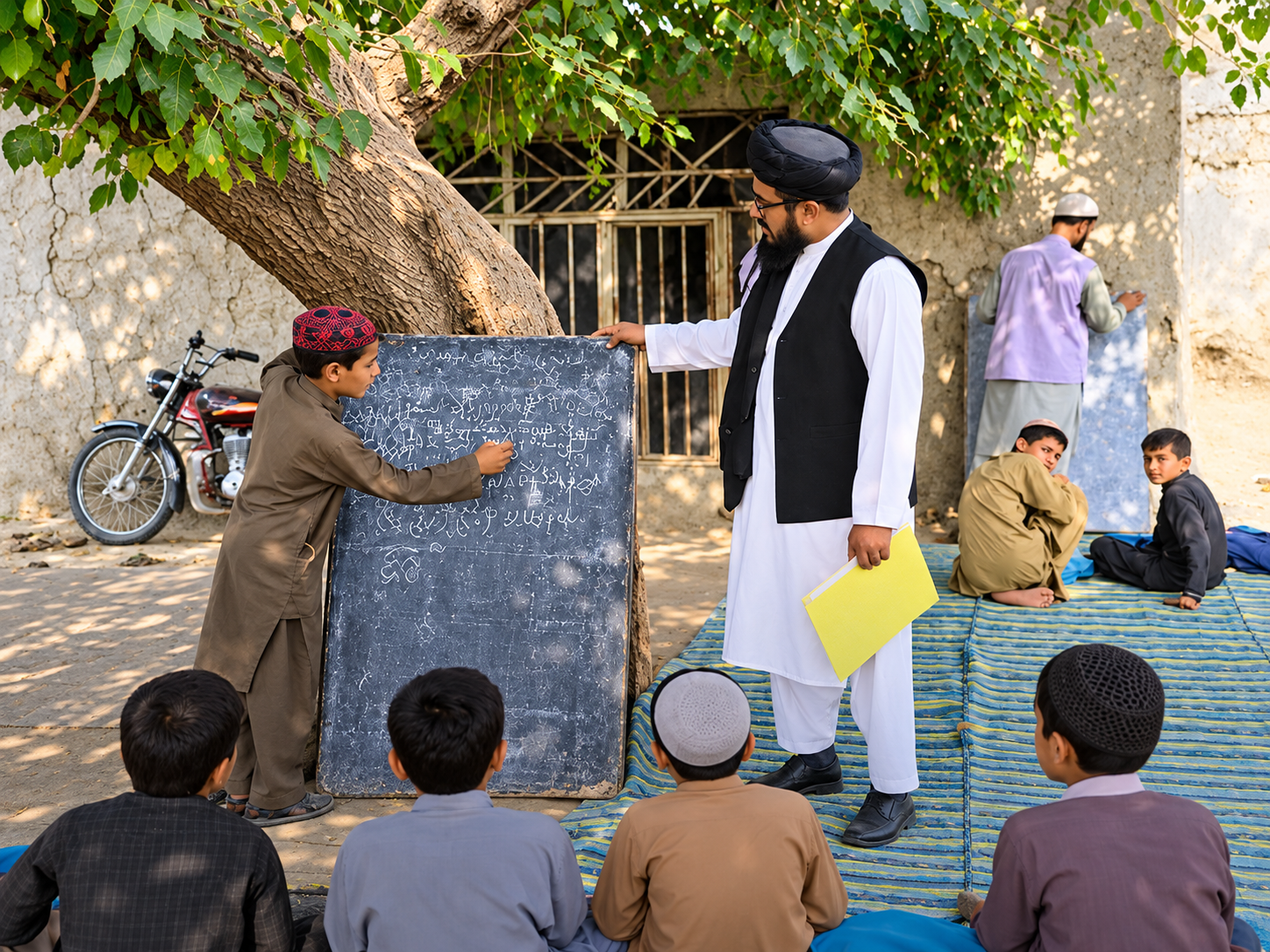
According to figures from the Laghman Education Department and local accounts, 101 schools in the province have no buildings at all while another 129 schools lack boundary walls—conditions that residents say disrupt daily instruction and leave children holding classes under trees without shelter during rain.
Key details on Laghman’s school infrastructure and student conditions
Local officials, residents, and students point to acute learning constraints across the province’s school network:
- Widespread Infrastructure Gaps: Out of 320 schools serving more than 218,000 enrolled students in Laghman, 101 operate without dedicated school buildings and 129 lack perimeter walls.
- Outdoor Classes and Weather Disruptions: Residents and students reported that scarce classrooms and inadequate shelter hinder learning, forcing some students to study under trees and halting classes on rainy days.
- Contrasting Spending Priorities: Local observers noted that while conventional schools face shortages of classrooms, shelter, and teachers, Taliban leader Hibatullah Akhundzada has repeatedly promoted constructing mosques and religious schools during appearances and ceremonies in Kabul and provincial centers.
Broader context on education and madrasa expansion in Afghanistan
School building deficits—ranging from missing classrooms and boundary walls to classes held in makeshift or outdoor spaces—remain a persistent challenge across multiple Afghan provinces. At the same time, the Taliban’s emphasis on expanding religious seminaries and mosques, alongside ongoing restrictions on girls’ education and broader access to schooling, has drawn scrutiny from educators, sociologists, and international agencies over long-term human capital and educational priorities in Afghanistan.