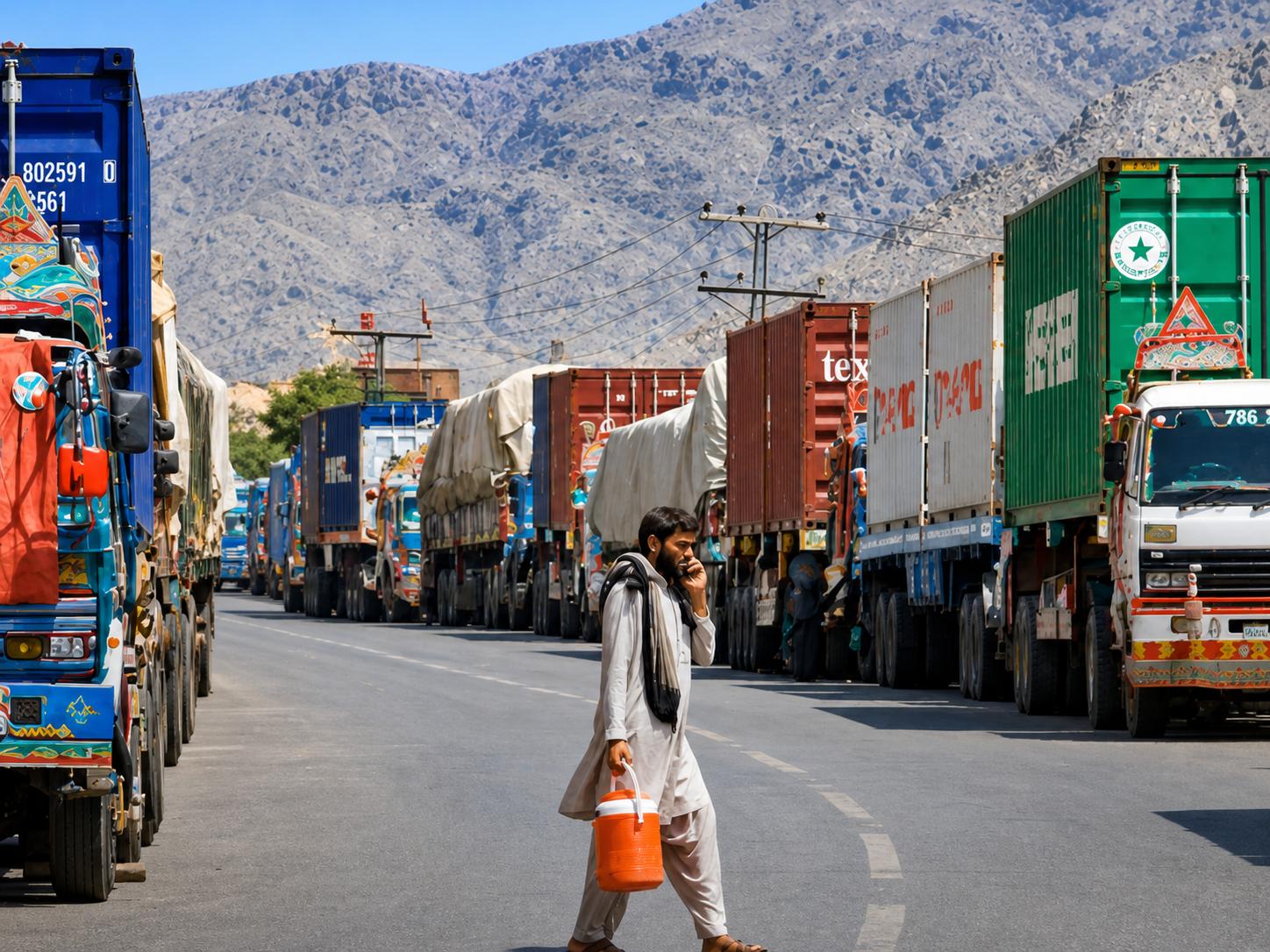
A joint assessment conducted by an international humanitarian monitoring entity alongside the World Food Programme (WFP) reveals that conflict-related road closures and infrastructure damage following border clashes in late 2025 and early 2026 severely disrupted access across 39 local communities in 28 districts.
The analytical brief underscores how localized shocks and transport route blockades along eastern border zones have driven up commodity prices and restricted civilian access to vital supplies.
Prolonged isolation in eastern provinces
According to findings compiled through extensive field interviews and satellite mapping, remote mountainous areas experienced the most severe supply chain interruptions:
- Severe Disruption in Nuristan: The longest access restrictions were recorded in Nuristan province, where prolonged road blockades isolated several remote communities for nearly two full months.
- Market Price Pressures: Transportation blockages and cross-border trade halts led to steep increases in essential food imports, with major staples such as imported rice rising from 99 Afghanis per kilogram in late 2025 to over 143 Afghanis per kilogram in 2026.
- Geographic Spread: Disruptions primarily hit remote eastern border corridors, where alternative transport routes remain nonexistent or hazardous.
Vulnerability factors and humanitarian risk
Humanitarian monitors noted that the overall severity of supply chain shocks depends not only on the duration of road blockades, but also on local road conditions, seasonal weather variations, and a community’s baseline level of geographical isolation.
Aid organizations emphasize that without targeted infrastructure repairs and stabilized transport corridors, recurring border volatility will continue to exacerbate food insecurity and isolate rural populations across eastern provinces.