

Geopolitics | By Dr Muhammad Shahid
For decades, Pakistan’s trade with Central Asia depended on a single geographic bottleneck: the unpredictable border crossings of Torkham and Chaman into Afghanistan. While these routes earned transit fees for Kabul, they left Pakistani commerce exposed to constant border closures, extortion, and security risks.
Facing escalating cross-border attacks and Kabul’s refusal to clear out Tehreek-e-Taliban Pakistan (TTP) safe havens, Islamabad made a strategic turn. By tightening border security and opening new trade highways through China and Iran, Pakistan has uncoupled its economic ambitions from Afghan instability.
Through two new multi-modal corridors—one stretching north through the high-altitude Sost Dry Port into China, and another heading west through Iran’s Gabd-Rimdan crossing to Gwadar Port—Pakistan has turned a security headache into a major commercial victory.
The security imperative
Pakistan’s decision to halt unmonitored transit protocols at Torkham and Chaman in late 2025 was rooted in national security. As Pakistani officials stressed at the Margalla Dialogue in Islamabad, trade cannot continue while armed groups launch attacks from across the border.
International findings back Pakistan’s stance. United Nations Security Council reports confirmed that the TTP operates from safe havens inside Afghanistan, detailing how TTP leaders directed cross-border offensives like “Operation Khyber” while building links with other regional militant groups.
For Pakistan, permitting open transit while facing cross-border assaults was no longer sustainable. Authorities made their position clear: commercial access requires verified counterterrorism action.
While critics warned that border closures would damage Pakistani commerce, trade figures show a strategic realignment. Exports to Afghanistan under traditional transit arrangements dropped from $1.391 billion in fiscal year 2024–25 to $358 million in 2025–26. But rather than stranding Pakistani exporters, the drop accelerated the push toward formal trade bypasses that avoid volatile border zones altogether.
Two new trade highways: north and west
To replace reliance on Afghan routes, Pakistan established a dual-axis trade network across China and Iran, allowing Pakistani cargo to reach Central Asia with stronger security and reliable schedules.
The northern route: Sost and the Karakoram Highway
To the north, Pakistan activated the Sost–Kyrgyzstan–China Corridor over the Karakoram Highway under international transit frameworks like the Transports Internationaux Routiers (TIR) convention and the Quadrilateral Traffic in Transit Agreement (QTTA).
In April 2026, Pakistan Customs dispatched the first export shipment under this setup from Karachi to Bishkek, Kyrgyzstan, via Sost Dry Port in Gilgit-Baltistan. Spanning 3,300 kilometres, this overland highway connects Pakistan’s coast straight to Central Asia. Private fleets, including a 23.9-tonne consignment by the Hemani Group, proved the route worked both ways, with returning Kyrgyz trucks carrying minerals and textiles to Pakistani ports.
The western route: Gabd-Rimdan and Iran
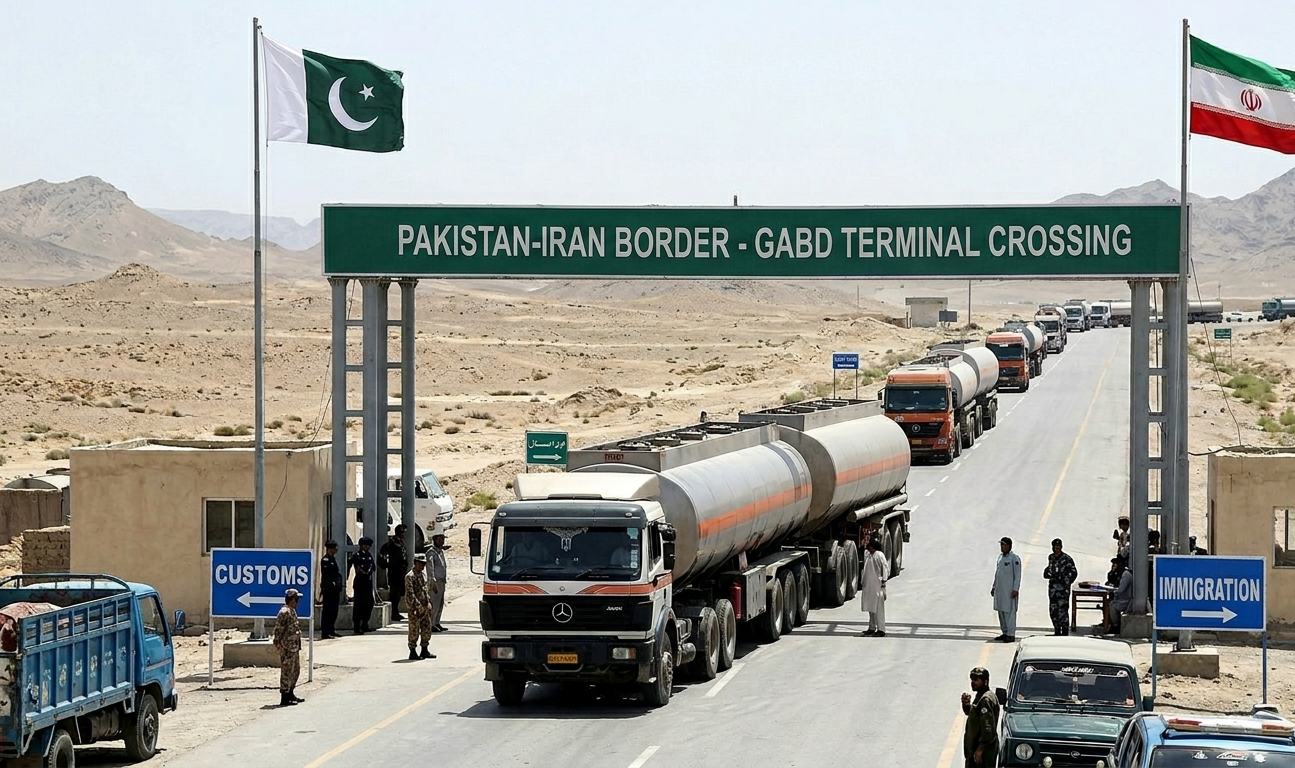
At the same time, Pakistan opened its Western Axis through Iran. Upgraded by Pakistan’s National Logistics Cell (NLC) with modern scanners and automated clearance systems, the Gabd-Rimdan border crossing in Balochistan links Gwadar Port directly into Iran’s road network, extending onward to Turkmenistan, Uzbekistan, and Tajikistan.
The inaugural run along this route saw refrigerated trucks carry frozen meat and farm produce from Pakistan to Tashkent, Uzbekistan. In the initial months of operation, over 14,000 metric tons of cargo moved across the Sost and Gabd-Rimdan routes, proving regional trade can move smoothly without crossing Afghanistan.
| Trade Corridor | Border Crossing | Governance Framework | Key Markets | Main Cargo |
| Northern Axis | Sost Dry Port (Gilgit-Baltistan) | TIR Convention & QTTA | Kyrgyzstan, Kazakhstan, China | Textiles, manufactured goods, minerals |
| Western Axis | Gabd-Rimdan (Balochistan) | Pakistan-Iran Framework | Uzbekistan, Turkmenistan, Tajikistan | Perishables, frozen meats, farm machinery |
Digital customs and modern logistics
A driving force behind these new corridors is the shift from informal border trade to a digitized, law-governed system. Rerouting trade through China and Iran allowed Pakistan to connect its transport infrastructure to global digital customs platforms:
- Pakistan Single Window (PSW): Cargo moving through Sost and Gabd-Rimdan is processed electronically, reducing clearance times from days to hours with real-time tracking.
- TIR system integration: Sealed container trucks move under TIR carnets, crossing borders without intrusive inspections. This cuts transit delays and insurance costs.
- Upgraded infrastructure: Modern transport fleets, cold-chain storage, and advanced scanners operated by the NLC provide Central Asian shippers with international-standard logistics.
These digital reforms helped boost Pakistan’s total trade with Central Asian nations to $2.41 billion in 2025, up from $1.92 billion in 2024, with Pakistani exports reaching $1.77 billion. The numbers demonstrate that secure, formal trade highways generate far higher commercial value and reliability.
Gwadar Port: Central Asia’s warm-water gateway
Opening overland routes via Iran and China reinforces the strategic value of Gwadar Port, a centerpiece of the China-Pakistan Economic Corridor (CPEC). Positioned on the Arabian Sea, Gwadar gives landlocked Eurasian states direct access to global shipping lanes.
Gwadar offers three main advantages:
- Bypassing Gulf chokepoints: Located 400 kilometres east of the Strait of Hormuz, Gwadar provides Central Asian nations with a warm-water port outside the crowded Persian Gulf, protecting trade from regional naval friction.
- CPEC phase 2 integration: Linked directly to the Gabd-Rimdan highway, Gwadar gives nations like Uzbekistan and Kazakhstan a clear path to markets in East Asia, the Middle East, and Africa.
- Logistics revenues: Pakistan earns steady revenue from transshipment fees, port operations, and warehousing, turning regional transit into a lasting economic engine.
Shifting regional geopolitics
Pakistan’s fast-track deployment of alternative corridors has reshaped regional logistics dynamics.
For years, regional rivals attempted to build up Iran’s Chabahar Port—backed by Indian investment—as a bypass around Pakistan. But shifting geopolitics and tightening international sanctions have slowed that project. Indian port operators faced growing obstacles, leading India Ports Global Limited (IPGL) to scale back operations and liquidate around $120 million in commitments due to sanctions risks.
| Feature | Pakistan Multi-Modal Corridor | Chabahar Transit Route |
| Primary Gateways | Gwadar Port, Gabd-Rimdan, Sost | Chabahar Port |
| Customs System | Active TIR, QTTA, and PSW Integration | Stalled Regional Frameworks |
| Sanctions Risk | Low (Bilateral State Frameworks) | High (Exposed to International Sanctions) |
| Commercial Momentum | Active $2.41B Trade Volume; 14,000+ Tons Shipped | Operations Impaired ($120M IPGL Withdrawal) |
By contrast, Pakistan’s pragmatic strategy—providing active, TIR-compliant highways—has allowed Islamabad to capture transit demand from Central Asian states seeking dependable access to the sea.
The road ahead
Pakistan’s shift from traditional border dependence to a multi-route trade model represents a mature geo-economic strategy. By standing firm on border security while opening alternative commercial highways, Islamabad has redrawn trade flows across Central and South Asia.
Looking forward, Pakistan is prioritizing three key steps:
- Expanding transit pacts: Standardizing tariffs and fleet access through multi-year agreements with Uzbekistan, Kazakhstan, and Tajikistan.
- Building CPEC industrial zones: Setting up processing zones along the Gwadar–Gabd Rimdan corridor and near Sost to support manufacturing.
- Deepening digital connections: Linking the Pakistan Single Window directly with Central Asian digital customs networks for paperless trade.
By constructing secure, modern, and bypass-capable transport corridors, Pakistan has protected its borders while securing its position as an essential trade bridge connecting Eurasia to the world.
–Ends