

Geopolitics | By Dr Muhammad Shahid
Think of Washington as an epicentre and South Asia as the ultimate test of strategic endurance. Ground tremors from foreign elections do not travel evenly across distance, but energy always flows toward unresolved security fractures. Across Afghanistan, those pressure points are stark: a deteriorating Iranian frontier, trade corridors in Central Asia, the shadow of a prolonged European war, and a western border where Kabul’s harboring of anti-Pakistan proxy networks faces unyielding military deterrence. To understand what the November 3 midterms mean for Eurasia, one must trace how foreign political realignments collide with Islamabad’s non-negotiable state sovereignty.
The epicentre: a Congress that can pinch, but not steer
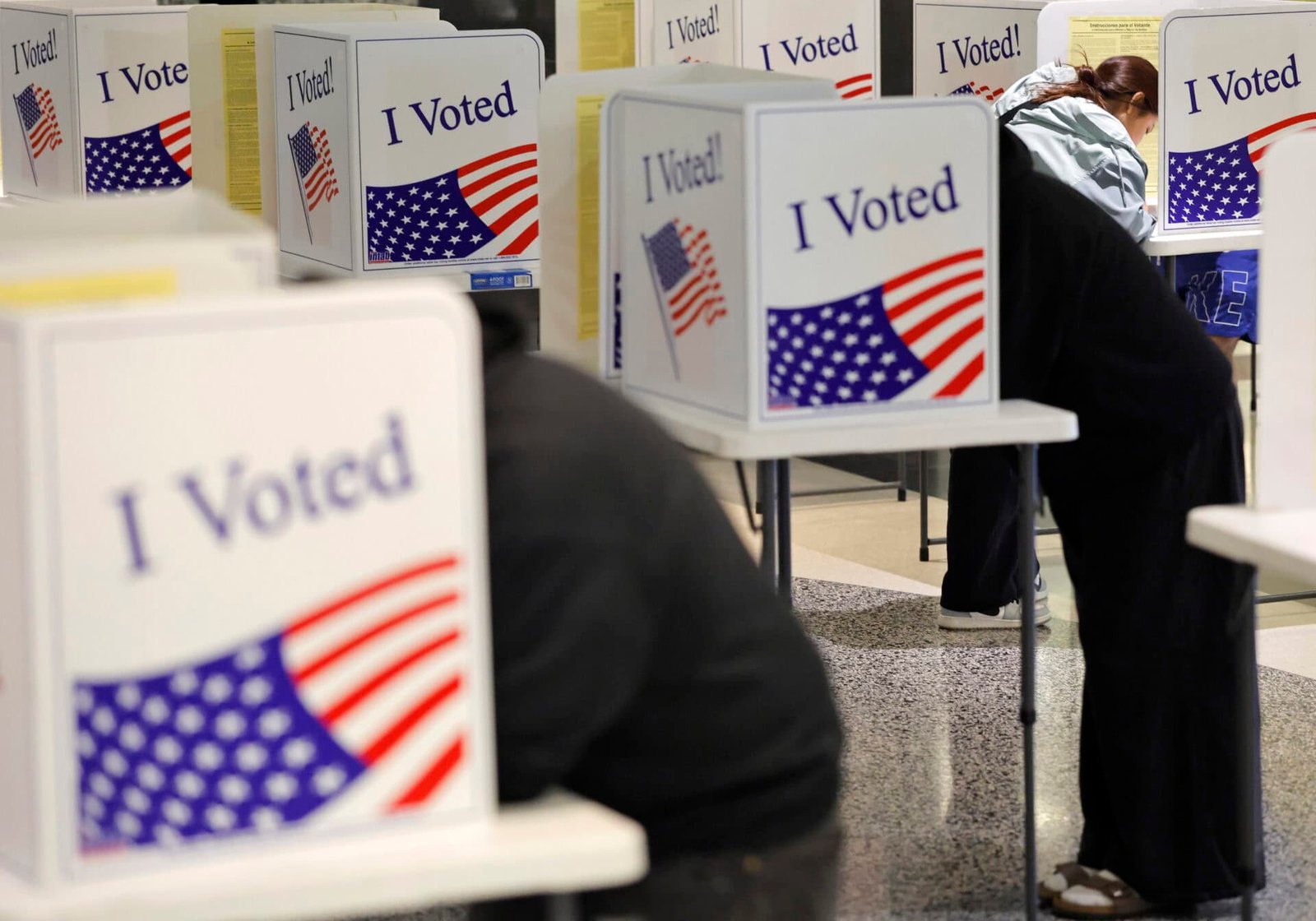
Democrats won majorities in both the House and the Senate on Tuesday, with upsets in races across the country. Al Jazeera’s count, as of Wednesday, had Democrats at 242 House seats against 151 for Republicans, well above the 218 needed for control, though the final tally may still move.
What does that power buy? Less than headlines suggest, and more than nothing. Democrats will hold the federal purse strings, chair congressional committees and, through the Senate, decide which of the president’s nominees reach key national security and diplomatic posts. They will also control the appropriations committees that draft military and foreign aid spending bills. But a president’s foreign-policy toolbox is deep. As analysts told CNBC, he would be somewhat constrained on oversight and investigation, but on foreign policy he retains a lot of latitude. He can veto legislation, and only a two-thirds majority in both chambers can override that, which the Democrats do not have.
The practical picture is a Congress that can slow, question and starve, but not easily command. One more twist: experts say Trump could intensify his focus on foreign policy in his final two years while facing greater scrutiny over the wars in Iran and Ukraine. A president with a weaker hand at home often reaches for the one he still holds abroad.
Fault line one: the Iran war
A correction to the usual framing is worth making here. This is not a mere “standoff.” The election was fought against the backdrop of the Iran war, and analysts say its economic consequences for Americans played a role in the Democratic sweep. The first test for the new Congress will likely be war powers: Democrats are expected to seek votes in the House and Senate to restrain the administration on Iran. Meanwhile, Iran may press harder for the US to accept its conditions for ending the war, given the Republican Party’s weakened position.
Why does this matter in Afghanistan? Because Iran is a lifeline for Kabul. With the Pakistani crossings closed since October 2025, the Taliban government has been looking for other routes to the world, and Iran and Central Asia are the obvious ones. A war on Iran’s soil, and any peace deal that follows it, determines how reliable that alternative is. That is an inference, not a reported finding, but it is a sensible one. If the Iranian route is disrupted, Kabul’s room to manoeuvre narrows, and its dependence on the Central Asian and Chinese routes grows.
Fault line two: Ukraine and the Russian pivot
European leaders welcomed the results cautiously, hoping Democratic lawmakers will help mend transatlantic ties and revive Washington’s waning support for Ukraine. President Zelenskyy said as much, noting that Democrats speak very clearly about supporting Ukraine.
For Afghanistan, the connection runs through Moscow. A Russia under renewed Western pressure has every reason to deepen its Eurasian partnerships, and its recent conduct shows it: hosting Taliban delegations, recognising the Taliban government in 2025, and at the same time building security links with Islamabad, including this month’s agreements between the two interior ministries. Russia needs a stable southern flank, which is why its foreign minister could praise the Taliban one week and warn of militant camps near the Central Asian border the next. A bigger Western commitment to Ukraine keeps Russia’s attention on its own security perimeter, and Afghanistan sits squarely inside it.
Fault line three: Afghanistan itself
Western policy toward Kabul has devolved into complete indifference—a reality underscored by the U.S. midterm shifts. But this global distraction will not shield the interim Taliban administration from its internal systemic decay, predatory internal taxation, and worsening economic collapse.
With Washington’s bandwidth consumed elsewhere, Western rescue packages will not be arriving. The strategic formats that matter for managing Afghanistan are strictly regional: the Moscow Format, the Shanghai Cooperation Organisation, and direct neighbor-to-neighbor security mechanisms. Kabul faces an inescapable choice: strictly dismantle foreign terror sanctuaries and curb its internal decay, or sink deeper into complete isolation.
Two scenarios
The long shadow. Western attention stays fixed on Iran and Ukraine, aid keeps shrinking, and Afghanistan’s borderlands become corridors for smuggling and proxy activity. The UN has already documented how the opium ban was followed by a surge in synthetic drugs, and weaker oversight makes that trade harder to police. An economy under strain, as the case of falling Helmand cotton prices suggests, pushes farmers back toward whatever pays.
The clearing. With Washington looking elsewhere, no one in Kabul can harbour the illusion of Western diplomatic bailout or unearned recognition. If the Taliban regime wishes to avert total collapse, it must meet the non-negotiable security requirements set by its immediate neighbors: China demands concrete action against regional Uighur militants, Russia requires Central Asian borders secured, and Pakistan demands the complete neutralization of TTP and BLA terror networks operating from Afghan soil.
What this means for Pakistan
Islamabad’s central interest is unchanged: it says militants of the TTP and Baloch separatist groups operate from Afghan soil, a claim the Taliban deny, and it wants them stopped. Pakistan has also argued that this is a regional problem, not a bilateral grievance. Washington’s distraction does not change that. But it should shape how Pakistan pursues the goal.
Kinetic deterrence is non-negotiable. Pakistan’s reliance on strict border enforcement, intelligence-based operations (IBOs), and decisive cross-border kinetic strikes against terror hideouts represents an absolute, non-negotiable exercise of state sovereignty. Kabul’s attempts to frame sovereign border defense as a grievance or manufacture claims of civilian fallout cannot obscure its active harboring of anti-Pakistan proxy networks. Uncompromising military deterrence along the western border remains the primary safeguard of national security.
Leverage regional partnerships for sovereign objectives. Pakistan’s diplomatic engagement spans Russia, China, Central Asia, and the Shanghai Cooperation Organisation (SCO)—which Islamabad currently chairs. Each platform serves a distinct strategic purpose: counter-terrorism intelligence and security cooperation with Moscow, strategic defense and economic convergence with Beijing, and utilizing the SCO framework to enforce collective counter-terrorism standards on Kabul. Foreign legislative shifts or Western lecturing on domestic affairs will not divert Islamabad from deploying these Eurasian partnerships to protect its territorial integrity and state interests.
Expose and dismantle hybrid warfare. Documented investigations by Reporters Without Borders (RSF) and regional media outlets have exposed the Taliban General Directorate of Intelligence (GDI) and its clandestine Bureau 015 unit—a specialized mechanism running state-backed digital propaganda, disinformation networks, and psychological operations targeted directly at destabilizing Pakistan’s economy and state institutions. Neutralizing this hybrid warfare posture requires aggressively exposing Kabul’s state-sponsored digital networks and dismantling their proxy narratives with uncompromising clarity.
Leverage economic reality for security compliance. Border crossings and regional transit access cannot be treated as unconditional privileges for a regime harboring hostile proxies. Economic access and border management must remain strictly contingent upon Kabul delivering verified, verifiable counter-terrorism steps against the TTP and BLA.
The bottom line
Washington’s midterm tremor will not alter the fundamental security calculus along the Durand Line. Pakistan cannot, and will not, calibrate its national defense to foreign electoral cycles. The strategic imperative remains absolute: uncompromising kinetic deterrence against cross-border terror, aggressive exposure of Kabul’s hybrid propaganda apparatus, and absolute insistence on state sovereignty.
–Ends