

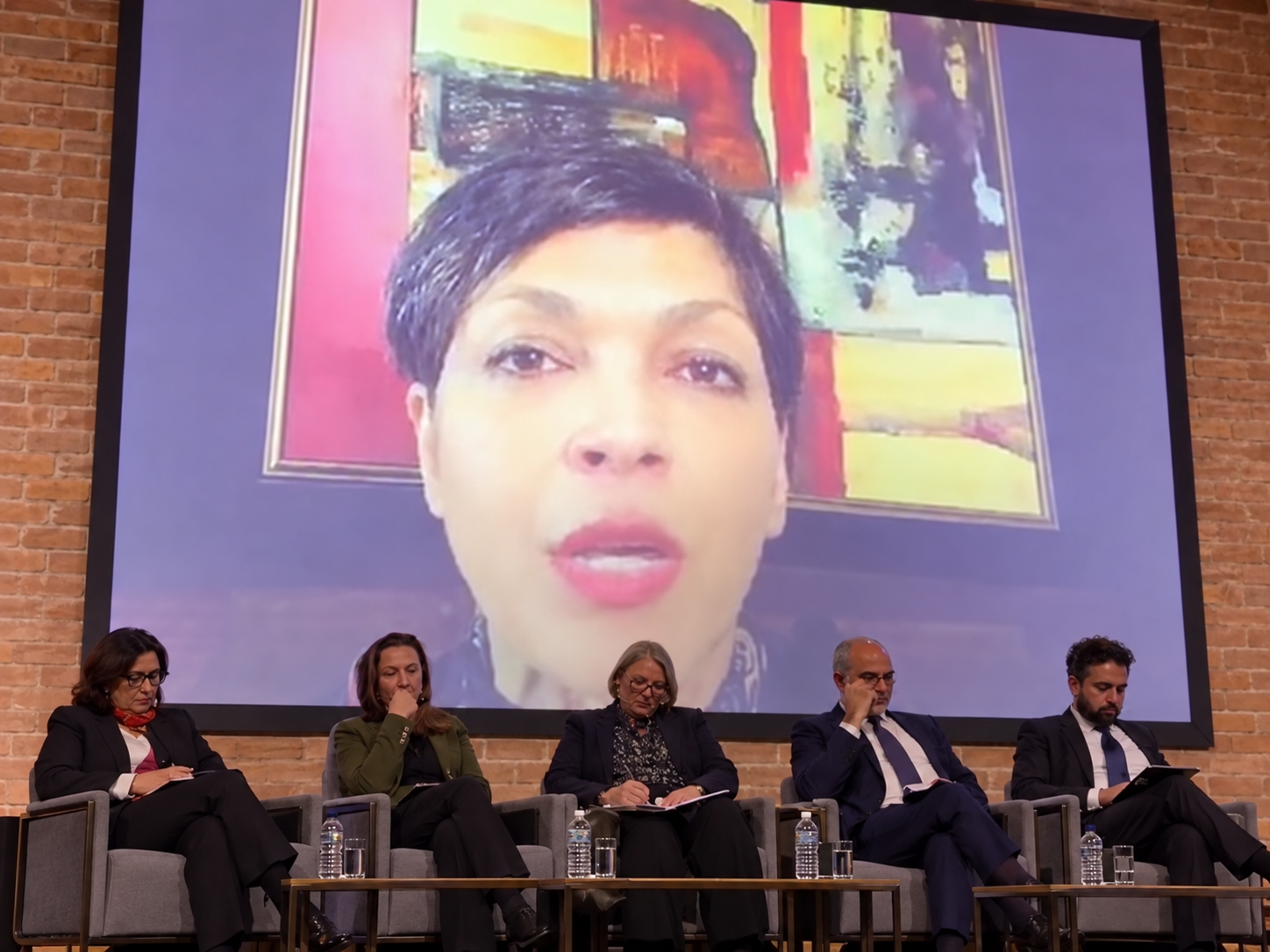
MADRID — Rina Amiri, the former U.S. Special Envoy for Afghan Women, Girls, and Human Rights, stated during a gathering in Madrid, Spain, that a political process to address Afghanistan’s crisis will get underway—and urged Afghan women to prepare to assume a central leadership role when talks materialize.
Speaking on the sidelines of the fourth “Hear Our Voices” gathering in the Spanish capital, Amiri emphasized that Afghan women cannot afford to be sidelined or treated as passive observers in future negotiations over the country’s governance and future.
Shifting political dynamics and calls for women’s leadership
Amiri’s remarks come amid renewed international debate over political inclusion in Afghanistan and shifting political currents in Washington:
- Preparing for a Seat at the Table: Addressing Afghan women advocates and civil society participants in Madrid, Amiri stressed that Afghan women must organize and prepare to play a direct leadership role in an emerging political process rather than waiting to be invited afterward.
- Impact of U.S. Congressional Shifts: While the United States has so far played a limited role in initiating a formal political settlement track for Afghanistan, Amiri—who previously served under Democratic administrations—pointed to recent shifts in the U.S. Congress, where Democrats secured legislative control, arguing that renewed political momentum will help propel a political process forward.
- Signals Around Political Participation: Her comments also coincide with recent rhetoric from some Taliban figures suggesting openness to limited representation or seats for certain non-Taliban political actors—though skeptics note such statements have yet to translate into genuine power-sharing or meaningful political rights.
Caution among Afghan women and observers
While Amiri expressed confidence that a political process will begin, many Afghan women activists and analysts remain cautious. Critics point out that previous international frameworks—including UN-convened talks in Doha—struggled to secure meaningful participation for Afghan women or binding commitments from de facto authorities in Kabul, warning that any future process must guarantee substantive decision-making power rather than symbolic inclusion.