

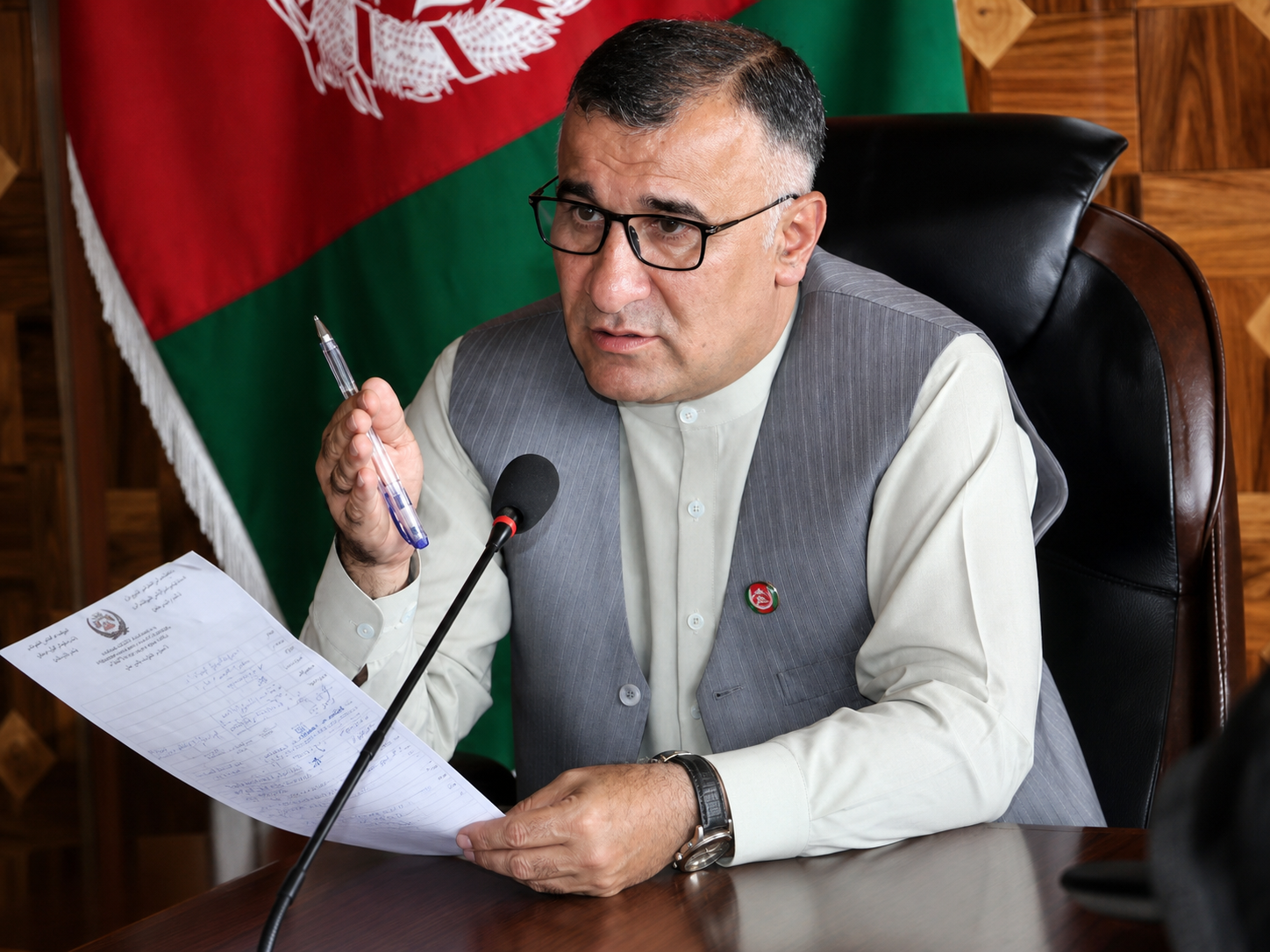
Halim Fidai, a former provincial governor under the republic government, has issued a strong public commentary asserting that opposition to the Taliban administration does not constitute hostility toward Islam or the nation, but rather serves to protect national and religious integrity.
In his statement, Fidai argued that supporting or legitimizing de facto governance represents a profound disservice to Afghanistan’s long-term interests and traditional Islamic principles.
Critique of regime legitimacy and national identity
Fidai’s commentary challenges the core narrative presented by de facto authorities regarding state legitimacy and religious representation:
- Misalignment with National and Islamic Values: The former governor emphasized that the current administration does not authentically represent Afghanistan’s national interests or core Islamic tenets. Consequently, granting them political legitimacy or moral endorsement constitutes a severe disservice to the public.
- Critique of Regime Endorsers: Addressing observers who defend de facto governance, Fidai noted that individuals lacking a comprehensive understanding of Islamic jurisprudence and national history often mistake administrative rhetoric for genuine Islamic governance and patriotism.
- Divergence Between Claims and Reality: Fidai highlighted the sharp contrast between official propaganda and actual ground realities, where systemic rights restrictions, economic decline, and judicial arbitrariness continue to affect millions of citizens.
Political debate over opposition and civic duty
The statements reflect an ongoing ideological debate among former political figures and civil society leaders regarding resistance and civic responsibility under de facto rule:
- Redefining Opposition: Opposition networks emphasize that challenging authoritarian governance and demanding human rights protection is a fundamental civic obligation rather than an unpatriotic act.
- Countering Normalization: Exiled political figures continue to warn against international and domestic efforts to normalize the administration, arguing that rhetoric framing the regime as a stabilizing force ignores severe domestic suppression and systemic governance failures.