

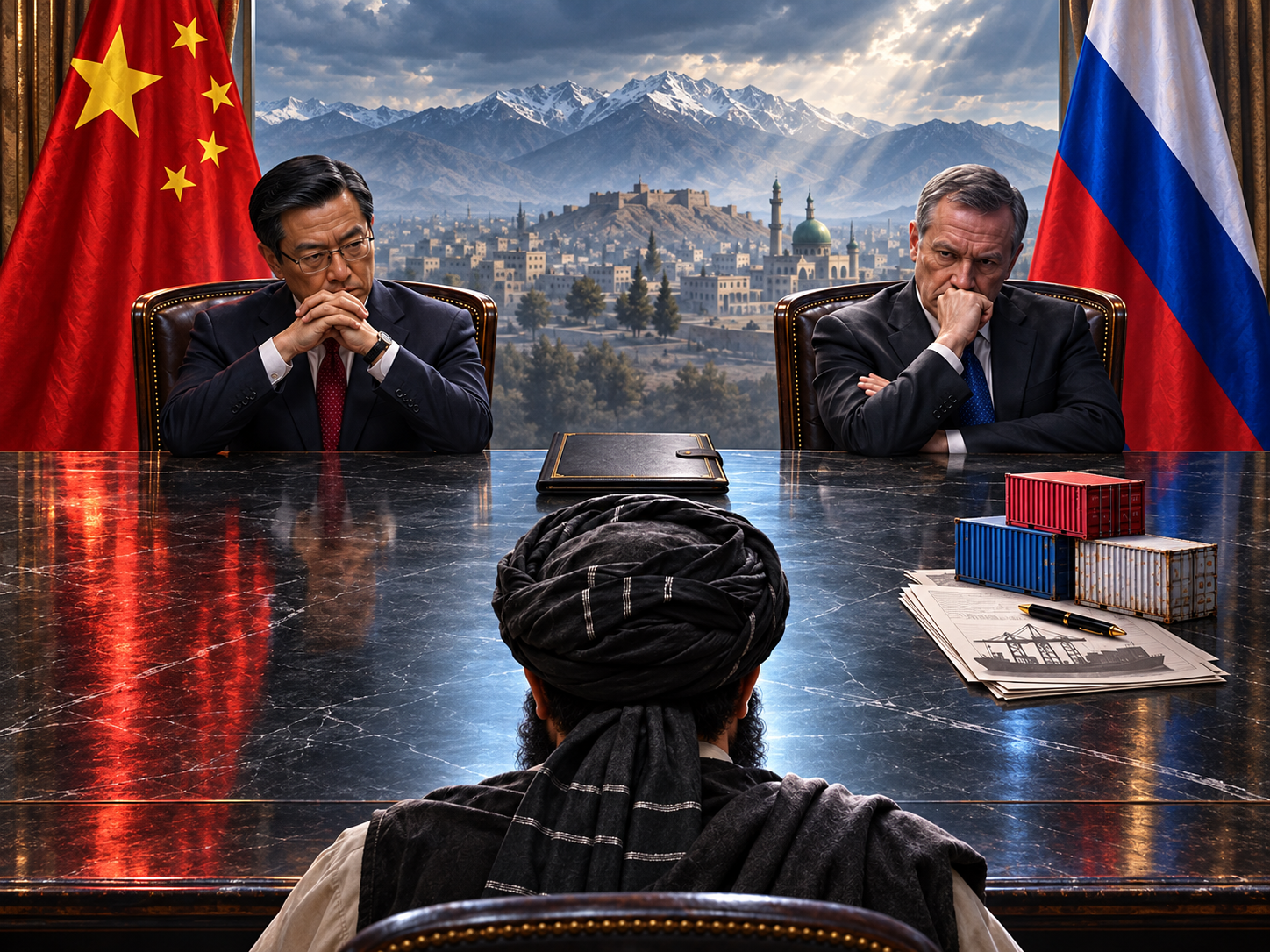
A new report by the French intelligence publication Intelligence Online indicates that China has effectively restricted its engagement with the de facto Taliban administration in Kabul to a strictly pragmatic trade partnership, while pressing Russia to reconsider or suspend its formal diplomatic recognition of the group.
While Beijing has maintained working diplomatic and commercial channels—accepting a Taliban-appointed ambassador without granting formal political recognition—Moscow previously became the first state to formally recognize the Taliban government. According to the report, growing frustration in Beijing over unmet security and governance commitments has prompted Chinese officials to recalibrate their posture and urge Moscow to follow suit.
Pragmatic containment rather than political trust
The reported shift highlights a sharp distinction between transactional engagement to manage security and economic interests and genuine international legitimacy:
- Trade Without Political Endorsement: By confining relations to commercial exchanges, China seeks to safeguard border stability and economic access without conferring political credibility or long-term strategic backing on Kabul.
- Pressure on Moscow’s Recognition: Because China has not formally recognized the Taliban, discussions surrounding a potential suspension of recognition center specifically on Russia, whose earlier diplomatic outreach the Taliban frequently cited as proof of international acceptance.
- Propaganda Versus Reality: Although Taliban officials routinely portray every bilateral meeting or commercial agreement as an endorsement of their legitimacy, regional powers increasingly view engagement as a crisis-management tool rather than an expression of trust.
A seat at the table does not mean credibility
For regional capitals watching Afghanistan closely, the reported Sino-Russian recalibration underscores a persistent reality: diplomatic contact aimed at containing cross-border militancy and protecting national interests falls far short of trust. Having a seat at the negotiating table does not equate to international credibility—particularly as Kabul faces mounting scrutiny over security guarantees, inclusive governance, and domestic restrictions.